

Respiratory system in humans
Mammals have a well-developed respiratory system : nose, trachea, lungs, and a complete separation of nasal and oral passages.
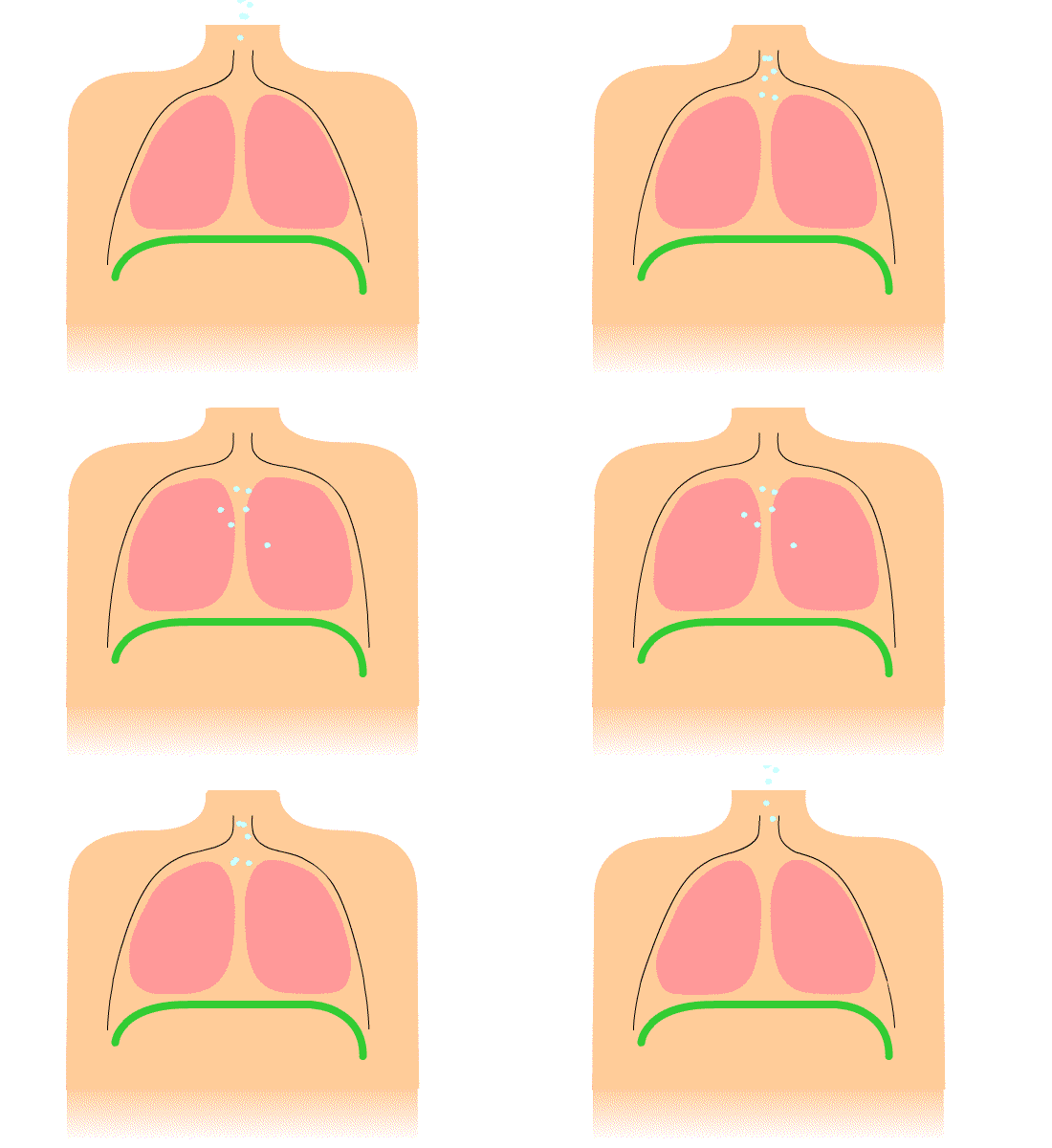
Breathing illustration
Pathway of air: Nostrils → Nasal cavity → Pharynx → Larynx → Trachea → Bronchi → Bronchioles → Alveoli → Capillaries.
Air enters through the nostrils, passes through the nasal cavity, pharynx, larynx, and trachea, then moves into bronchi, bronchioles, and finally reaches the alveoli, where gas exchange occurs.
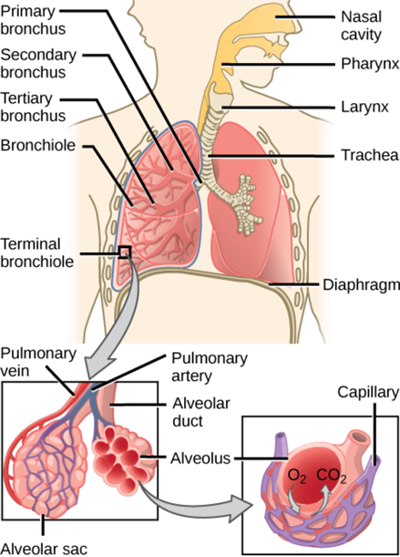
Human respiratory system
Nose, Larynx, Trachea, and Alveoli
The nose filters, warms, and moistens the air, and the hair and mucus trap dust and microorganisms.
The larynx, also called the voice box, contains the epiglottis to prevent food from entering the trachea.
The trachea and bronchi are reinforced with cartilage to prevent collapse, and cilia help remove dust and pathogens. The alveoli are tiny balloon-like sacs with thin walls and rich blood supply, providing a large surface area for efficient oxygen and carbon dioxide exchange.
Breathing
Breathing is controlled by the diaphragm and intercostal muscles. During inhalation, the diaphragm contracts and the ribs move outward, increasing lung volume and drawing in air. During exhalation, the diaphragm relaxes and the ribs return to their position, decreasing lung volume and expelling air.
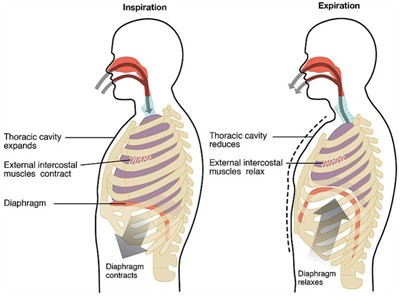
Inspiration and Expiration
Gas Exchange and Haemoglobin
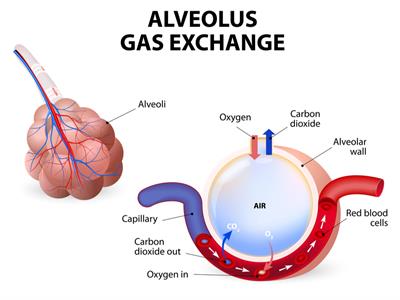
Exchange of gases in the alveolus and blood capillary
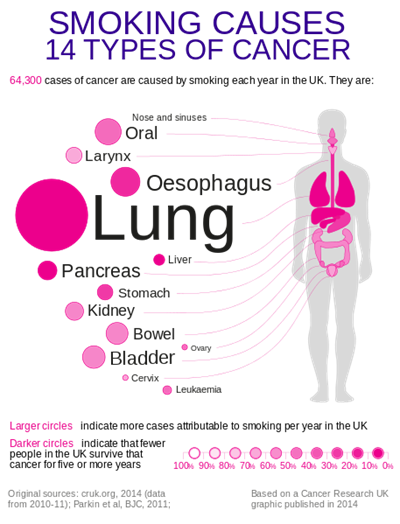
Smoking damages the cilia and alveoli, reducing gas exchange and increasing the risk of lung disease, heart problems, and cancer.
Circulatory system in humans
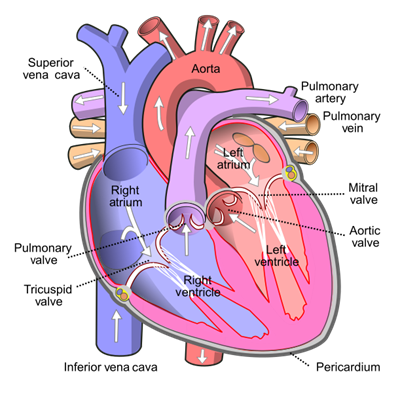
The heart is a muscular, fist-sized organ with four chambers that prevent oxygenated and deoxygenated blood from mixing. The left side pumps oxygen-rich blood to the body, while the right side sends deoxygenated blood to the lungs.
Valves prevent backflow, and ventricles have thicker muscular walls than atria. Mammals and birds show double circulation (blood passes through heart twice per cycle) for efficient oxygen supply, while fish have single circulation and amphibians show partial mixing in three chambers.
Human heart
Blood vessels and lymph
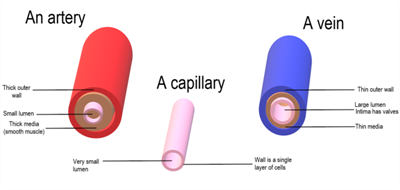
Arteries carry blood away from the heart under high pressure and have thick elastic walls. Veins carry blood toward the heart with valves and thin walls. Capillaries are one-cell thick and allow exchange of materials. Platelets clot blood to prevent loss. Lymph is a colorless fluid that carries fats from the intestine and returns excess tissue fluid to the bloodstream.
Blood vessels