

Transportation in plants
Plants transport water and minerals via xylem and food via phloem. Xylem movement is upward due to root pressure (night) and transpiration pull (day). Phloem carries food in both directions (up and down) through translocation, which uses ATP energy.
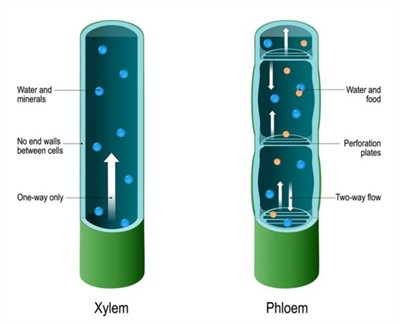
Vascular tissues - Xylem & Phloem
Excretion in plants
Transpiration is of three types based on the site where they occur. They are as follows:
- Stomata transpiration
- Lenticular transpiration
- Cuticular transpiration
Plants lack special excretory organs. They remove gases (O₂, CO₂), lose water by transpiration, and store wastes in vacuoles, leaves, gums, and resins. Some wastes are released into soil through roots.
Nutrition in human beings
The alimentary canal is a long tube from mouth to anus, with specialized regions for digestion.
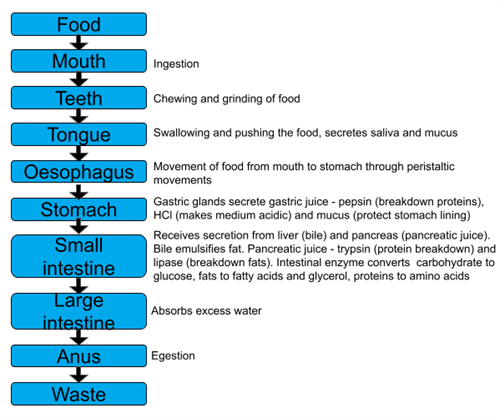
Process of digestion
Mouth:
-
Food is chewed by teeth and mixed with saliva, which contains salivary amylase to break starch into sugar.
-
The tongue helps mix and move food.
Oesophagus:
-
Food moves to the stomach through peristaltic movements.
Stomach:
-
Gastric glands secrete HCl, pepsin, and mucus.
-
HCl aids protein digestion; mucus protects the stomach lining.
-
Food exits gradually via a sphincter into the small intestine.
Small intestine:
-
Longest part of the canal thats is coiled to fit the abdomen.
-
Small intestine receives bile (from liver) and pancreatic juice (from pancreas).
-
Bile neutralizes acid and emulsifies fats (Emulsification)
-
Pancreatic enzymes are trypsin (proteins) and lipase (fats).
-
-
Villi absorb nutrients into blood vessels for energy, growth, and repair.
Large intestine and anus:
-
Absorbs water from waste; remaining material is expelled through the anus under control of the anal sphincter.
Nutrition in humans includes ingestion, digestion, absorption, assimilation, and egestion, providing energy and materials for life.
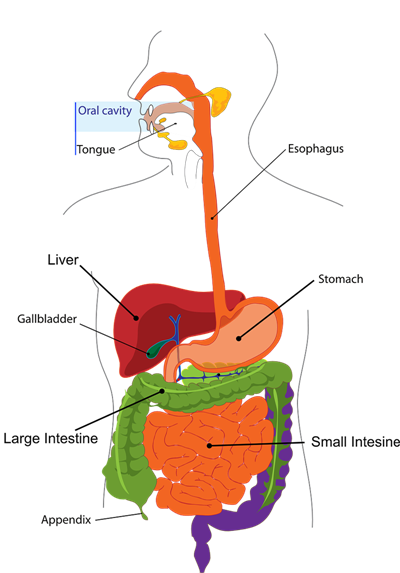
Human digestive system