

Introduction – Biology as a story of life:
Biology is not a collection of chapters to memorise; it is the story of how life works, from the smallest unit to the most complex actions. When this story is understood step by step, Biology becomes simple, logical, and even beautiful.
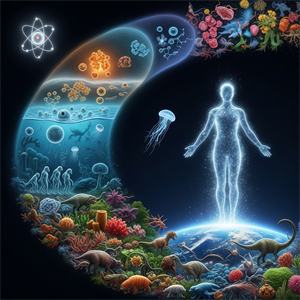
Biology: the way of life
In earlier classes, many fundamental ideas about living organisms were introduced. This session connects concepts from "Class 8" and "Class 9" and gradually leads into "Class 10 Biology", showing how biological ideas are interlinked and become increasingly complex.
What we have already learnt:
From Class 8 Biology:
In Class 8, the theory explained that:
- Living organisms perform basic life activities like nutrition, respiration, and movement.
- The human body has different organ systems, such as the digestive system and nervous system.
- Plants prepare their own food using sunlight.
These ideas introduced the fact that life depends on energy, coordination, and the proper functioning of body parts.
From Class 9 Biology – The Fundamental unit of life:
In class 9, the concepts went deeper, and we discovered that:
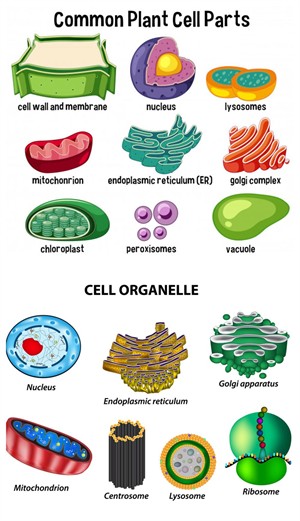
Plant and animal cell organelles
- All living organisms are made of cells.
- The cell membrane controls what enters and leaves the cell.
- The nucleus acts as the control centre and contains genetic material.
- Mitochondria release energy from food.
- Chloroplasts trap sunlight to make food in plants.
From this, we learnt an important idea that:
Life does not begin at the organ level; it begins at the cellular level.
1. Energy in living organisms:
In Class 8, we learnt that Plants are the main source of energy in food chains, and that living things need energy for processes such as growth, movement, and reproduction.
In Class 9, we learnt that energy is released at the cellular level when nutrients are transformed into ATP by mitochondria.
In Class 10: Cellular respiration explains the stepwise breakdown of glucose to produce ATP for all life processes.
In Class 8, we learnt that Plants are the main source of energy in food chains, and that living things need energy for processes such as growth, movement, and reproduction.
In Class 9, we learnt that energy is released at the cellular level when nutrients are transformed into ATP by mitochondria.
In Class 10: Cellular respiration explains the stepwise breakdown of glucose to produce ATP for all life processes.
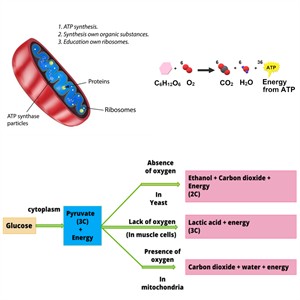
Mitochondria and cellular respiration
Concept Interlinking:
Energy required by the organism is released inside cells and finally utilized by tissues and organs to perform life activities.
2. Food production and photosynthesis:
In Class 8, we learnt that Green plants prepare food using sunlight, carbon dioxide, and water, supporting all living organisms.
In Class 9: Chloroplasts containing chlorophyll are identified as the site of food synthesis.
In Class 10, photosynthesis is explained as a biochemical process involving light and dark reactions and environmental factors.
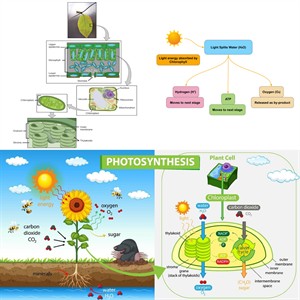
Photosynthesis inside the chloroplast
Concept interlinking:
Concept interlinking:
Food prepared in chloroplasts serves as the energy source that fuels cellular respiration in all living organisms.
3. Control and coordination:
In Class 8: The "Control and coordination" occur through the brain, sense organs, and responses to stimuli.
In Class 9, the nucleus controls cellular activities through genetic instructions.
In Class 10, we learnt that nervous and hormonal systems coordinate body functions through neurons, reflex actions, hormones, and brain regulation.
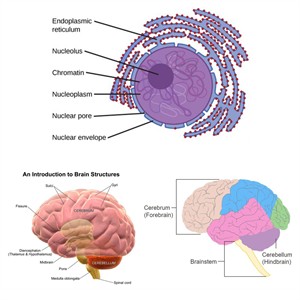
The nucleus and the brain are the controlling parts of a cell and of the human body.
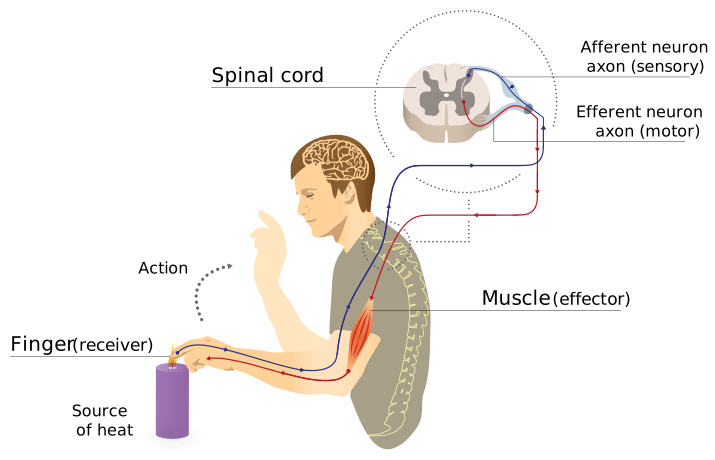
Process of reflex action
Concept Interlinking:
Concept Interlinking:
Control begins at the cellular level and expands into complex nervous and hormonal coordination at the organism level.
4. Transport of materials:
In Class 8: Blood transports oxygen, nutrients, and wastes throughout the body.
In Class 9: We learnt that Cell membranes regulate transport through diffusion, osmosis, and selective permeability.
In Class 10: Specialised transport systems operate in plants and animals using xylem, phloem, heart, and blood vessels.
4. Transport of materials:
In Class 8: Blood transports oxygen, nutrients, and wastes throughout the body.
In Class 9: We learnt that Cell membranes regulate transport through diffusion, osmosis, and selective permeability.
In Class 10: Specialised transport systems operate in plants and animals using xylem, phloem, heart, and blood vessels.
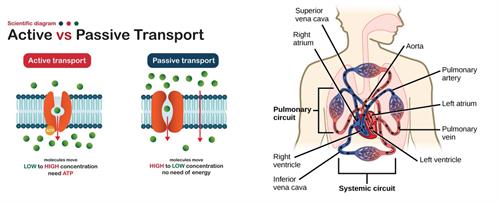
Membrane transport and circulatory system in humans
Concept interlinking:
Concept interlinking:
Material transport across cell membranes forms the basis for large-scale transport systems in plants and animals.
5. Waste removal and homeostasis:
In Class 8, we learnt that Removal of waste is essential to prevent harm and maintain health.
In Class 9: Cells maintain internal balance by removing metabolic wastes.
In Class 10, excretory organs such as the kidneys, lungs, and skin eliminate waste products from the body.
5. Waste removal and homeostasis:
In Class 8, we learnt that Removal of waste is essential to prevent harm and maintain health.
In Class 9: Cells maintain internal balance by removing metabolic wastes.
In Class 10, excretory organs such as the kidneys, lungs, and skin eliminate waste products from the body.
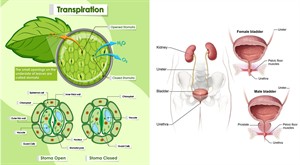
Excretion in plants and the human excretory system
Concept Interlinking:
Concept Interlinking:
Cellular waste removal ensures internal balance, which is extended to organ-level excretion in complex organisms.
6. Heredity and continuity of life:
In Class 8, we learnt that reproduction ensures the continuity of the species and the resemblance between parents and offspring.
In Class 9: DNA, genes, and chromosomes are identified as carriers of hereditary information.
In Class 10, we are covering Heredity and Evolution; we will be learning about inheritance, variation, and the diversity of life.
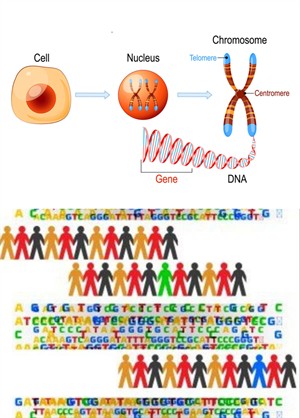
DNA, genes, and variations
Concept interlinking:
The transfer of genetic information ensures the continuity of life, while variations drive evolutionary change.
7. Cellular organisation and tissue formation:
In Class 8, organ systems are introduced as groups of organs that work together.
In Class 9, we learnt that Cells specialise and organise into tissues.
In Class 10, tissues form organs and systems, such as the nervous system, enabling rapid coordination.
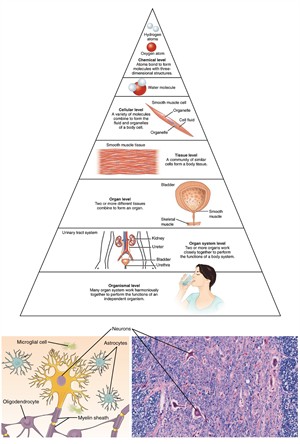
Cell to organism and nervous system
Concept interlinking:
Concept interlinking:
Structural organisation from cells to tissues and organs increases efficiency and complexity in living organisms.
8. Cell division and biological continuity
In Class 9, we learnt that mitosis helps in growth and repair, while meiosis forms reproductive cells.
In Class 10: We will understand how meiosis creates variation, which is essential for reproduction and evolution.
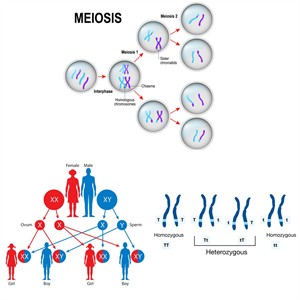
Meiosis and reproduction in plants and animals (clockwise)
Concept Interlinking:
Proper control of cell division ensures growth, continuity of life, and genetic diversity from one generation to the next.
9. Structural specialisation and functional efficiency:
In Class 9, cell structure is related to function, leading to specialised cells such as neurons and muscle cells.
In Class 10: Specialisation at the tissue and organ levels increases efficiency and coordination in multicellular organisms.
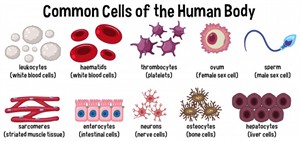
Specialised cells in the human body
Concept Interlinking:
Increasing specialisation improves functional efficiency and supports complex life processes.
Important!
Biology is a subject where small ideas explain big life mysteries.
Summary – What we learnt and how it helps in class 10
In this session, we understood that:
- Life begins at the cellular level.
- Cell organelles enable energy production and regulation.
- Cellular activity is expressed through life processes.
- Control and coordination are found throughout the nervous system and the nucleus
This understanding will help to:
- Learn Class 10 chapters with clarity rather than fear.
- Make logical connections between explanations, procedures, and diagrams.
- Apply ideas with assurance in both real life and exams.
Important!
When we understand the cell, we understand life itself.