

Do all animals breathe like humans?
You already know that animals live in many kinds of places — some live on land, some live in water, and others can live in both! Birds fly in the sky, fish swim in water, and elephants walk on land.
Have you ever wondered how these different animals breathe and get oxygen in all these different environments?
Animals have developed various ways of breathing because they live in different habitats and face different challenges. To survive well, their bodies have adapted systems that work best for their environments — whether it’s lungs, gills, skin, or a combination of these.
Many animals, including birds, elephants, lions, cows, goats, lizards, and snakes, breathe using lungs just like humans do. But even though many of them have lungs, the lungs of each animal are not exactly the same. Their lungs are specially built to match their size, lifestyle, and habitat.
Breathing in fishes:
Fish cannot breathe air like we do because they live underwater. Instead of lungs, they have special structures called gills. Gills are full of tiny blood vessels (capillaries) that allow fish to take oxygen from the water and release carbon dioxide into it. When water passes over the gills, oxygen dissolved in the water moves into the fish’s blood, and carbon dioxide from the blood moves out into the water. This process helps fish get the oxygen they need to survive in their aquatic environment.
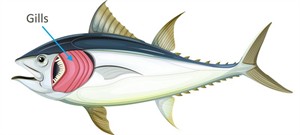
Gills of a fish
Breathing in amphibians:
Some animals, like frogs, are called amphibians because they live both on land and in water at different times of their lives:
-
When frogs are young tadpoles, they breathe using gills underwater, just like fish.
-
As they grow into adult frogs, their breathing changes. Adult frogs have lungs and breathe air through them when they’re on land and breathe through their skin when they are in water. Their skin stays moist to help them absorb oxygen directly from the environment.
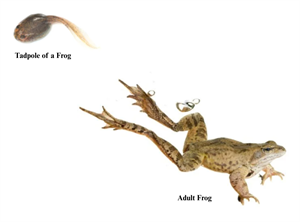
Young and adult frog
This ability to breathe using different organs helps amphibians survive in both water and on land — a great example of how animals adapt to different environments over time.
Breathing through skin:
Earthworms don’t have lungs or gills. Instead, they breathe through their moist skin. Oxygen from the air passes through the thin skin into their blood vessels, and carbon dioxide moves out the same way. Since their skin needs to stay wet for this gas exchange to happen, earthworms live in damp soil.
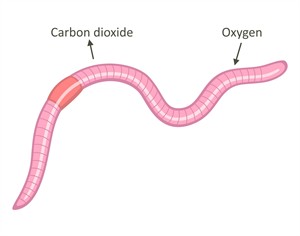
Earthworm-breathing through skin
Other life processes and body systems:
Besides the respiratory system (which helps animals breathe), animals also have systems like the digestive system to process food, and the circulatory system to carry oxygen and nutrients everywhere. All these systems work together to keep animals alive and healthy.
As you move to higher classes, you will learn more about these important systems and how they help living beings function every day!