

Science as a Guide to Understanding Change and Nature
We can investigate patterns in the world around us with the aid of science. It describes the materials we use, the changes we see, and the events that take place from Earth to space.
Investigate the changes around us
We can better understand broader natural processes by examining common examples.
Classifying Materials and Changes
Scientists classify materials based on their properties and behaviour.
Testing Conductivity
Using batteries, bulbs, and wires, we test whether materials allow electricity to pass. Scientists call materials that conduct electricity metals and those that do not non-metals. This distinction explains why manufacturers use metals for wires and non-metals for insulation.
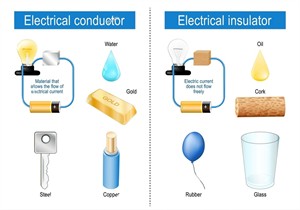
Metals and non-metals based on electric conduction
Testing Response to Stimuli
As we know, living organisms are classified based on how they respond to stimuli such as light, touch, and temperature. Plants bend towards light, while animals move away from heat or danger. It helps us understand the difference between living and non-living things and how organisms adapt to their surroundings.
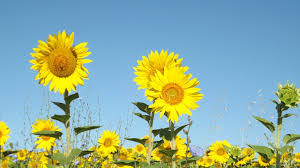
Sunflower facing the sun
Testing Solubility
We mix materials with water to check whether they dissolve. Salt and sugar dissolve and are referred to as soluble, whereas sand and chalk powder do not dissolve and are called insoluble. This activity helps us decide which materials can form solutions and which can form mixtures.
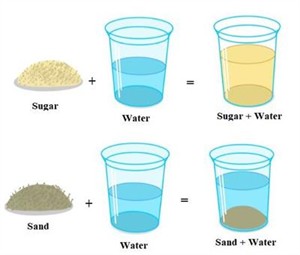
Solubility
Types of Changes Around Us
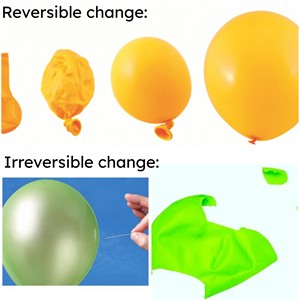
Scientists evaluate and classify changes according to reversibility.
i. Reversible Changes: These changes can be undone and do not form new substances.
ii. Irreversible Changes: These changes cannot be undone and often form new substances.
Example:
Melting and freezing of ice, stretching a rubber band, and evaporation followed by condensation.
Example:
Burning paper, ripening of fruits, and a fully discharged battery.
Blowing a balloon and bursting a balloon
The Journey of Heat and Water
Heat and energy play a major role in causing changes.
Role of Heat
Heat flows from warmer to cooler areas. It speeds up changes such as melting ice, drying clothes, and cooking food.
On a large scale, solar heat causes glacier melting, cloud formation, and rainfall.
Heat and energy play a major role in causing changes.
Role of Heat
Heat flows from warmer to cooler areas. It speeds up changes such as melting ice, drying clothes, and cooking food.
On a large scale, solar heat causes glacier melting, cloud formation, and rainfall.
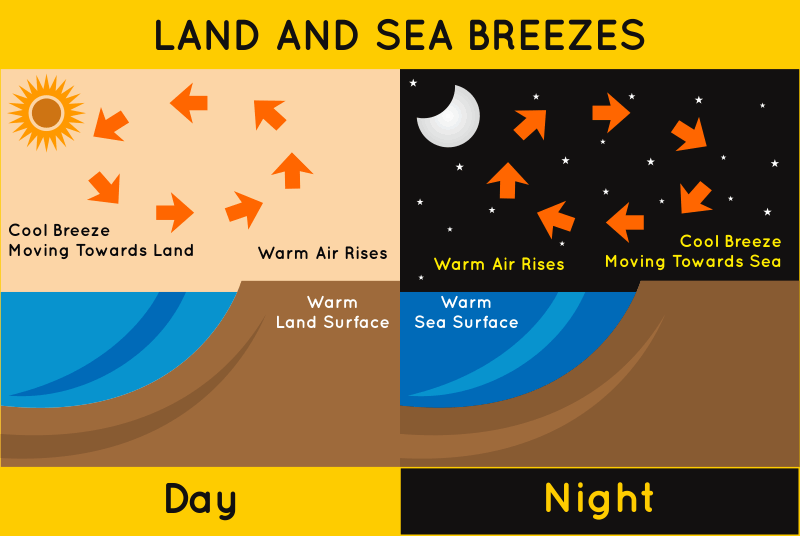
Land and sea breeze
The Water Cycle
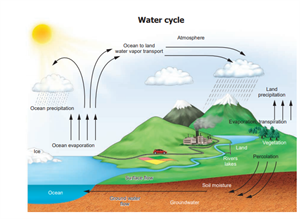
The Sun heats water, causing it to evaporate. Water vapour forms clouds and falls as rain. Some water flows on land, while some moves underground, completing the water cycle.
The Water Cycle
The Sun heats water, causing it to evaporate. Water vapour forms clouds and falls as rain. Some water flows on land, while some moves underground, completing the water cycle.
Water cycle
Life Processes and Growing Bodies
Every living thing is constantly changing.
Growth and Development
We know humans grow rapidly during adolescence. The body becomes taller, stronger, and more developed.
Every living thing is constantly changing.
Growth and Development
We know humans grow rapidly during adolescence. The body becomes taller, stronger, and more developed.
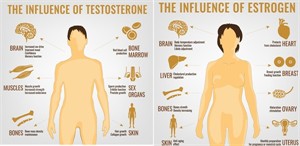
Secondary sexual characteristics in males and females
Survival Systems
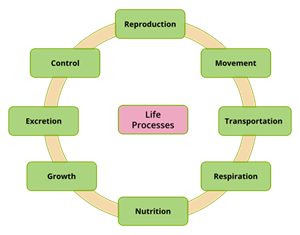
We will learn that, to survive, living things engage in life processes. Animals digest food, humans circulate blood, and plants use photosynthesis to produce food.
Survival Systems
We will learn that, to survive, living things engage in life processes. Animals digest food, humans circulate blood, and plants use photosynthesis to produce food.
Life processes
Time and the Cosmic Dance
Science helps us understand changes over time and in space.
Measuring Time
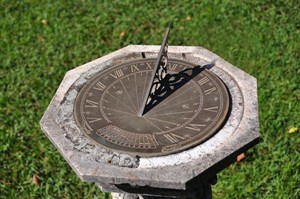
Earlier, people used shadows to measure time. Today, we study motion and rate of change.
Science helps us understand changes over time and in space.
Measuring Time
Earlier, people used shadows to measure time. Today, we study motion and rate of change.
Sundial
Shadows in Space
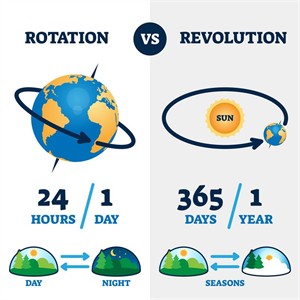
Day and night occur due to Earth’s rotation. Seasons change due to Earth’s revolution. Eclipses occur when the Sun, Earth, and Moon align.
Shadows in Space
Day and night occur due to Earth’s rotation. Seasons change due to Earth’s revolution. Eclipses occur when the Sun, Earth, and Moon align.
Rotation and revolution difference
Activity 1: Question the Answer
We understand that science encourages us to ask meaningful questions. In this activity, we frame questions for given answers, which helps us develop curiosity and scientific thinking.
We understand that science encourages us to ask meaningful questions. In this activity, we frame questions for given answers, which helps us develop curiosity and scientific thinking.
Conclusion: Change as a Part of Nature
We observe that change happens naturally in our lives. Simple changes, like ice melting, help us understand larger processes such as the water cycle, life cycles, and motion in space. Through science, we relate everyday experiences to the universe.
We observe that change happens naturally in our lives. Simple changes, like ice melting, help us understand larger processes such as the water cycle, life cycles, and motion in space. Through science, we relate everyday experiences to the universe.