

We now look into the nature of matter. We are building on what we know from scientific research and natural events. At this stage, we focus on explaining the basic interactions and structure of matter. This lesson lays the foundation for future scientific understanding by introducing matter particles and their classification.
Let us delve further into Exploring the Natural World and the concepts we are going to cover
1. Particles of matter:
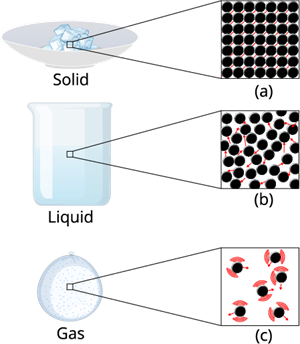
Solid, liquid, and gaseous states of matter
- Tiny particles make up all matter.
- Particles vibrate in fixed places in solids.
- Particles in liquids move a little.
- Particles are free to travel in gases.
- Matter is anything that has mass and occupies space.
2. Classification of matter:
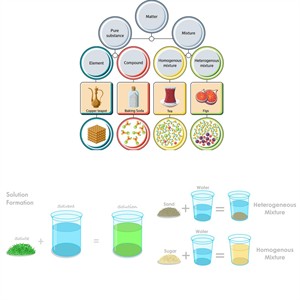
Matter classification, solution and mixture types (counter-clockwise)
- Materials can be classified by composition.
- Elements are pure substances made of only one type of atom.
- Compounds are formed when two or more elements combine chemically.
- Mixtures contain substances that are physically combined and can be easily separated.
- A solution is a mixture in which one substance dissolves completely in another.
3. Light and optics:
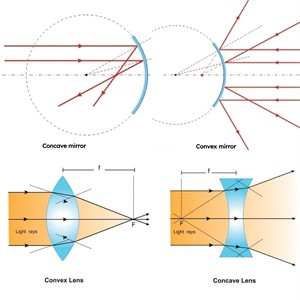
Concave and convex mirrors and lenses with reflection and refraction, respectively (clockwise)
- Light travels in straight lines and reflects from surfaces.
- Mirrors form images by reflection.
- Lenses bend light and help in clear vision.
- The bending of light explains how spectacles and optical instruments work.
- Reflection is the bouncing back of light from a surface.
- Refraction is the bending of light when it passes from one medium to another.
4. Moon, Sun, and Calendars
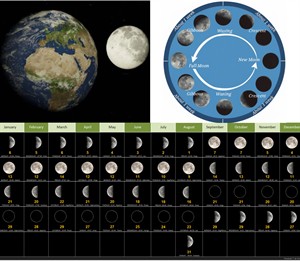
Moon, Phases of the Moon and the Lunar Calendar
- The Moon exhibits various phases and reflects sunlight.
- The Earth, Moon, and Sun's locations determine these phases.
- Early humans employed these cycles to make calendars.
- The foundation of calendars is meticulous monitoring of astronomical movements.
5. Environmental and ecosystems
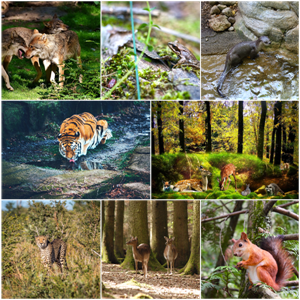
A forest ecosystem
- Living things interact with sunshine, water, air, and one another.
- These interactions create ecosystems that sustain life.
- A system where living and non-living elements interact is called an ecosystem.
- All organisms depend on their environment for survival.
6. Earth and life
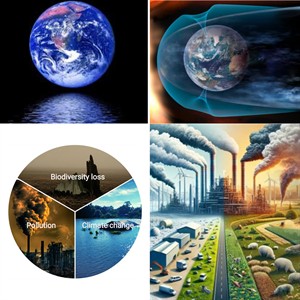
Earth, the blue planet, protects against the solar flare impact on humans on the planet (clockwise)
- Because of its ideal temperature and water content, Earth is home to life.
- In addition to supplying oxygen, the atmosphere shields life from dangerous radiation.
- Earth's natural equilibrium can be disrupted, and human activity can impact the climate.
- Long-term variations in Earth's temperature and weather patterns are referred to as climate change.
7. Role of humans and Science:
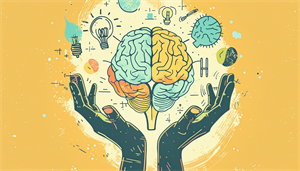
Collective minds for scientific understanding
- Human behaviour significantly impacts Earth's climate.
- Science helps us understand environmental changes and develop solutions.
- Responsible actions are informed by careful observation, measurement, and research.
- Our scientific knowledge and wise choices will shape the future of Earth.
Important!
Curiosity, meticulous observation, and study foster the growth of science, which is urged to remain based on evidence while allowing innovative ideas to explore novel possibilities.