

Does every organism in a community matter?
Every organism, no matter how small, plays an essential role in maintaining the balance of a community or habitat.
A community is made up of different populations (groups of the same species) living together in the same habitat and interacting with one another. These interactions ensure survival, reproduction, and the continuous cycling of materials and energy in nature.
Let us understand community and interaction in the following section.
Activity 1: Researchers conducted a study using two ponds, Pond A and Pond B, to observe the interactions between animals and plants within the community.
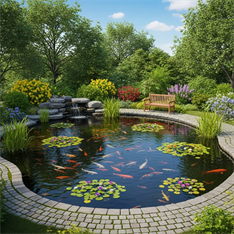
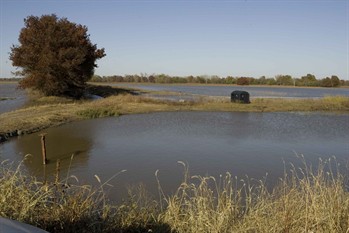
Depiction of Pond A and Pond B, respectively
-
Pond A: Contained fish and many flowering plants nearby.
-
Pond B: Had no fish and fewer flowering plants nearby.
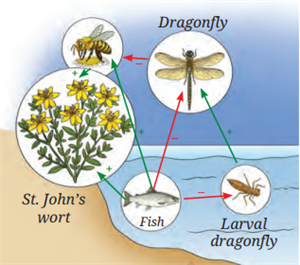
Trophic cascades across ecosystems: dragonfly fish, bees, st john's wort.
Let’s understand why this difference occurred:
Fish eat dragonfly larvae. So, ponds with fish had fewer dragonflies.
\(\downarrow\)
Dragonflies eat bees, butterflies, and flies.
\(\downarrow\)
With fewer dragonflies, there were more pollinators (bees, butterflies, flies).
\(\downarrow\)
More pollinators means more pollination, which in turn.
\(\downarrow\) More seed production in nearby plants.
Therefore, fish indirectly increase seed production in surrounding plants.
This experiment shows that organisms in a habitat are interconnected in a web of relationships that directly or indirectly influence each other.
Even though fish do not interact directly with plants, their feeding behaviour affects dragonflies, which, in turn, affect pollinators, and ultimately the plants themselves. This is known as an indirect effect in ecology.
Important!
-
Removing one species (e.g., fish) can disturb the food web.
-
Overfishing can reduce pollination and affect plant life.
-
All organisms are linked in a chain of dependence.
Ecosystem and interactions:
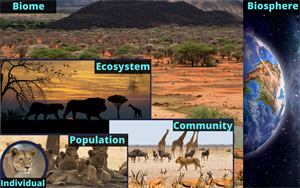
From individual to biosphere
No organism can live alone. Every living being depends on other living and non-living things for survival. These interdependencies create complex networks of interactions that form ecosystems.
Interactions in an ecosystem refer to the various ways in which living organisms (plants, animals, microorganisms) and non-living components (air, water, soil, sunlight) affect and depend on each other for survival, growth, and reproduction.
Types of interactions:
Activity 2: Identify and describe how living and non-living components interact in nature and how abiotic factors affect living things, how abiotic and biotic factors influence each other, and how living organisms depend on one another. Record your observations in a table based on these interactions.
1. Interactions between biotic and abiotic components: These interactions influence life processes like nutrition, respiration, reproduction, and growth.
Example:
Earthworms live in moist soil (Depend on abiotic moisture), fish lay eggs in water, plants need sunlight, CO₂, and water for photosynthesis, and temperature affects the rate of plant growth and seed germination.
2. Interactions between abiotic components: These interactions affect the physical environment and habitat conditions.
3. Interactions among biotic components: These involve relationships among living organisms for food, protection, and reproduction.
Example:
Bright sunlight increases the temperature during the day; sunlight evaporates water; and Wind movement creates waves on the pond surface.
Example:
A frog eats insects (predator–prey relationship); a snake eats a frog; frogs and fish compete for larvae (competition); and microbes decompose dead matter, enriching soil.
Ecosystems can be classified based on various factors. The ecosystem can be classified by formation, region, and size.
Classification of ecosystems based on formation:
Ecosystems are classified as natural or artificial based on how they form.
1. Natural ecosystems: Ecosystems like ponds, lakes, rivers, forests, etc., evolve naturally without the involvement of human beings. Such ecosystems are called natural ecosystems.
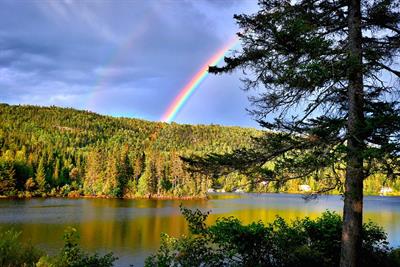
Lake
2. Artificial ecosystems: Ecosystems like zoos, gardens, parks, agricultural fields, aquariums, etc., are man-made ecosystems. Such ecosystems are called artificial ecosystems. These ecosystems are developed and maintained by humans. It can help reduce pollution and support limited biodiversity if managed sustainably.
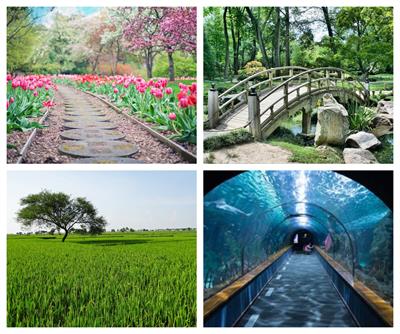
Clockwise from top left: garden, park, agricultural paddy field, and aquarium
Classification of ecosystems based on region:
Ecosystems are also classified by region, i.e., on land or water. They are classified as:
1. Terrestrial ecosystem: Ecosystems that exist on land are known as terrestrial ecosystems.
Example:
Forests, grasslands, deserts, mountains and tundra ecosystems.
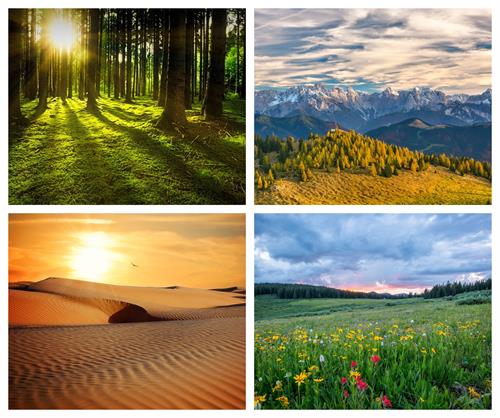
Clockwise from top left: Forests, mountains, desert, and grasslands
2. Aquatic ecosystem: Ecosystems that exist in water are known as aquatic ecosystems.
Example:
Freshwater ecosystems - ponds, lakes, rivers; marine water ecosystems - oceans and seas; and estuarine ecosystems.
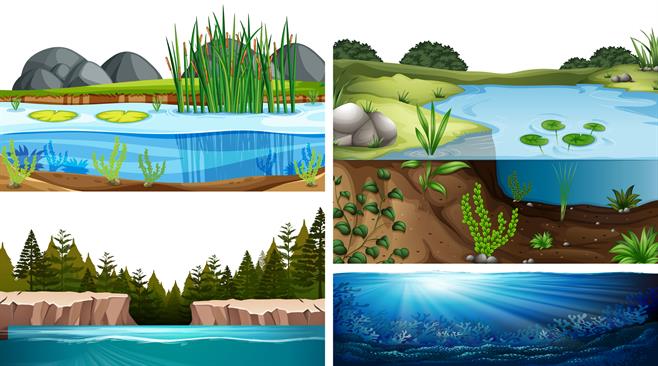
Aquatic ecosystems
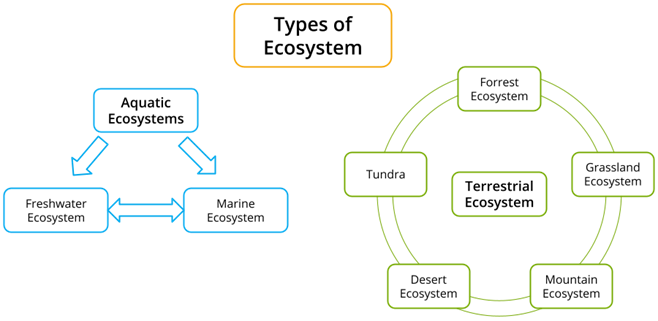
Types of ecosystem
Classification of ecosystems based on their size:
Ecosystems can also be classified based on their size:
1. Micro ecosystem: Small-scale ecosystems such as a pond, tree trunk, etc.
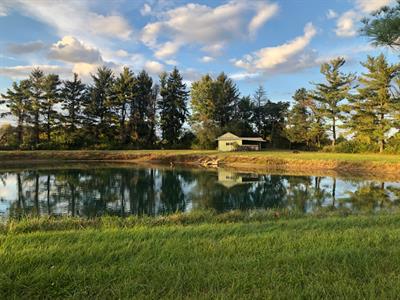
Pond
2. Meso ecosystem: Medium-scale ecosystems such as lakes, coral reefs, forests and dunes.
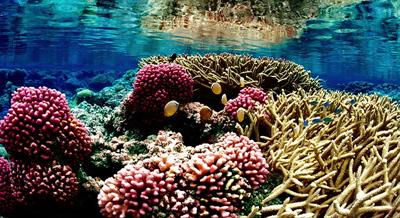
Coral reef
3. Macro ecosystem: Large-scale ecosystem or an entire rainforest, also called a biome.
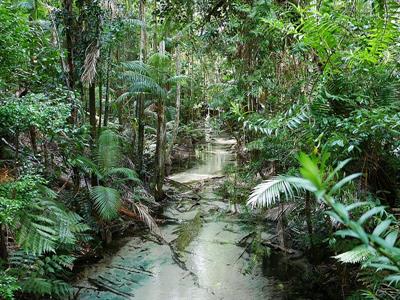
Rain forest
How do interactions maintain balance in ecosystems?
In an ecosystem, every organism interacts with others in multiple ways through feeding, reproduction, shelter, or competition.
These relationships ensure balance and stability within the system.
These relationships ensure balance and stability within the system.
Competition is the interaction between organisms that struggle for the same limited resources such, as food, water, sunlight, shelter, or space.
If competition did not exist, one species could overpopulate, disrupting the food chain and the balance of the ecosystem.
Types of biological interactions:
1. Mutualism: A relationship in which both organisms benefit.
Example:
Bees get nectar from flowers, and flowers get pollinated.
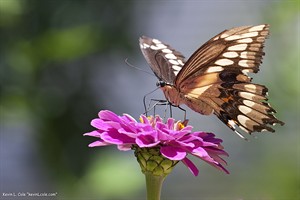
Mutualism of butterflies and flowers
2. Commensalism: One organism benefits while the other remains unaffected.
Example:
Orchids grow on tree branches for support, without harming the tree.
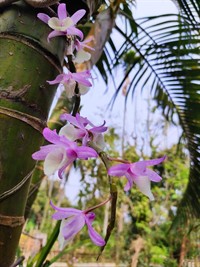
Commensalism of orchids
3. Parasitism: One organism (the parasite) benefits by living on or inside another (the host), causing harm.
Example:
Ticks on dogs feed on their blood and irritate.
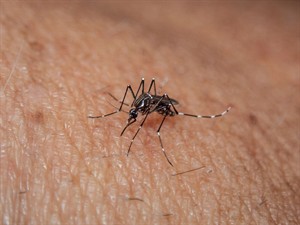
Parasitism of mosquitoes
Interactions like competition, mutualism, commensalism, and parasitism are vital for ecosystem balance. They regulate population sizes, promote diversity, and ensure that resources are used efficiently.
Important!
- Asir Jawahar Thomas Johnsingh (A.J.T. Johnsingh) was a renowned Indian wildlife biologist who studied forest ecosystems by observing animal behaviour. His research in Bandipur National Park showed that predators like tigers and leopards depend on healthy prey populations for survival, inspiring many to protect India’s forests and biodiversity.
- All organisms are connected in a complex web of interactions such as, predation, competition, and cooperation.
- These relationships maintain ecological equilibrium and ensure resource sharing.
- Human activities such as overfishing, deforestation, or pollution can disrupt this natural balance.
Reference:
https://commons.wikimedia.org/wiki/File:Early_Pond.jpg
https://commons.wikimedia.org/wiki/File:Coral_reef_09.jpg
https://commons.wikimedia.org/wiki/File:Rainforest_Creek_-_Fraser_Island.jpg