

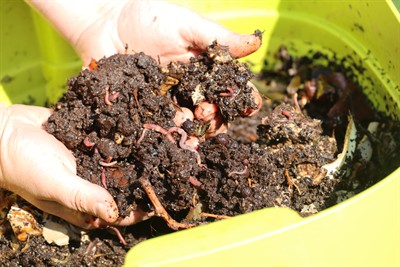

Fertilizers:
Fertilizers are commercially produced nutrients supplying nitrogen (N), phosphorus (P), and potassium (K) to the soil.
Example:
Urea, ammonium sulphate, superphosphate, potash, NPK.
Advantages:
-
Easily available and easy to use.
-
Produce higher yields, similar to high-cost farming.
-
Promote healthy vegetative growth.
Disadvantages:
-
Must be applied carefully to avoid water pollution.
-
Continuous use reduces soil fertility and harms soil microorganisms.
-
Provide only short-term benefits.
Organic farming:
An environment-friendly system using minimal or no chemical fertilisers, herbicides, or pesticides.
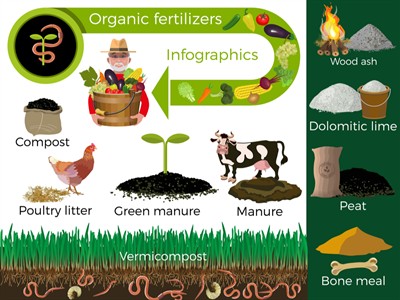
Organic fertilizers
It relies on,
-
Organic manures and recycled farm waste
-
Healthy cropping systems: mixed cropping, inter-cropping, crop rotation
-
Bio-fertilisers: Including blue-green algae, Rhizobium in legumes
-
Bio-pesticides: neem leaves, turmeric
Nitrogen Fixation:
Leguminous crops (cowpea, pigeon pea, peas, gram, soybean) contain nitrogen-fixing bacteria in root nodules (e.g., Rhizobium), which convert atmospheric nitrogen into usable forms, reducing the need for nitrogenous fertilisers.
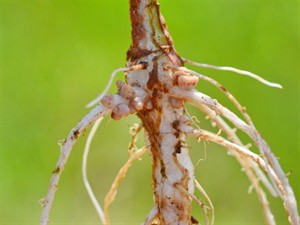
Rhizobium in root nodules