Production of fish (Animal husbandry)
Fish is an important source of animal protein and can be obtained from natural resources or through artificial breeding in controlled environments.
 
Types of fish:
  1. Finned true fish
  2. Shellfish (prawns, molluscs)
Methods of obtaining fish:
  1. Natural resources (capture fishery): From seawater (oceans, seas) or freshwater (rivers, ponds).
  2. Fish farming (culture fishery/pisciculture): Artificial breeding, rearing, and management of fish.
Marine fisheries: 
 
India has ~\(7500\) km coastline. Popular fish include pomfret, tuna, salmon, hilsa, and bombay duck. Fish are caught using nets, boats, and echo-sounders. 
 
High-value fish (mullets, bhetki, pearl spots) and shellfish (prawns, mussels, oysters) can also be farmed.
The cultivation of marine fish and organisms to meet demand is called mariculture.
Inland fisheries: 
 
Freshwater sources include lakes, ponds, rivers, canals, and estuaries. Yields are low, so aquaculture is practiced. Fish can be raised with rice or in composite culture systems.
 
Composite fish culture: 
 
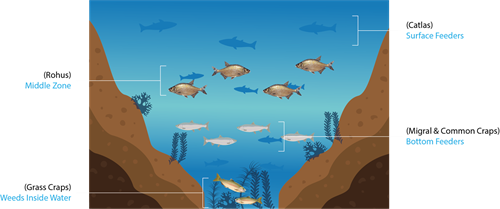
In composite fish culture, \(5–6\) species are grown together in a single pond, selected to avoid competition for food. Examples include Catla (surface feeder), Rohu (middle zone), Mrigal and Common Carp (bottom feeder), and Grass Carp (weed eater). This technique maximizes fish production per unit area.
 
UmaResourcesw1482.png
Composite fish culture
 
  • Disadvantages: Seasonal breeding and lack of quality fish seeds.
  • Solution: Hormonal stimulation to produce pure fish seeds in desired quantities.

Apiculture or Bee-keeping

Apiculture is the practice of rearing honeybees for honey and wax. It is a low-cost activity that provides extra income to farmers.

Apiary: 

An apiary is a place where beehives are kept for large-scale honey production. Honey and wax are both commercially valuable.

Steps in setting up an apiary: 

  1. Site selection: Choose a dry place with water and plenty of flowering plants.
  2. Beehive selection: Use wooden or plastic hives with frames for honeycomb.
  3. Bee variety: Select bees from natural nests or buy colonies with a queen.
  4. Colony care: Feed sugar syrup when nectar is less.
  5. Honey extraction: Use a smoker and extractor to collect honey.

Common bee varieties: 

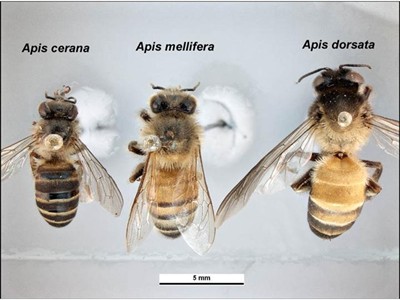
  • Apis cerana indica – Indian bee
  • Apis dorsata – Rock bee
  • Apis florae – Little bee
  • Apis mellifera – Italian bee

Apisspecies.jpg

Different species of bees

Italian Bee (A. mellifera):

Apis mellifera (Italian bee) is preferred for commercial honey production. It produces more honey, stings less, stays longer in one hive, and has a high breeding rate

Bee types in a hive: 

  • Queen: Lays eggs and maintains colony population.
  • Drones: Male bees that fertilize the queen.
  • Workers: Collect nectar, build combs, guard hives.

Honey quality: 

Depends on flower type and pollen availability.