

Crop production and management involve various practices that help increase yield and maintain soil health. These factors include irrigation, fertilisers, cropping patterns, and pest control methods.
Fertilisers:
Fertilisers are commercially produced nutrients that enrich the soil with nitrogen (N), phosphorus (P), and potassium (K).
Example:
Urea and NPK
They increase crop yield and promote healthy plant growth. However, overuse can harm soil, water, and microbes and gives only short-term benefits.
Organic farming:
Organic farming is eco-friendly and avoids chemical fertilisers and pesticides. It uses manure, compost, and biofertilisers like Rhizobium and algae.
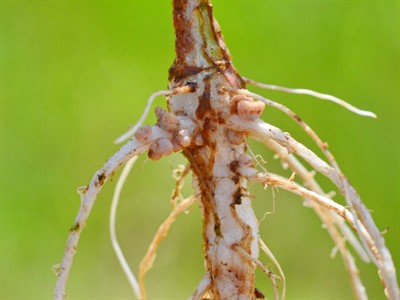
Leguminous crops
Leguminous crops naturally fix nitrogen, and neem or turmeric can be used as bio-pesticides.
Irrigation:
Irrigation is the process of supplying water to crops at regular intervals and in controlled amounts. It ensures crop growth when rainfall is insufficient, helping prevent crop failure and increase yields.
Sources of Irrigation:
1. Wells: Wells use groundwater for irrigation.
-
Dug wells: Manually dug to extract water.
-
Tube wells: Water is pumped from underground sources.
2. Canals: Canals transport water from reservoirs or rivers. Main canals divide into branch canals to irrigate fields efficiently.
3. River lift systems: Used where canal water is insufficient, water is lifted directly from rivers for irrigation.
4. Tanks: Small reservoirs store water for fields. They help increase water availability through rainwater harvesting and watershed management.
-
Rainwater harvesting: Collects rainwater in tunnels to recharge groundwater.
-
Watershed management: Small check-dams stop water runoff, increase groundwater, and reduce soil erosion.
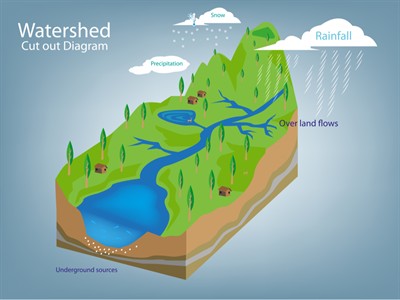
Watershed management
Droughts:
Drought occurs due to low rainfall and threatens farmers dependent on rain. Light soils worsen drought effects as they retain less water. Drought-resistant crops have been developed to tolerate such conditions.
Infestation:
Crops must be protected from weeds, pests, insects, and diseases that damage plants and reduce yield. Crop protection methods help control such infestations.
1. Weeds:
Weeds are unwanted plants that compete with crops for nutrients, light, and space.
Control methods: Use of weedicides, manual removal, proper seedbed preparation, intercropping, and crop rotation.
Example:
Xanthium, Parthenium, Cyperus, Amaranthus.
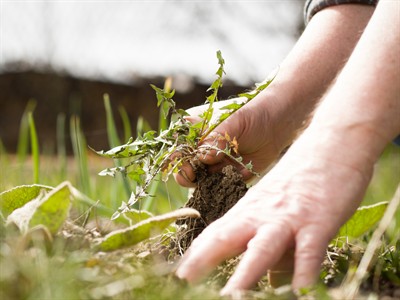
Uprooting weeds manually by hand
2. Insect pests:
Insects damage crops by cutting roots and leaves (locusts), sucking sap (aphids), or boring into stems and fruits (shoot borer).
Control methods: Use pest-resistant varieties, summer ploughing, and spraying insecticides.
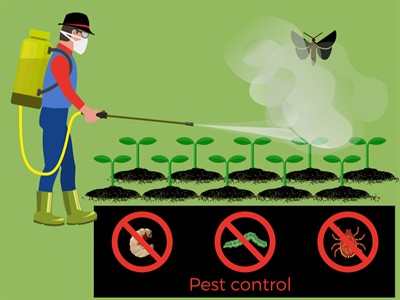
Pest control by Spraying pesticides and insecticides