

Learning outcomes
-
Receptors and hormones: Students explain the role of receptors and relate them to hormonal control.
-
Receptors and endocrine system: Students identify sensory receptors and major endocrine glands with their functions.
-
Hormones and feedback mechanisms: Students explain hormone action and differentiate positive and negative feedback mechanisms.
Hormones in animals
Hormones are chemical messengers secreted by endocrine glands into the blood to regulate body functions.
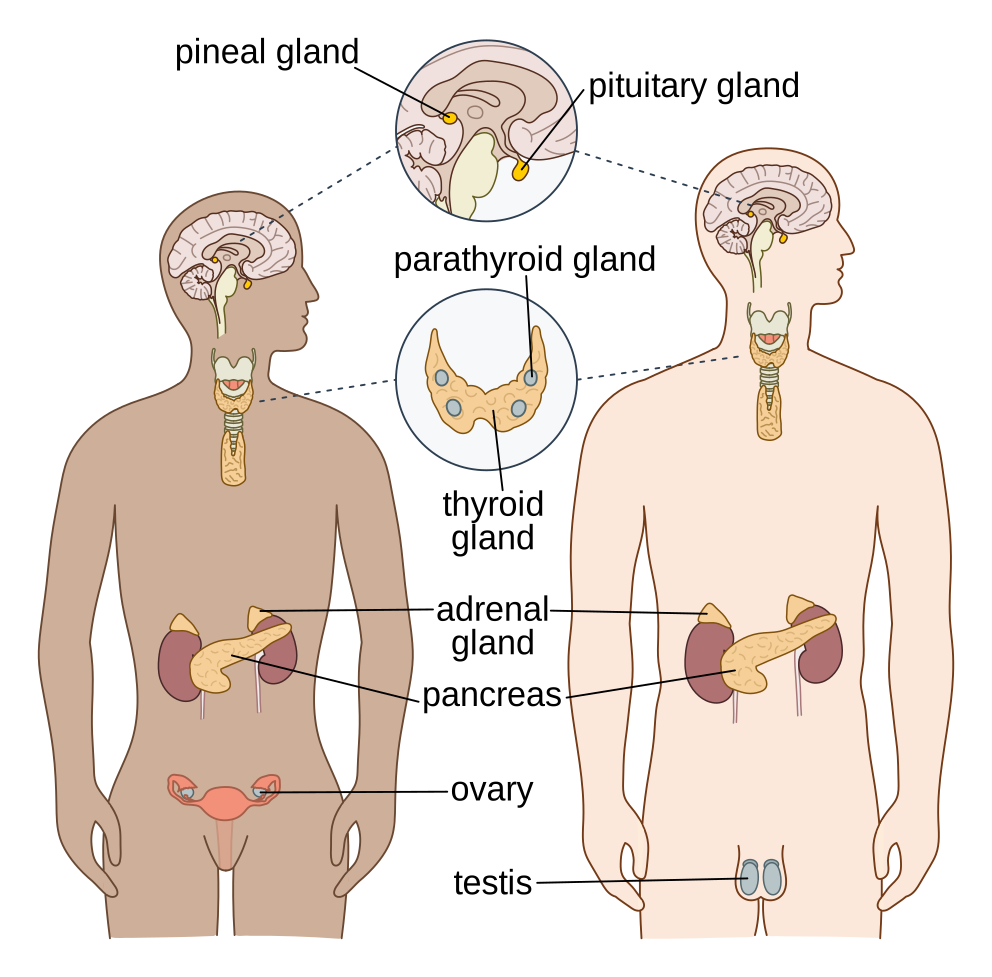
Picture showing the different endocrine glands in the human being (Both female and male)
Exam questions
Role of adrenaline
Adrenaline is secreted by the adrenal glands during stressful situations (fight or flight). It increases heart rate, diverts blood to skeletal muscles, and raises breathing rate, preparing the body for rapid action.
Exam question: Fright hormone
Growth and thyroid hormones:
-
Growth hormone from the pituitary regulates overall body growth; deficiency leads to dwarfism.
-
Thyroxin from the thyroid controls metabolism; lack of iodine can cause goitre.
Exam question: TSH
Sex hormones
-
Testosterone in males and oestrogen in females trigger changes during puberty and regulate reproductive functions.
Insulin and Diabetes
-
Insulin from the pancreas regulates blood sugar.
-
Diabetic patients may need insulin injections if their bodies cannot produce it naturally.
Exam question: Insulin
Feedback mechanism
Hormone levels in the blood are maintained through feedback mechanisms to ensure proper body functioning.
Negative feedback reduces hormone secretion when levels rise, e.g., thyroxine regulation.
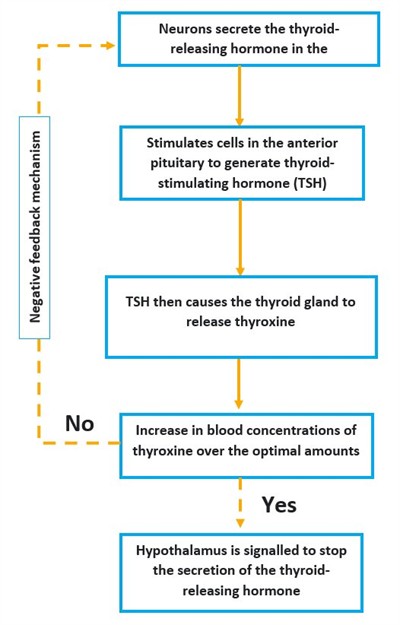
Flowchart of negative feedback mechanism TSH
Positive feedback increases hormone secretion in response to a stimulus, e.g., oxytocin during childbirth.
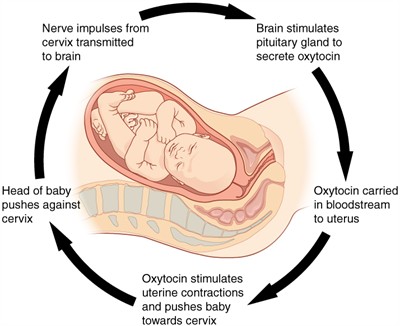
Positive feedback mechanism of childbirth by Oxytocin
Negative feedback is more common and helps maintain homeostasis, while positive feedback occurs in special situations.
Exam tips:
-
Always link hormone → gland → function in answers (e.g., adrenal → adrenal gland → fight or flight response).
-
Remember examples for deficiency diseases: iodine → goitre, growth hormone → dwarfism.
-
Use terms like chemical coordination, endocrine gland, feedback mechanism in short answers.