

Sexual reproduction
Sexual reproduction involves two parents. Male and female gametes fuse to form a zygote. This method creates variations that help species survive better.
Exam Tip:
- Write: Sexual reproduction = fusion of gametes.
Sexual reproduction in flowering plants
Flowers have male (stamen) and female (pistil) parts.
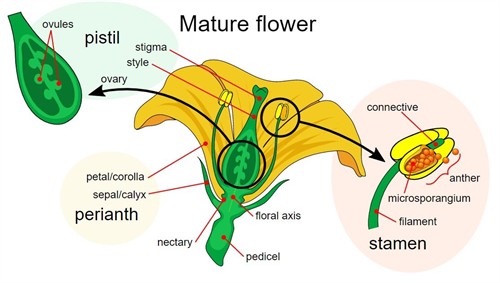
Flower parts
Exam Tip:
- Pollination = transfer of pollen; Fertilisation = fusion of gametes
PYQ's
Male reproductive system (human)
The male system includes testes (make sperm), vas deferens (transport), glands (add fluids), and penis (delivery). Testes also produce testosterone.
Exam Tip:
- Write two functions of testes: sperm production and hormone production.
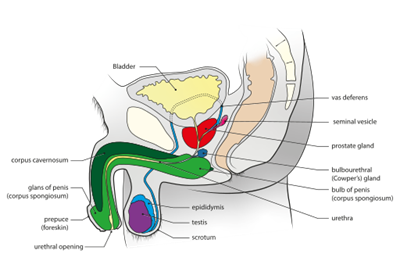
Male reproductive system
Female reproductive system (human)
The female system includes ovaries (produce eggs), fallopian tubes (site of fertilisation), uterus (embryo development), and vagina.
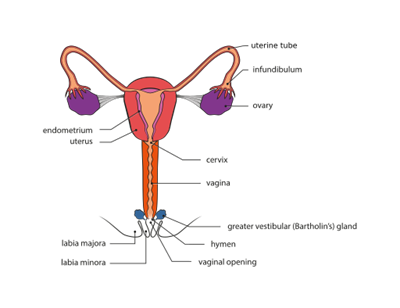
Feale reproductive system
Exam Tip:
- Remember: Fertilisation occurs in the fallopian tube.
PYQ's
Menstruation
If the egg is not fertilised, the thick uterine lining breaks down and comes out through the vagina every month as menstrual flow.
Exam Tip:
- Mention duration: \(2–5\) days.
Embryo development and placenta
After fertilisation, the zygote develops into an embryo in the uterus. The placenta supplies nutrients and oxygen from the mother and removes waste.
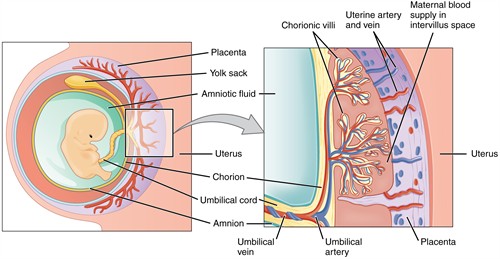
Placenta
Exam Tip:
- Important point: Placenta helps in nutrient and waste exchange.
Reproductive health
Adolescents undergo physical and emotional changes. Basic contraceptive methods help avoid unwanted pregnancies and support health. Examples include barrier methods, pills, copper-T, and surgical methods.
Exam Tip:
- For exams, only list methods—no detailed explanation needed.
PYQ's