

Theory:
Health:
Health is defined as the overall state of physical, mental, and social well-being rather than simply the absence of diseases or infirmities.
Abuse
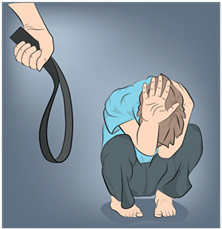
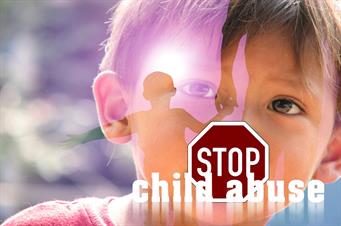
Child abuse - domestic violence
1. Influence of Environment and Abuse: Humans are influenced by their surroundings, where negative influences can harm physical and mental health and are termed as abuse.
2. Types and Nature of Abuse: Abuse includes physical, emotional, verbal, sexual, and child abuse, and can occur within families or in society, often involving harmful behaviors or substance use.
3. Child and Sexual Abuse Impact: Child abuse and sexual abuse severely affect a child’s development and well-being, causing long-term physical, psychological, and emotional damage and requiring awareness and prevention.
Approaches for protection of an abused child
1. Impact of Abuse (Oprah Winfrey Example): The experience of Oprah Winfrey shows that child sexual abuse can have long-lasting emotional and psychological effects, even into adulthood, though support can help individuals overcome and succeed.
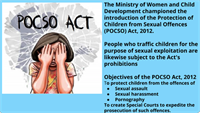
POSCO Act
2. Protection and Support Measures: Abused children can be protected and rehabilitated through helplines, counselling, family and medical support, legal aid, education, and community awareness to ensure their safety, recovery, and dignity.
2. Protection and Support Measures: Abused children can be protected and rehabilitated through helplines, counselling, family and medical support, legal aid, education, and community awareness to ensure their safety, recovery, and dignity.
Drug abuse
1. Addiction and Its Effects: Addiction is a physical and mental dependence on drugs, alcohol, or tobacco that alters brain chemicals like dopamine, leading to harmful effects on health, behavior, and society.
2. Types of Drugs: Drugs include addictive drugs that affect the body and mind (e.g., heroin, nicotine) and psychotropic drugs that alter mood, thinking, and perception (e.g., aripiprazole, clozapine).
2. Types of Drugs: Drugs include addictive drugs that affect the body and mind (e.g., heroin, nicotine) and psychotropic drugs that alter mood, thinking, and perception (e.g., aripiprazole, clozapine).
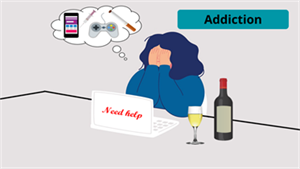
An illustration showing an individual addicted to various factors
Drug dependence is a severe condition where individuals become physically and psychologically reliant on drugs, causing harmful behavioral changes, and recovery through de-addiction involves stages like detoxification, therapy, family support, and rehabilitation.
Smoking:
Tobacco Abuse and Its Effects: Tobacco contains addictive nicotine that affects the brain and leads to dependence, causing serious health problems like heart disease, cancer, and lung disorders, which is why awareness campaigns are promoted to reduce its use.
Harmful Effects of Smoking: Smoking introduces toxic and carcinogenic substances into the body, causing diseases like lung cancer, bronchitis, emphysema, heart disease, ulcers, reduced oxygen supply, and oral cancer, making its prevention essential.
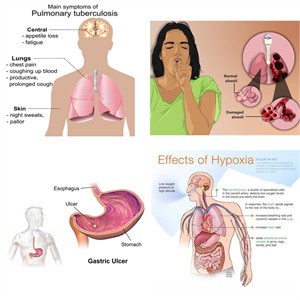
Tuberculosis, Emphysema, Hypoxia and Gastric ulcer (clockwise)
Alcoholism
Alcoholism is a harmful addiction that impairs physical, mental, and emotional health, damages organs like the liver and brain, and negatively affects individuals and their families.
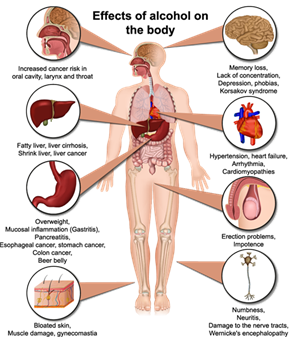
Effect of alcohol on the body
Diseases and disorders due to lifestyle modifications
a. Diabetes mellitus is a long-term metabolic disorder caused by high blood glucose due to insufficient or ineffective insulin, often linked to lifestyle factors like poor diet, inactivity, and stress, and can be managed through healthy habits. Diabetes can be controlled by maintaining normal blood glucose levels through a balanced diet, regular exercise, medications or insulin therapy, and proper awareness about the disease.
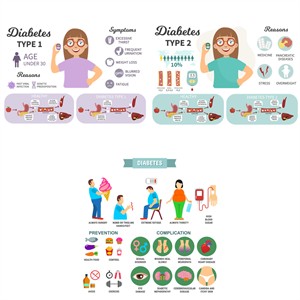
Diabetes mellitus
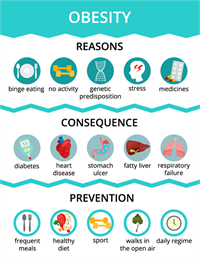
b. Obesity is a chronic condition caused by excess body fat due to high calorie intake, low physical activity, and factors like genetics and lifestyle, increasing the risk of diseases such as diabetes and heart problems, and can be managed through proper diet and exercise.
Risk factors, reasons and prevention of obesity.
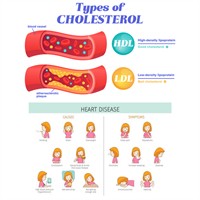
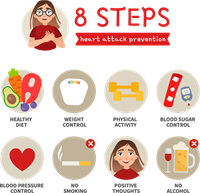
c. Cardiovascular disease is a condition affecting the heart and blood vessels, mainly caused by factors like high cholesterol, hypertension, unhealthy lifestyle habits, and atherosclerosis, leading to reduced blood flow, heart damage, and serious complications like heart attack or stroke. Heart disease can be prevented and controlled by following a healthy diet low in fats and cholesterol, regular physical activity, and avoiding habits like smoking and alcohol consumption.
Type of cholesterol and causes and symptoms of heart disease.
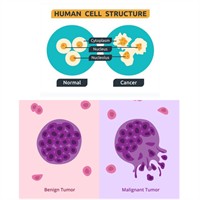
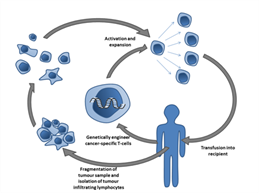
d. Cancer is an uncontrolled growth of abnormal cells that can spread (metastasis) to other parts of the body, caused by factors like carcinogens, genetics, and lifestyle, and includes types such as carcinomas, sarcomas, and leukaemia. Cancer can be caused by physical, chemical, radiation, and biological agents, and can be treated through methods like surgery, radiation, chemotherapy, and immunotherapy, while prevention involves avoiding carcinogens and early detection.
Cancer cells and immunotherapy
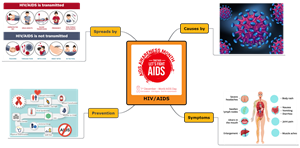
e. AIDS: Acquired Immunodeficiency Syndrome is a disease (AIDS) caused by HIV (Human Immunodeficiency Virus).
Acquired Immunodeficiency Syndrome
Did you find an error?