

pH scale:
The term pH stands for “power of hydrogen” or potential of hydrogen. It is a numerical scale used to measure the acidity or basicity (alkalinity) of a solution.
The pH scale ranges from \(0\) to \(14\) and measures the concentration of hydrogen ions (\(H^+\)) in a solution.
- Acidic solution (pH < 7)
- Basic solution (pH > 7)
- Neutral solution (pH = 7)
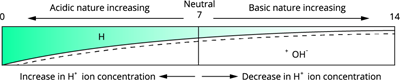
Variation of pH with concentration of ions
When a solution contains a large number of hydrogen ions, it is strongly acidic. In such cases, the pH value becomes low. On the other hand, when the concentration of hydrogen ions in a solution is low, the solution becomes basic (alkaline) and the pH value increases.
Role of neutralisation in daily life:
Every single day begins with a neutralisation reaction, can you believe? Obviously, yes, we start our day with brushing our teeth, which is a neutralisation reaction; there are many such examples in our everyday life where we can notice the neutralisation reaction. Let’s learn neutralisation reactions that are happening around us.
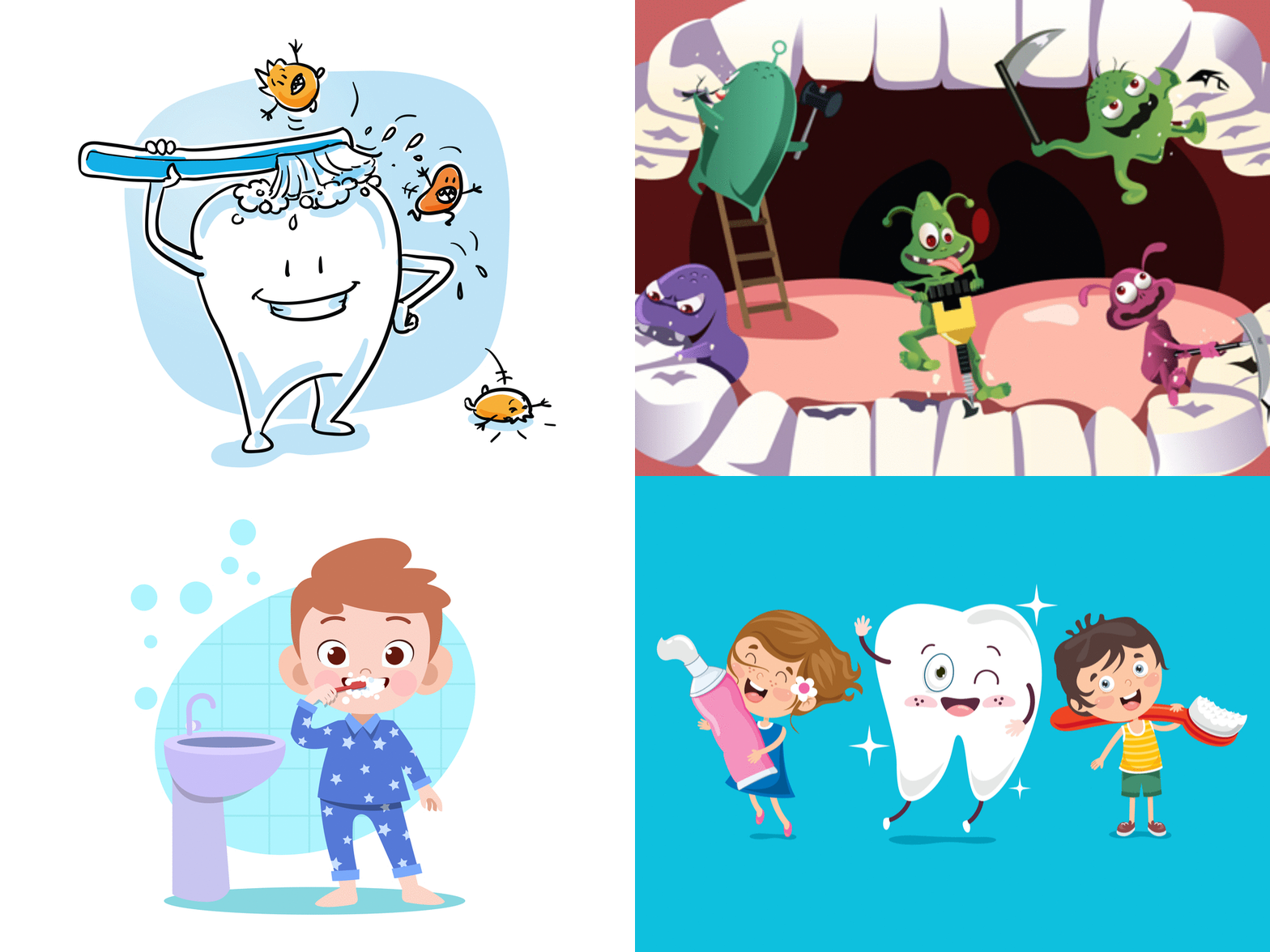
Neutralisation to prevent tooth decay
Acid-base balance is pivotal for our health and the environment. We unknowingly perform many neutralisation processes in our daily lives. Let us now explore the significance of some of those reactions.
i. Acidity:
Scenario: Generally, our stomach secretes hydrochloric acid, which hates spicy foods and unhealthy junk. When Riya used to eat junk foods frequently, one day she got severe heartburn, causing burning and discomfort.
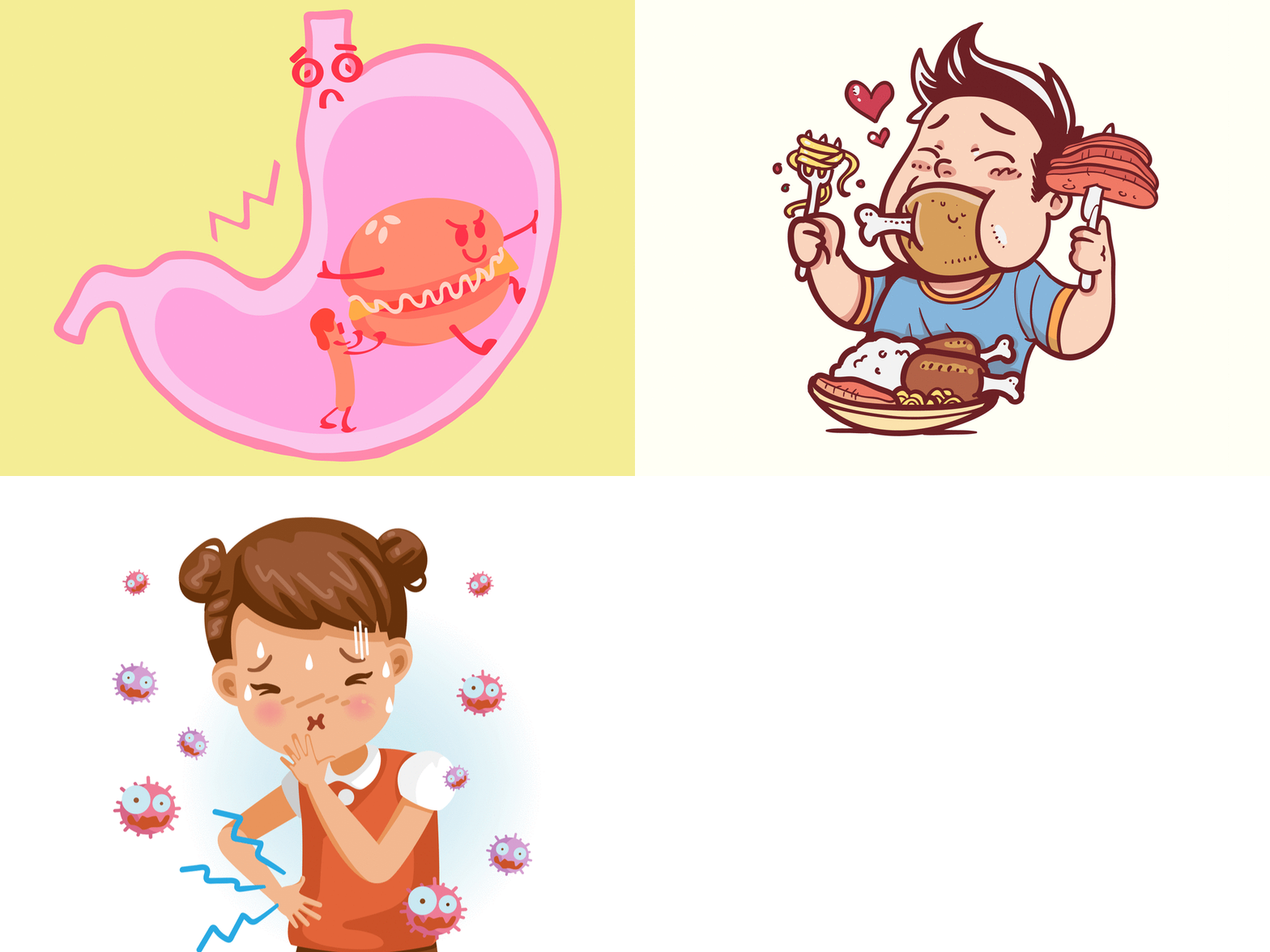
Acidity
Action Plan: Her mom gave her an Antacid. After some time, she was surprised that she was relieved of discomfort.
What Worked? Antacid is a base which neutralises the excess acid in the stomach and leads to relief.
ii. Soil Therapy:
Scenario: Have you ever noticed farmers apply fertiliser to enrich the soil? One day, the gardener saw that the plants did not seem healthy and there weren't many flowers blooming, so he checked the soil and found it was acidic.
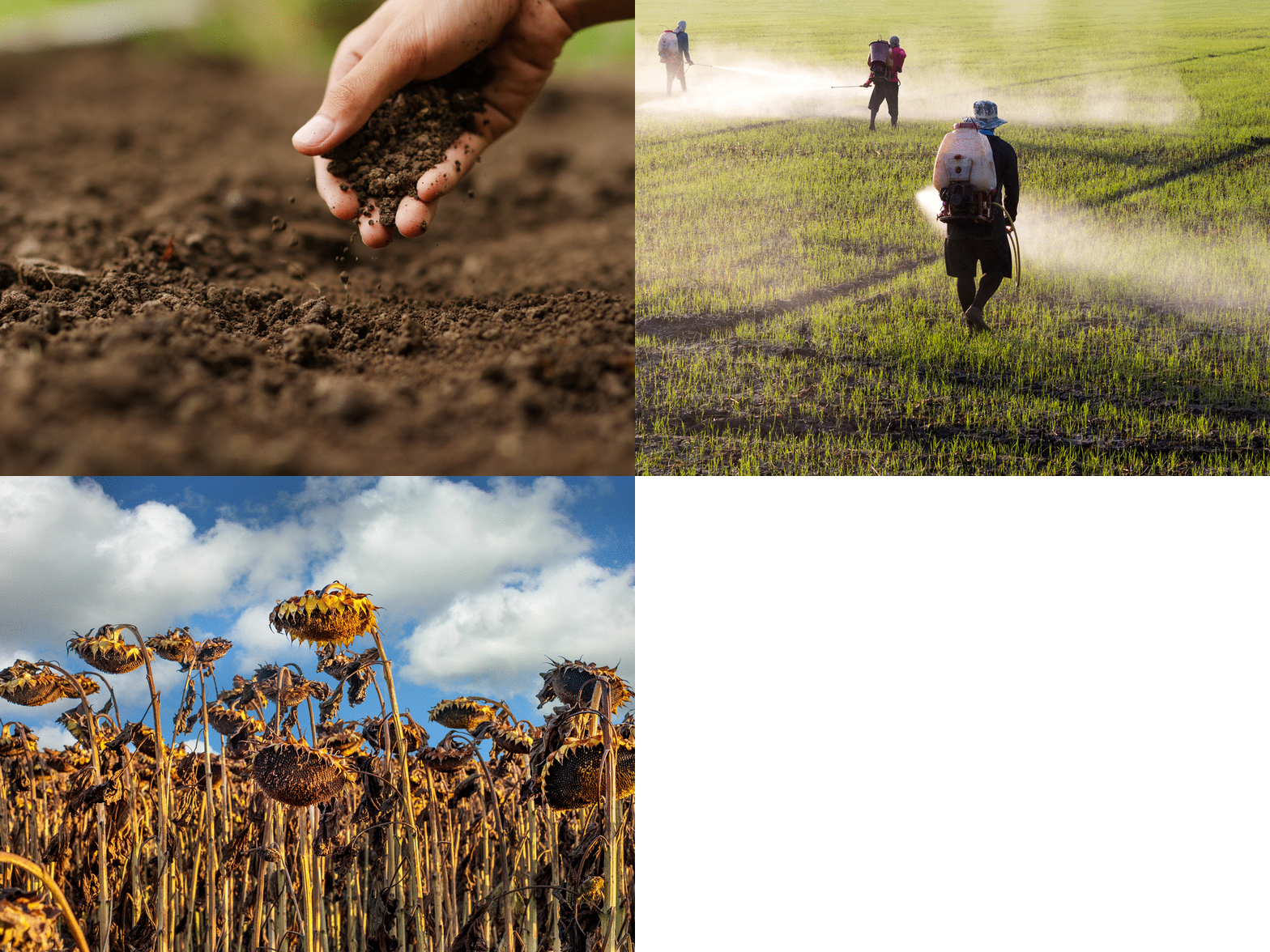
Effect of pH on soil
Action Plan: He treated the soil with some lime, and slowly, the plants started to seem healthy and bloom
What Worked? Since the soil is acidic, when it was treated with lime(CaO), which is a base, it neutralised the soil's condition and improved the soil's fertility.
iii. Insect bite:
Scenario: When Mokshitha was playing near the garden, suddenly she was bitten by something. She noticed that it was a bee. With stinging pain, she ran to her grandmother.
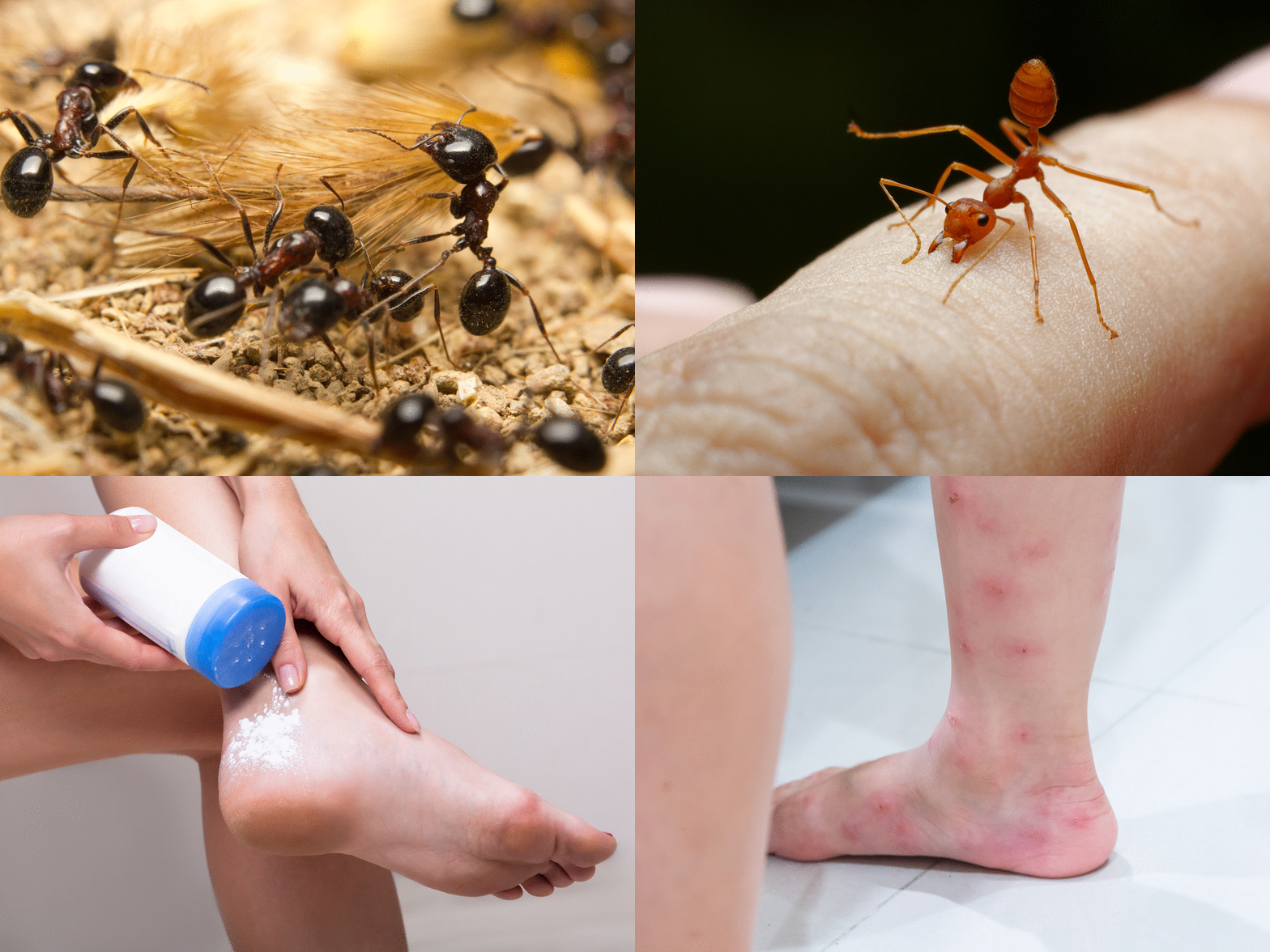
Effect of formic acid
Action Plan: Her grandmother immediately applied a paste on the skin where the bee bit. It was baking soda mixed with water, and in a few minutes, she felt relief from pain.
What worked? The bee sting injects formic acid into the skin, which causes pain as soon as it is applied. Baking soda paste, which is a base, neutralises the acid, and the pain fades away.
iv. Industrial waste balance:
Scenario: There was a factory in an area near a water body which released toxic acidic wastes. Harmful and corrosive, which affects the water as well as the environment.
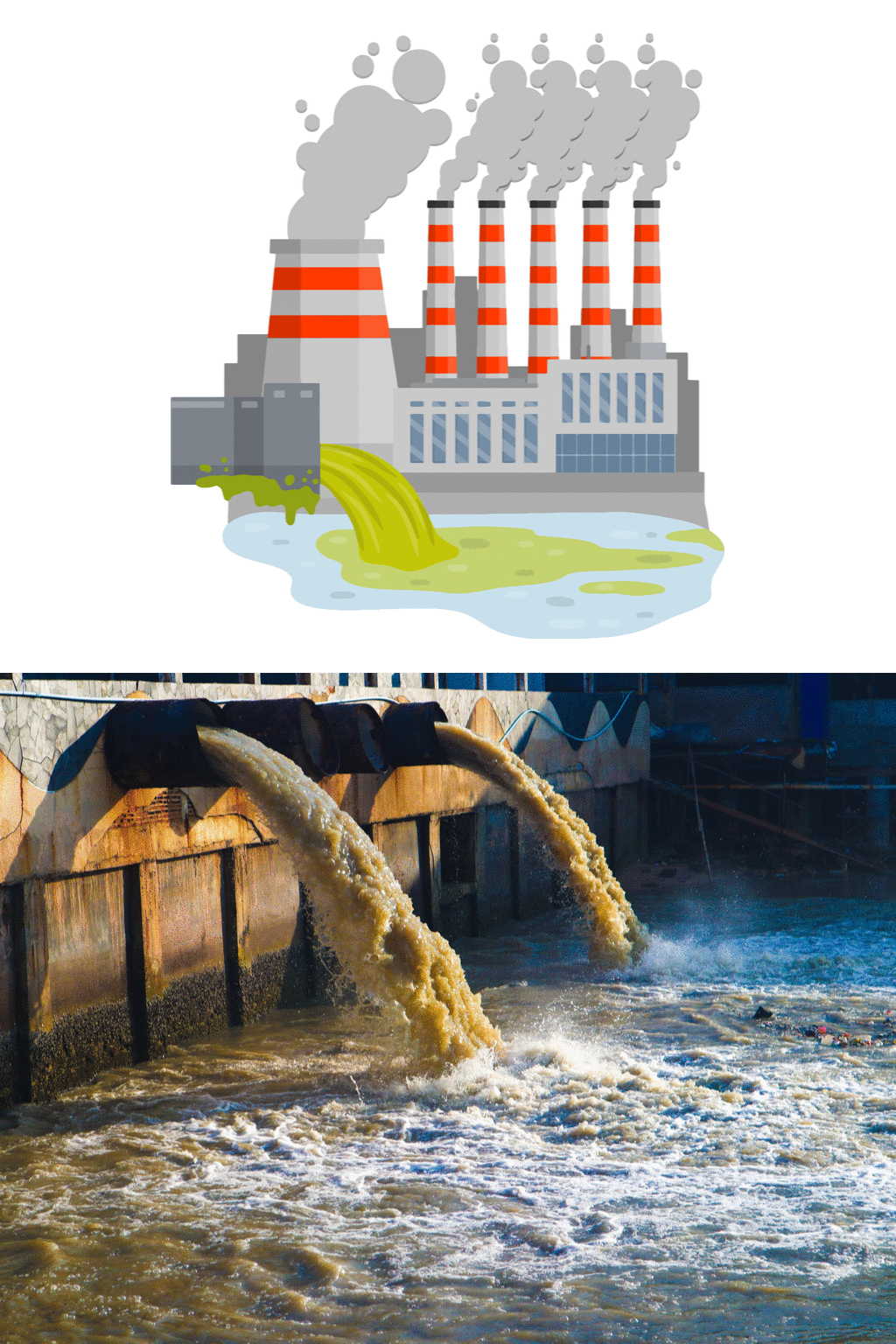
Effect of industrial wastes
Action Plan: A team noticed it, and before letting the waste out, they passed it through a reactor tank, which contains base, and the waste which came out doesn’t seem to be toxic.
What Worked? When the acidic waste is passed through the tank containing base, it gets neutralised, which turns the harmful waste harmless before releasing it to the water bodies.
| Situation | Cause | Effect | Neutralisation |
| Insect/Bee sting | Formic acid | Pain & burning | Base (Baking soda/lime paste) |
| Wasp sting | Alkaline | Pain & burning | Acid (Vinegar) |
| Nettle sting | Methanoic acid | Burning pain | Base (Rub dock leaf) |
| Tooth decay | Mouth acids | Cavity formation | Basic toothpaste |
| Acidity | Excess HCl | Heartburn/ulcer | Antacids (\(Mg(OH)_2\) |
| Acidic soil | Fertilisers | Poor plant growth | Lime (\(CaO\) or \(Ca(OH)_2\)) |
| Alkaline soil | Excess base | Poor nutrient availability | Acid (Compost) |
| Industrial waste | Acidic effluents | Environmental damage | Lime or limestone |
Salts:
Salts are ionic compounds that dissociate to produce a positively charged ion other than hydrogen \(H^+\) and a negatively charged ion other than hydroxide \(OH^-\). During salt formation, a positive ion is produced by the base, and a negative ion is produced by the acid.
\(Acid + Base \rightarrow Salt + Water\)
The pH of the salts vary according to the concentration taken. The nature of a salt solution depends on the strength of the parent acid and base. The strength of the salts can be acidic, basic, or neutral.
- \(\text{Strong acid + Strong base → Neutral Salt + Water}\)
- \(\text{Weak acid + Weak base → Neutral Salt + Water}\)
- \(\text{Strong acid + Weak base → Acidic Salt + Water}\)
- \(\text{Weak acid + Strong base → Basic Salt + Water}\)
|
Salt
|
pH
|
Base
|
Acid
|
|
Sodium chloride
|
\(7\)
|
\(NaOH\)
|
\(HCl\)
|
|
Potassium nitrate
|
\(7\)
|
\(KOH\)
|
\(HNO_3\)
|
|
Aluminium chloride
|
\(<7\)
|
\(Al(OH)_3\)
|
\(HCl\)
|
|
Zinc sulphate
|
\(<7\)
|
\(Zn(OH)_2\)
|
\(H_2SO_4\)
|
|
Ammonium chloride
|
\(<7\)
|
\(NH_4OH\)
|
\(HCl\)
|
|
Copper sulphate
|
\(<7\)
|
\(Cu(OH)_2\)
|
\(H_2SO_4\)
|
|
Sodium acetate
|
\(>7\)
|
\(NaOH\)
|
\(H_2CO_3\)
|
|
Sodium carbonate
|
\(>7\)
|
\(NaOH\)
|
\(H_2CO_3\)
|
|
Sodium hydrogen
carbonate
|
\(>7\)
|
\(NaOH\)
|
\(H_2CO_3\)
|