

Have you ever wondered how invisible substances impact the taste of your food, the fizzing in your beverages, and even the washing power of your washroom cleaner? Why does soap generally feel slippery?
Also, have you ever tasted a lemon and reacted by puckering your lips?
The secret agents hiding behind these mysteries are the acids and bases.
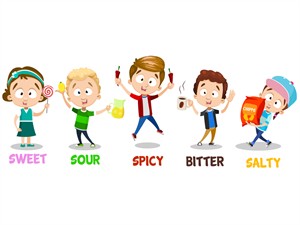
Types of tastes
In this chapter, we will discover the reason behind all the above questions, the different tastes in foods, drinks, colour changes in solutions and many more. These clever substances are always busy!
i. Acids are the sour super chemicals found in fruits like lemon, grapes, and oranges and even in your stomach.
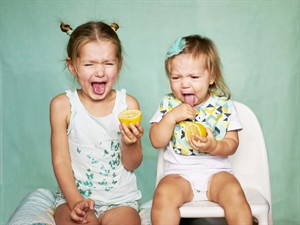
Acid: Sour taste
ii. Bases are bitter and slippery cleansers found in leafy vegetables, spinach, soap, toothpaste, and baking soda.
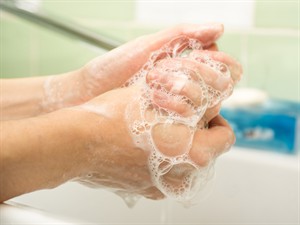
Base: As a cleanser
Get ready to mix solutions, test, and explore the science behind the reactions, indicators, and pH value mysteries—where each solution has a story!
Nature - Our Science Laboratory:
You can not see acidity, you can not smell basicity, but with a drop of the right substances, colour shifts in that instance that were previously unseen become visible. These are acid-base indicators; one speaks not with words, but with colour! Let us learn more about different natural indicators.
The chemical substance that changes colour depending on the pH of the solution, indicating whether the solution is acidic, basic or neutral, is called an acid-base indicator.
1. Litmus as an indicator:
Litmus is a natural indicator obtained from lichens. It is commonly used to test whether a substance is acidic, basic or neutral.
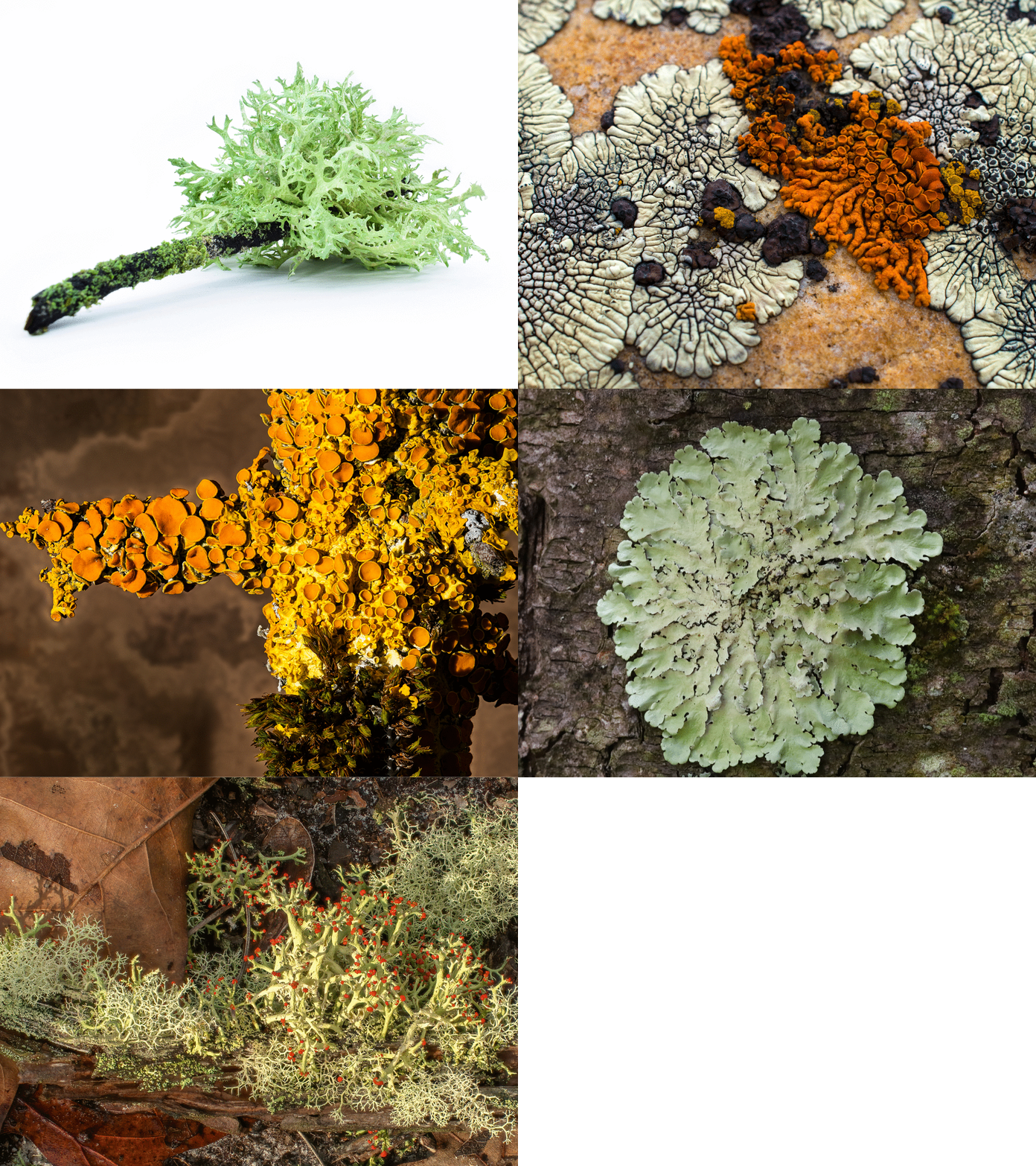
Lichens
Action of Litmus on acids, bases and neutral substance:
| Litmus paper | Test with the acid substance | Test with the base substance |
| Blue litmus paper |
Blue \(→\) Red
|
Blue \(→\) Blue (No change)
|
| Red litmus paper |
Red \(→\) Red (No change)
|
Red \(→\) Blue
|
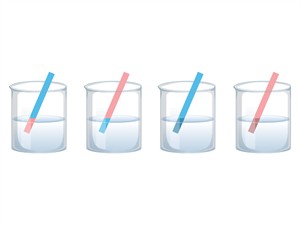
Litmus test: Acid, base and neutral solution
2. Red rose as an indicator:
Yes, you heard it right, Red Rose can help you figure out whether the solution is acid, base or neutral. It’s because of a natural chemical present in the petal which acts as an acid-base indicator.
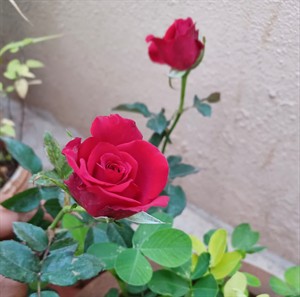
Red rose
Red rose contains a natural pigment in their petals called anthocyanin. This pigment tends to change colour depending on the pH level of the liquids. Ready to make your indicator using a red rose!
Response of the red rose indicator depending on the nature of the solution is as listed below;
i. Acidic solution blends with red rose indicator and changes to a deep red.
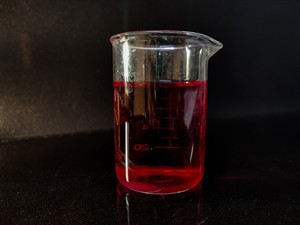
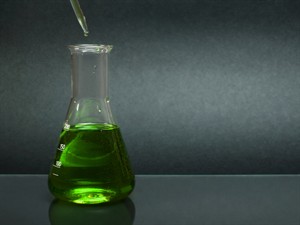
Colour change of red rose: In acidic and basic solutions
ii. Basic solution blends with red rose indicator and changes to greenish, bluish, or even to yellowish, based on the strength of the basic solution.
iii. Neutral solution with red rose indicator stays in its natural red without changing.
3. China rose as an indicator:
The petals of china roses also act as a natural indicator. Anthocyanin, a water-soluble pigment found in china roses, changes colour when it reacts with an acid or a base.
China rose indicator changes the acidic solution to magenta (dark pink). It turns the basic solution to dark green colour and no colour change in neutral solutions.
4. Turmeric as an indicator:
Can you believe that there is an ingredient straight out of the kitchen that acts as a detective to investigate the nature of the solutions? Yes, we have an agent yellow from our spices that's turmeric!
Turmeric contains a compound called curcumin. Curcumin is responsible for the colour change in different solutions.
Observation with Turmeric Indicator:
- Acidic solution → Remains yellow
- Basic solution → Turns reddish-brown
- Neutral solution → Remains yellow
Paper painted with turmeric paste; turns red on painting with basic solution
Interesting fact!
Olfactory indicators:
There is another interesting type of indicator called an olfactory indicator. These substances show changes through smell when added to acidic or basic solutions.
Substances whose odour changes in acidic or basic media are called olfactory indicators.
Observation:
|
Sample
|
Acid
\(HCl\) solution
|
Base
\(NaOH\) solution
|
|
Onion
|
Retains the odour
|
Odourless
|
|
Vanilla essence
|
Retains the odour
|
Odourless
|
|
Clove oil
|
Retains the odour
|
Odourless
|