

Have you ever wondered why an ant sting can be relieved with baking soda, or why antacids are taken for acidity? The answer lies in a fascinating chemical process called neutralisation. When an acid and a base come together, they reduce each other's effects and form new substances called salt and water.
Neutralisation reaction:
When two opposite characters meet, what happens? They don’t fight each other; instead, they shake hands and create peace. It’s like a coffee with a splash of milk, where the bitter black coffee meets the milk, which softens the bitterness, creating a delicious coffee.

Making coffee
When the angry acid comes in contact with the bitter base, they shake hands, resulting in the formation of peaceful droplets of water and salt, which enter the peacemaker- the neutralisation reaction.
When an acid and a base are combined, a chemical reaction occurs. This process is called neutralisation. The reaction mixture produces heat during neutralisation; hence, it is an exothermic reaction.
In a neutralisation reaction, there is the formation of a new substance, which is known as a salt. The salt produced as a product can be either acidic, basic or neutral.
Activity - Testing neutralisation of acid and base with litmus solution:
Instructions:
i. Take a small quantity of baking soda mixed with water in a clean test tube 'A', and add a few drops of red litmus solution.
ii. Observe the colour change, the red litmus solution changes to blue.
iii. To the same test tube, slowly add vinegar. At one point, the blue solution starts turning red as shown in 'B'.
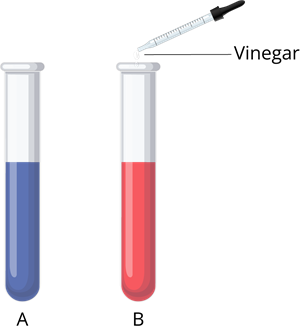
Litmus test
Science behind it!
When a red litmus solution is added to the baking soda solution, it turns blue due to its basic nature. When vinegar was added to the same test tube, the colour of the solution changed from blue to red.
Thus, the solution in the test tube is no longer basic; vinegar neutralises the effect of the base.
The reaction between hydrochloric acid and sodium hydroxide yields a salt and water as products. It is one example of a neutralisation reaction.
Hydrochloric acid + Sodium hydroxide → Sodium chloride + Water + Heat
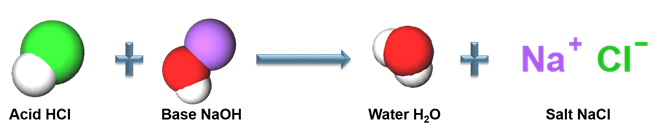
Acid-base reaction
Role of neutralisation in daily life:
Every single day begins with a neutralisation reaction, can you believe? Obviously, yes, we start our day with brushing our teeth, which is a neutralisation reaction; there are many such examples in our everyday life where we can notice the neutralisation reaction. Let’s learn neutralisation reactions that are happening around us.
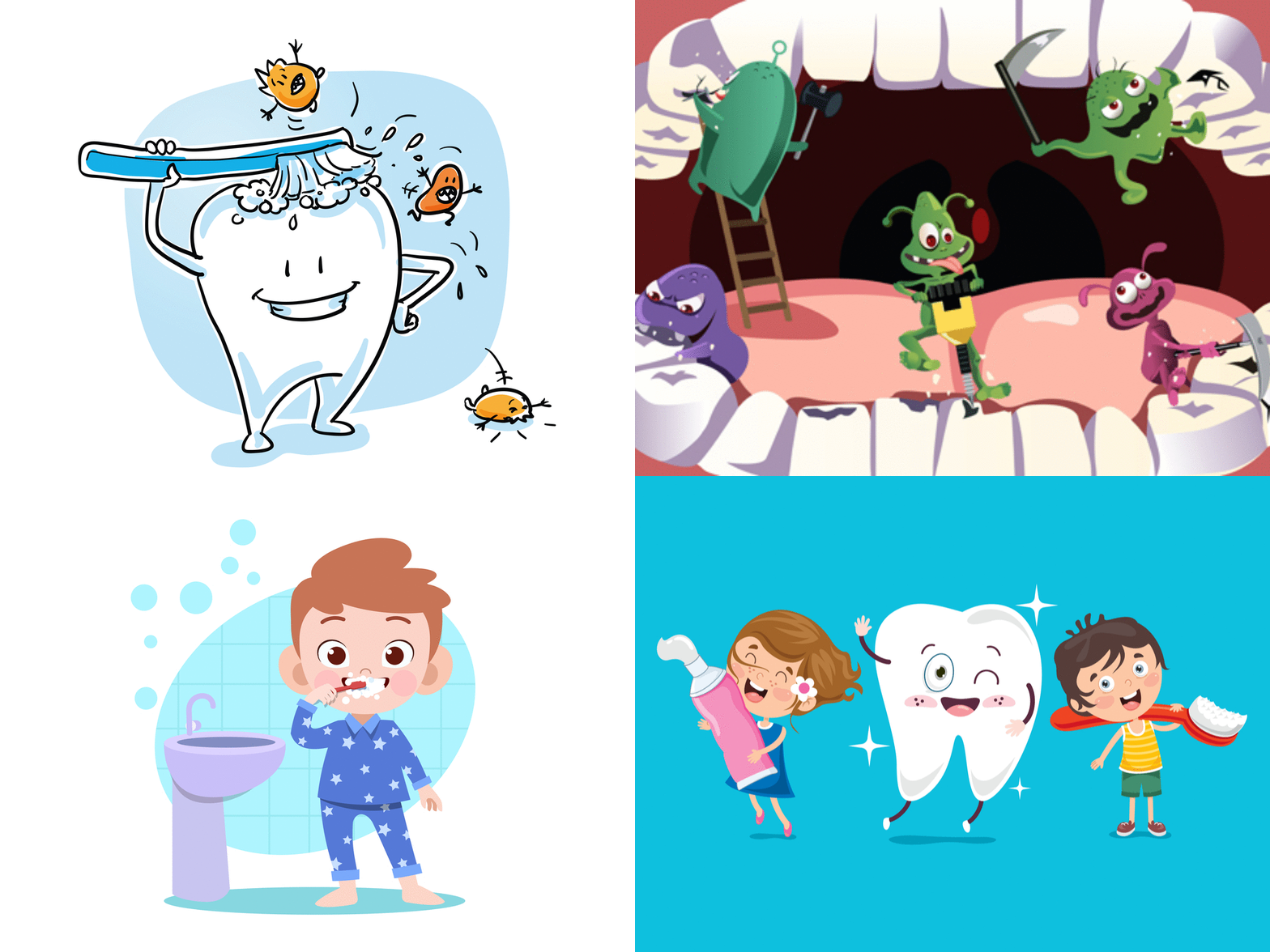
Neutralisation to prevent tooth decay
Acid-base balance is pivotal for our health and the environment. We unknowingly perform many neutralisation processes in our daily lives. Let us now explore the significance of some of those reactions.
i. Acidity:
Scenario: Generally, our stomach secretes hydrochloric acid, which hates spicy foods and unhealthy junk. When Riya used to eat junk foods frequently, one day she got severe heartburn, causing burning and discomfort.
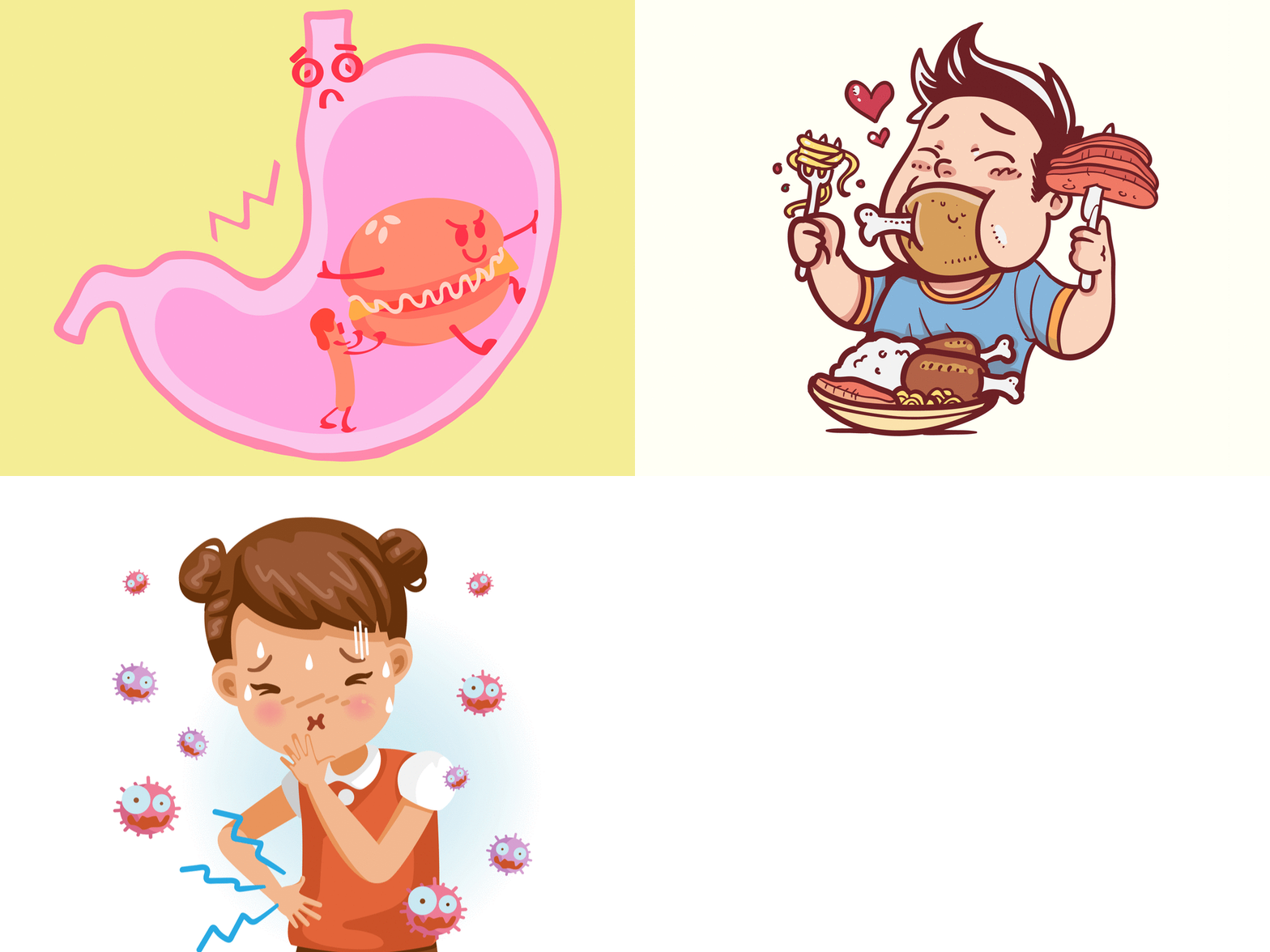
Acidity
Action Plan: Her mom gave her an Antacid. After some time, she was surprised that she was relieved of discomfort.
What Worked? Antacid is a base which neutralises the excess acid in the stomach and leads to relief.
ii. Soil Therapy:
Scenario: Have you ever noticed farmers apply fertiliser to enrich the soil? One day, the gardener saw that the plants did not seem healthy and there weren't many flowers blooming, so he checked the soil and found it was acidic.

Effect of pH on soil
Action Plan: He treated the soil with some lime, and slowly, the plants started to seem healthy and bloom
What Worked? Since the soil is acidic, when it was treated with lime(CaO), which is a base, it neutralised the soil's condition and improved the soil's fertility.
iii. Insect bite:
Scenario: When Mokshitha was playing near the garden, suddenly she was bitten by something. She noticed that it was a bee. With stinging pain, she ran to her grandmother.
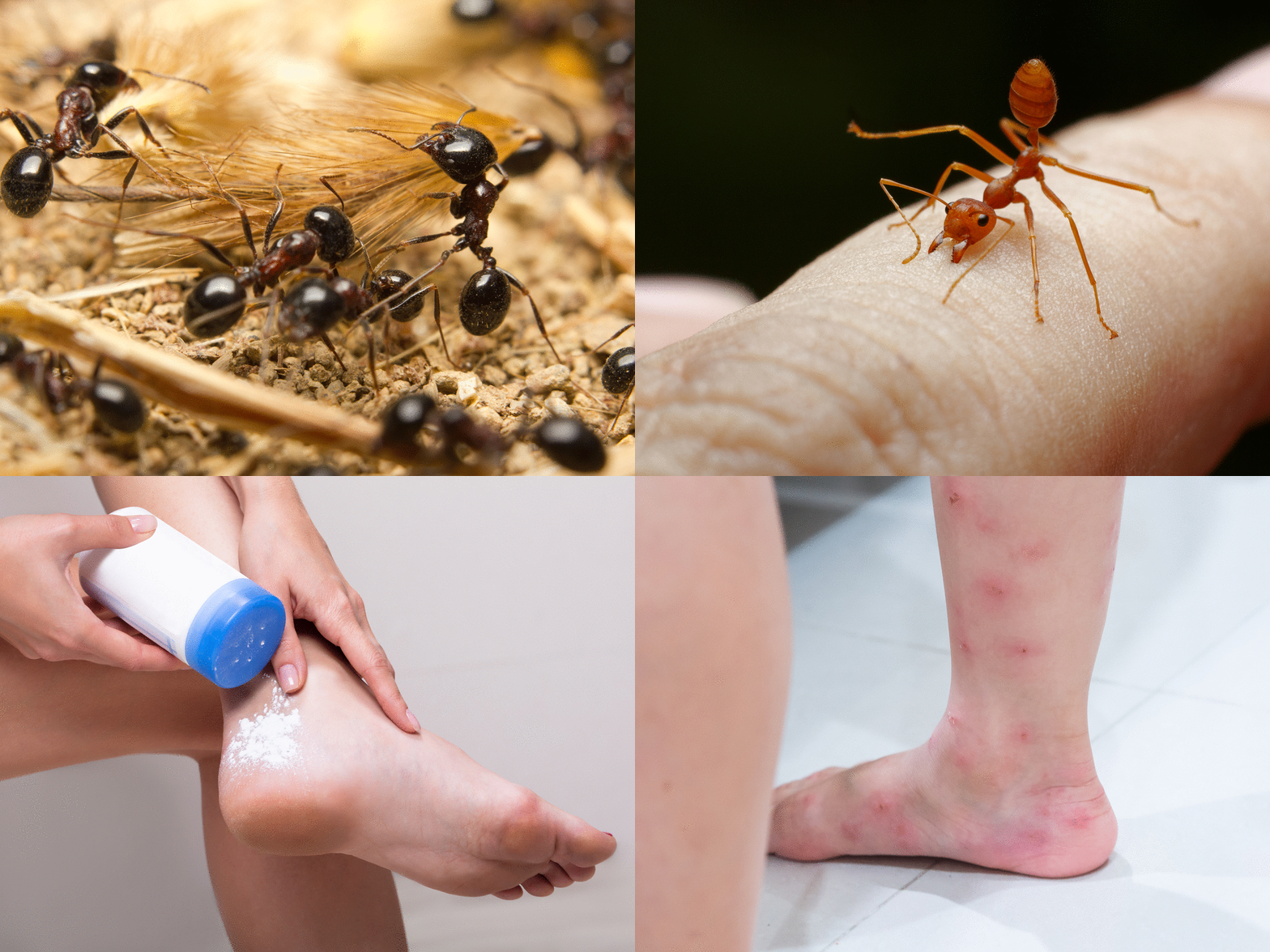
Effect of formic acid
Action Plan: Her grandmother immediately applied a paste on the skin where the bee bit. It was baking soda mixed with water, and in a few minutes, she felt relief from pain.
What worked? The bee sting injects formic acid into the skin, which causes pain as soon as it is applied. Baking soda paste, which is a base, neutralises the acid, and the pain fades away.
| Situation | Cause | Effect | Neutralisation |
| Insect/Bee sting | Formic acid | Pain & burning | Base (Baking soda/lime paste) |
| Wasp sting | Alkaline | Pain & burning | Acid (Vinegar) |
| Tooth decay | Mouth acids | Cavity formation | Basic toothpaste |
| Acidity | Excess hydrochloric acid | Heartburn/ulcer | Antacids (magnesium hydroxide) |
| Acidic soil | Fertilisers | Poor plant growth | Slaked lime (calcium hydroxide) |
| Alkaline soil | Excess base | Poor nutrient availability | Acid (Compost) |
| Industrial waste | Acidic effluents | Environmental damage | Slaked lime (calcium hydroxide) |