

1. Red rose as an indicator:
Yes, you heard it right, Red Rose can help you figure out whether the solution is acid, base or neutral. It’s because of a natural chemical present in the petal which acts as an acid-base indicator.
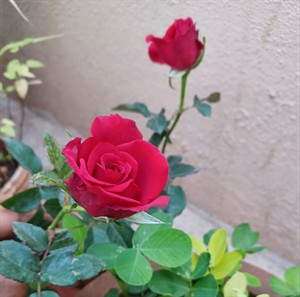
Red rose
Red rose contains a natural pigment in their petals called anthocyanin. This pigment tends to change colour depending on the pH level of the liquids. Ready to make your indicator using a red rose!
Activity 1
Materials Required:
-
Red rose petals
-
Warm water
-
Small cups & spoon
-
Samples to test (lemon juice, soap solution, baking soda, distilled water)
Instructions:
Step 1: Take the red rose petals in a cup and, with the help of a spoon, gently mash the petals to release the colour.
Step 2: To the mashed petals, pour in some warm water and let it stay for 10 minutes, then strain the solution into a clean cup.
Step 3: Now, take a small amount of rose indicator in different cups and add samples to be tested in each cup, and observe the colour change.
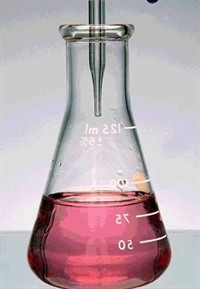
Red rose extract
Observation:
The changes observed are listed below:
|
Samples
|
Colour change
|
Nature
|
|
Lemon juice
|
Bright red
|
Acidic
|
|
Distilled water
|
Stays red (No change)
|
Neutral
|
| Baking soda solution | Green | Basic |
| Soap solution |
Green
|
Basic
|
Response of the red rose indicator depending on the nature of the solution is as listed below;
i. Acidic solution blends with red rose indicator and changes to a deep red.
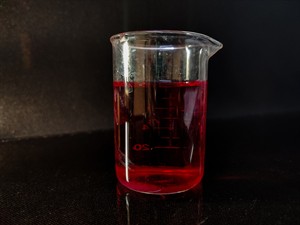
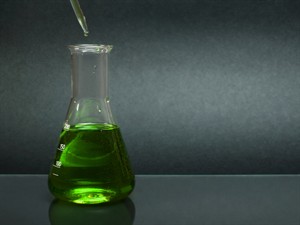
Colour change of red rose: In acidic and basic solutions
ii. Basic solution blends with red rose indicator and changes to greenish, bluish, or even to yellowish, based on the strength of the basic solution.
iii. Neutral solution with red rose indicator stays in its natural red without changing.
2. China rose as an indicator:
The petals of china rose (Hibiscus) also act as a natural indicator. Anthocyanin, a water-soluble pigment found in china roses, changes colour when it reacts with an acid or a base.
Preparation of china rose solution:
Step 1: Take some petals of china rose in a cup
Step 2: And some warm water in that cup
Step 1: Take some petals of china rose in a cup
Step 2: And some warm water in that cup
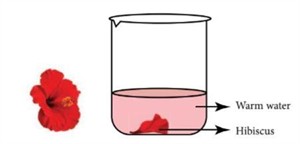
China rose extract
Step 3: Let it rest aside until the water colour changes
Step 4: Filter the solution. The filtered solution will act as an acid-base indicator
China rose indicator changes the acidic solution to magenta (dark pink). It turns the basic solution to dark green colour and no colour change in neutral solutions.
Effect of Soil on Hydrangea Flower Colour:
Hydrangea is a plant that grows in cooler climates, such as the Himalayan region and the North-eastern states. It produces flowers of different colours depending on the nature of the soil.
- In acidic soil, hydrangea flowers appear blue.
- In basic (alkaline) soil, the flowers appear pink or red.
This happens because the soil’s acidity or alkalinity affects the natural pigments in the petals. Just like natural indicators change colour in acids and bases, plants also show colour changes depending on the soil’s pH.
Gardeners can even alter the colour of hydrangea flowers by adjusting the soil to be more acidic or more basic, demonstrating a simple way that chemistry affects everyday life.
Interesting fact!