

Acids:
The properties of acids are as follows
-
Acids are sour.
-
The pH level of acid is less than \(7\).
-
Litmus paper: It turns blue to red.
-
Acids release \(H^+\) ions, which are responsible for their acidic properties.
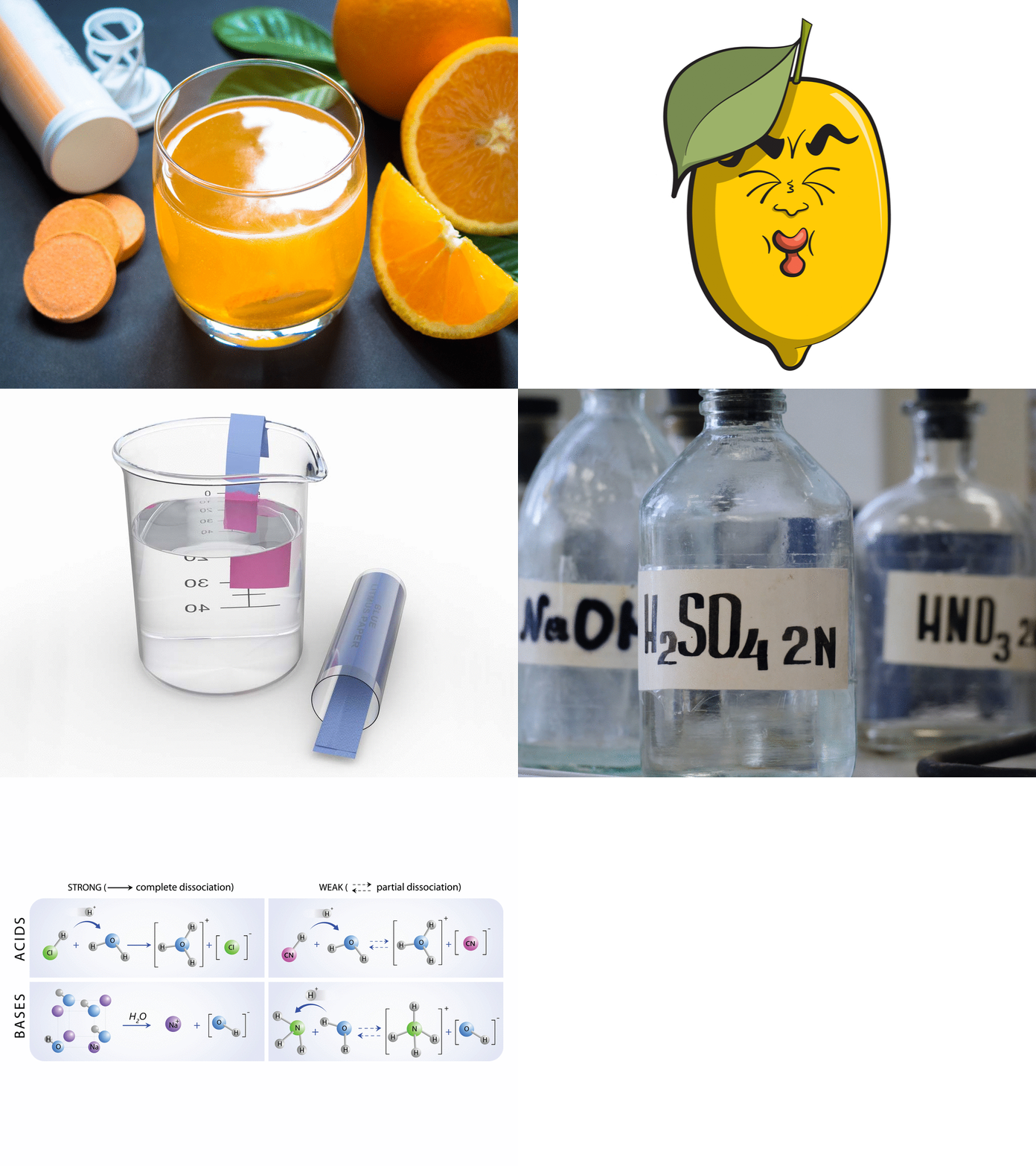
Properties of acid
Acids are generally found in fruits such as,
Lemon – Citric acid
Orange – Citric acid
Apple – Malic acid
Grapes – Tartaric acid
Strawberry – Ascorbic acid
The acids that are present naturally are called organic acids, and acids which are synthesised in laboratories, like \(HCl\), \(HNO_3\) and \(H_2SO_4\), are mineral acids. Generally, organic acids are weak acids, whereas mineral acids are strong acids.
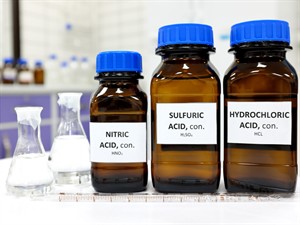
MIneral acids
Strength of an acid:
- Strong acid: When complete ionisation of \(H^+\) ions takes place in an aqueous solution, it is known as a strong acid. Here the high concentration of \(H^+\) ions is present.
- Weak acid: When partial ionisation of \(H^+\) ions takes place in an aqueous solution, it is known as a weak acid. Here the low concentration of \(H^+\) ions is present.
Bases:
The properties of bases are as follows
- Bases are bitter, and they feel soapy or slippery.
- The pH level of base is greater than \(7\).
- Litmus paper: It turns red to blue.
- Bases that can dissolve in water are known as alkalis, for example, potassium hydroxide and sodium hydroxide.
- Bases release \(OH^-\) ions, which are responsible for their basic properties.
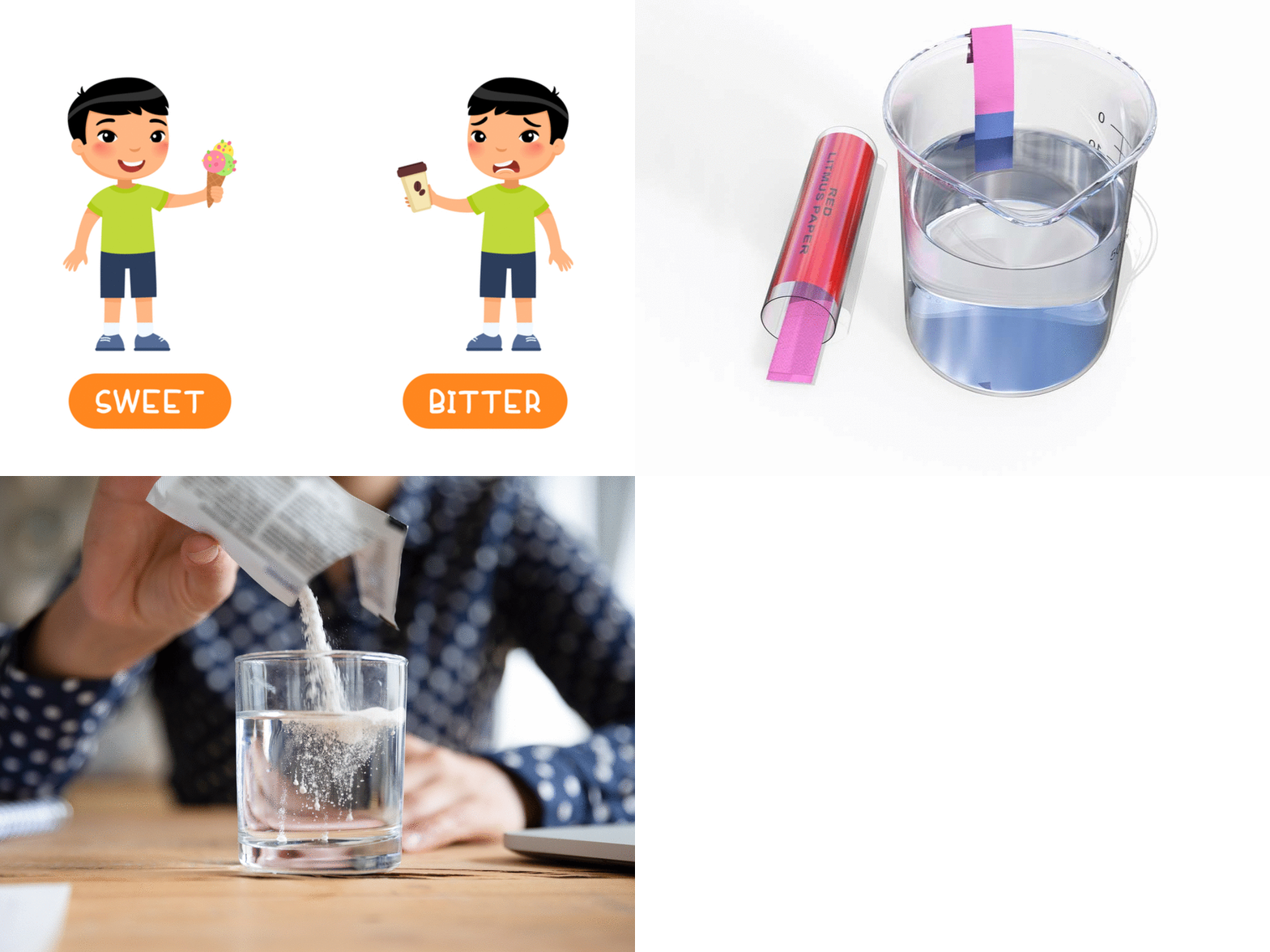
Properties of base
Bases are generally present in cleaning agents such as,
Soap – Sodium hydroxide
Baking Soda – Sodium bicarbonate
Cleaning Products – Potassium hydroxide
The organic bases are obtained naturally, like ammonia, urea, while inorganic bases are synthesised in laboratories like \(NaOH\), \(KOH\) and many more.
Strength of a base:
- Strong base: When complete ionisation of \(OH^-\) ions takes place in an aqueous solution, it is known as a strong base. Here the high concentration of \(OH^−\) ions is present.
- Weak base: When partial ionisation of \(OH^-\) ions takes place in an aqueous solution, it is known as a weak base. Here the low concentration of \(OH^−\) ions is present.
The classification of acid and base based on their concentration:
i. Concentrated acid/base: If the aqueous solution contains a high percentage of acid/base and a low percentage of water, it is said to be concentrated acid/base.
ii. Diluted acid/base: If the aqueous solution contains a high percentage of water and a low percentage of acid/base, it is said to be diluted acid/base.