

Have you ever considered how blessed we are to be comfortable in life? The food we eat, the air we breathe, the clothes we wear, the water we drink, and the vehicles we drive—all of these essentials are made up of various elements and compounds. While they may seem simple, life would be impossible without them.

Space rocket
From the toothpaste we use first thing in the morning to the medicine we take, to the spacecraft, and to the technological inventions we rely on, everything is a perfect and wise blend of elements and compounds.
Let us learn about the uses of elements, compounds, and mixtures.
Uses of elements:
i. Uses of metals in daily life:
- Iron is used to making bridges, engine parts, iron-sheets and girders.
- Aluminium is used in electrical wires, cables, aerospace industries and aluminium vessels for cooking purposes.
- Copper is used to making electrical wires, coins and statue.
- Silver and gold are used to make jewels for decorative purposes and photography.
- Mercury is used in thermometers and barometers.
- Lead is used in automobile batteries and X-ray machines.
ii. Uses of non-metals in daily life:
- Diamond is used for making jewels, cutting and grinding equipment. Graphite is used for making pencil lead.
- Sulphur is used for the manufacturing of gun powder and the vulcanization of rubber.
- Phosphorous is used for making matches, rat poison, etc.
- Nitrogen is commonly used in the manufacturing of ammonia.
- Chlorine is used in sterilising water and used as a bleaching agent.
- Hydrogen is used as rocket fuel.
iii. Uses of metalloids in daily life:
- Silicon is used in electronic devices such as cell phones, calculators, and as a semiconductor.
- Boron is used in fireworks for providing green colour and as a fuel for ignition in the rocket.
- Arsenic is used in making pesticide, herbicide and as a semiconductor combined with gallium.
Uses of compounds:
- Water (\(H_2O\)) is used for drinking, cooking, cleaning, farming, and also as solvents, in industries for cooling, power generation and steam production.
- Sodium chloride (table salt) (\(NaCl\)), essential component of our diet, used in cooking and preservative agent, in industries used to manufacture chlorine and hydrogen gas.
- Carbon dioxide (\(CO_2\)) used as a fire extinguisher, also used in soft drinks and helpful for photosynthesis in plants.
- Ammonia (\(NH_3\)) used as a fertilizer and cleaning agent.
- Baking soda (\(NaHCO_3\)) is used as a fire extinguisher, baking cakes and in manufacturing of baking powder.
- Calcium carbonate (\(CaCO_3\)) is used in making chalk, marbles, cement, and glass buildings.
Uses of mixture:
Mixtures are commonly used in daily life. Manufacturers and engineers are dependent on mixtures for creating materials with unique properties. One such creation is alloys.
An alloy is a homogeneous solid solution or combination of at least two elements, generally one or more metals or non-metals, which combine to form a new material that has enhanced properties.
Amalgam is a well-known alloy composed primarily of mercury and other metals such as silver, tin, copper, and, in certain cases, zinc. It is widely utilized in dental and chemical applications. Alloys have lower conductivity and melting temperatures compared to pure metals.
Brass (\(66 \%\) copper and \(34 \%\) zinc) is appreciated for its malleability and corrosion resistance, although it is not an effective electrical conductor. Similarly, bronze (\(88 \%\) copper and \(12 \%\) tin) provides strength and durability at the price of conductivity, making it ideal for industrial uses such as fittings and musical instruments but unsuitable for wiring.
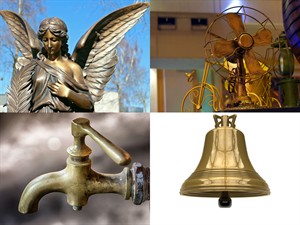
Alloys of copper
Minerals
Minerals are nature's hidden gems, that are treasured under deep oceans, ancient rocks, and narrow mines. Formed over millions of years under certain conditions such as heat, pressure, and long time. From salts to machines to the jewellery minerals play a vital role.
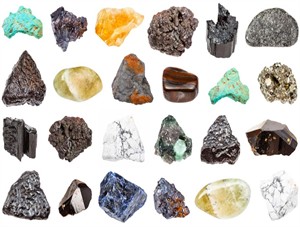
Minerals
Minerals are naturally occurring inorganic substances with definite chemical composition and unique crystalline structure that are found in the earth's crust.
Types of minerals:
Based on the composition of minerals they are classified into different types.
i. Metallic minerals:
Metallic minerals are composed of metals, they contain metal in their raw form. Most of the metallic minerals are hard, shiny substances and good conductors of heat and electricity.
Example:
Iron, copper, zinc, gold, and silver
ii. Non-metallic minerals:
Non-metallic minerals are composed of materials other than metals. Most of the non-metallic minerals are soft and poor conductors of heat and electricity.
Example:
Mica, limestone, gypsum, dolomite, and phosphate
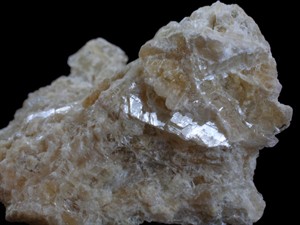
Mica
Some of the minerals are called native minerals, which exists as pure elements and not as compounds. Gold, silver, copper, platinum, and diamond are composed of a single element.
Uses of minerals:
- Bauxite (ore of aluminium) is used in automobiles and aeroplanes, industry, buildings and kitchen utensils.
- Gems are used in the jewellery making.
- Calcite, alumina, limestone, and quartz is used for manufacturing cement for construction.
- Talc is used in the production of talcum powder.
- Gypsum is used in construction as wallboard, drywall, or plasterboard. Also in the preparation of plaster of Paris.
- Silica is used in the manufacturing of glass.
Reference:
https://www.pickpik.com/discovery-space-shuttle-launch-mission-astronauts-liftoff-rockets-140609