

Look around you right now. Is the fan moving? Is your water bottle becoming warm in your hand? Did your hair grow since last month? All these are examples of changes. Changes happen every minute around us. Some are easy to notice, while some take time.
From morning to night, we see many changes. Ice melts in juice, clothes dry in sunlight, bread is cut into slices, flowers give fragrance, and fruits ripen. Our world is always changing.
What is a change?
Change is constant. A process in which a substance becomes a different one from what it was earlier. It is the difference between the initial and the final state of any substance. The difference in the size or shape of an object is termed as a 'change'.
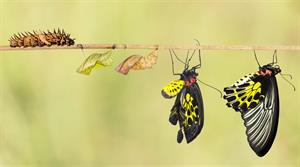
Lifecycle of butterfly
It may change in:
- Size – bigger or smaller
- Shape – different form
- Smell – good smell or bad smell
- State – solid, liquid, gas
- Colour – different colour
- Temperature – hotter or colder
- Texture – rough, smooth, soft, hard
Types of changes we see daily:
| Type of Change | Meaning | Examples |
| Change in Size | Object becomes bigger or smaller | Balloon inflating, pencil becoming shorter, plant growing taller, cutting a piece of paper |
| Change in Shape | Object changes its form | Paper folding, rolling small balls of dough into chapatis, clay moulding, chopping of vegetables, making small balls of dough |
| Change in Smell | Smell appears, spreads, or changes | Perfume spreading, garbage smell, flower fragnance, burning wood, making popcorn from corn |
| Change in State | Matter changes between solid, liquid, and gas | Ice melting, water freezing, steam forming, boiling water, drying wet clothes |
| Change in Colour | Object changes colour | Leaf turning yellow, banana ripening, apple turning brown, adding beetroot extract to water, making popcorn from corn |
| Change in Temperature | Object becomes hotter or colder | Tea cooling, soup heating, ice feeling cold, |
| Change in Texture | Surface becomes rough, smooth, soft, hard, sticky, etc. | Cotton becoming wet, soap lather, dough softening |
| Change in Sound | Sound is produced or changes | Bell ringing, paper tearing, thunder |
| Change in Taste | Taste becomes sweet, sour, salty, bitter, etc. | Lemon tasting sour, sugar tasting sweet, spoiled food tasting bad |
Types of change and their meaning
How do we observe changes? - Five senses
We are like scientists because we use our five senses.
| Sense Organ | Used for | Example |
|---|---|---|
| Eyes | See | Leaf turns yellow |
| Ears | Hear | Bell rings |
| Nose | Smell | Perfume fragrance |
| Tongue | Taste | Lemon tastes sour |
| Skin | Feel | Ice feels cold |
Sense organs and observing changes
Our world never stays the same. Everything around us changes in one way or another. By observing carefully with our five senses, we can identify, describe, and classify these changes. Science begins when we notice changes around us.