

We see many changes happening around us every day. Some changes only affect the shape, size, or state of a substance, while some changes produce new substances. A change in which one or more new substances are formed is called a chemical change. Chemical changes happen because of chemical reactions between substances.
Example:
Rusting of iron, burning paper, curdling of milk, cooking food, pot making and reactions producing gas.
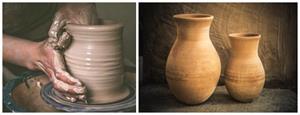
Pot making
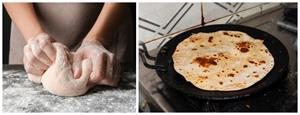
Baking a roti
What is a Chemical Change?
A chemical change is a change in which the original substance changes into one or more new substances with different properties.
Characteristics of Chemical Change:
- A new substance is formed.
- Usually permanent and difficult to reverse.
- Heat, light, sound, or smell may be produced.
- Colour may change.
- Gas bubbles may be formed.
- A solid may be formed from liquids.
Difference Between Physical Change and Chemical Change:
| Physical Change | Chemical Change |
| No new substance is formed. | A new substance is formed |
| Only shape, size, or state changes. | Composition and properties change. |
| Usually reversible | Usually irreversible |
| Example: melting ice | Example: rusting iron |
Activity: Reaction of Vinegar and Baking Soda
Aim:
To observe a chemical change that produces a gas.
Materials Required:
- Test tube
- Vinegar or lemon juice
- Baking soda (sodium hydrogen carbonate)
- Fresh lime water
- Delivery tube
Procedure:
- Take a teaspoonful of vinegar or lemon juice in a test tube.
- Add a pinch of baking soda to it.
- Observe the reaction carefully.
- Pass the gas formed through lime water kept in another test tube using a delivery tube.
Observation:
- Fizzing and bubbling are seen.
- A gas is produced.
- Lime water turns milky.
Inference:
- The gas produced is carbon dioxide.
- Carbon dioxide turns lime water milky.
- A new substance is formed during the reaction.
- Therefore, it is a chemical change.