

Many changes that take place around us involve chemical reactions. Burning of fuels, lighting a candle, and rusting of iron are common examples seen in daily life. Some substances burn easily and produce heat and light, while others slowly react with oxygen in the air. Understanding combustion, rusting, and ignition temperature helps us learn about fuels, fire safety, and changes in materials.
Combustion:
Combustion is a chemical process in which a substance reacts with oxygen and produces heat and light energy.
Example:
Burning of wood
Burning of petrol or diesel
Burning of candle wax
Burning of cooking gas
During combustion, new substances such as carbon dioxide, smoke, ash, and water vapour may also be formed.
Combustible Substances:
Substances that catch fire easily and burn in the presence of oxygen are called combustible substances.
Example:
Wood, Paper, Petrol, Diesel, Coal, Cooking gas
These substances release heat and light energy during burning.
Non-Combustible Substances:
Substances that do not burn easily are called non-combustible substances.
Example:
Stone, Glass, Sand, Water, Brick
These substances do not undergo combustion under normal conditions.
Conditions Required for Combustion:
Three important conditions are necessary for combustion to take place. These conditions together are called the fire triangle.
1. Fuel
Fuel is the combustible substance that burns during combustion. It may be solid, liquid, or gas.
Example:
Wood, Coal, Petrol, Cooking gas
2. Oxygen
Oxygen present in the air supports combustion. During burning, fuel reacts with oxygen and releases heat and light energy.
If oxygen supply is cut off, the fire goes out. This is why sand, foam, or fire extinguishers are used to stop fires.
3. Heat
Ignition Temperature:
Heat is needed to raise the temperature of the fuel so that it can start burning. A matchstick, spark, or flame provides the required heat energy.
Without heat, fuel cannot catch fire even if oxygen is present.
Ignition temperature is the minimum temperature at which a substance catches fire and starts burning.
Every combustible substance has its own ignition temperature. Paper has a lower ignition temperature and catches fire easily, while wood has a higher ignition temperature and takes longer to burn. Combustion begins only when the fuel reaches this temperature.
Ignition temperature plays an important role in fire safety because substances with low ignition temperatures catch fire quickly.
Rusting:
Rusting is a slow chemical process in which iron reacts with oxygen and moisture in the air to form a reddish-brown substance called rust.
Rusting weakens iron objects and damages their appearance over time.
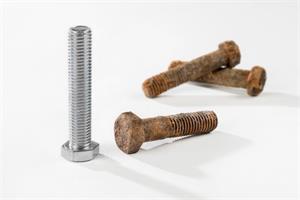
Rusting of iron nails
Example:
Rusted iron gate
Rusted bicycle chain
Rusted nails
Conditions Required for Rusting:
Rusting takes place only when:
- Oxygen is present
- Moisture or water is present
Both conditions are necessary for rusting to occur.