

Electricity is widely used in our daily life to operate devices such as bulbs, fans, and televisions. To make these devices work, electric current must flow through a complete path called an electric circuit. In order to understand and represent these circuits clearly, scientists use standard electrical symbols instead of drawing real components.
In this lesson, we will learn how to recognise electrical symbols, represent circuits using these symbols, and draw simple electric circuit diagrams.
Electric components and their symbols:
Electrical components are the basic elements used to build an electric circuit. Each component has a specific function and is represented using a standard symbol.
Common Electrical Components:
- Electric cell: Supplies electrical energy to the circuit.
- Battery: A combination of two or more cells.
- Bulb (Lamp): Produces light when current flows through it.
- Switch: Controls the flow of electric current.
- Connecting wires: Provide a path for current to flow.
Electrical Symbols:
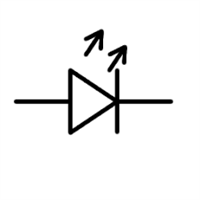
Electrical symbols are simple and standard representations of electrical components used in circuit diagrams.
These symbols are:
- Universal, meaning they are understood worldwide
- Simple and clear, making diagrams easy to read
- Time-saving, as they avoid drawing complex pictures
Symbols of common components:
| S.No | Electric component | Symbol |
| 1. |  |
 |
| 2. |  |
 |
| 3. | 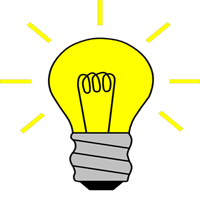 |
 |
| 4. | 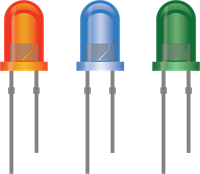 |
 |
| 5. |  |
 |
| 6. |  |
 |
| 7. | 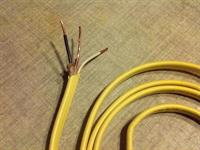 |
 |
Electric component and their symbols
Electric circuit:
An electric circuit is a closed and continuous path through which electric current flows.
Types of Circuits:
- Open circuit:
When the circuit is incomplete (switch is open), current does not flow and the bulb does not glow.
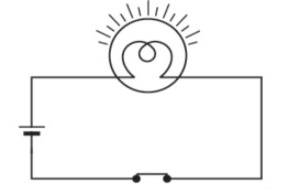
Circuit diagram showing the switch in ON state
- Closed circuit:
When the circuit is complete (switch is closed), current flows and the bulb glows.
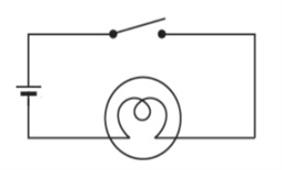
Circuit diagram showing the switch in OFF state
Drawing a simple electric circuit:
A simple electric circuit can be drawn using symbols by following these steps:
- Draw the symbol of a cell or battery
- Connect it using straight lines (wires)
- Add a bulb symbol
- Include a switch in the circuit
When all components are properly connected and the switch is closed, the circuit becomes complete and the bulb glows.