

Electricity is an important part of our daily life. It helps us light our homes, run fans, and operate many electrical devices. For electricity to flow, there must be a complete path called an electric circuit. However, not all materials allow electricity to pass through them. Based on this property, materials are classified as conductors and insulators.
Activity: To test and identify materials that allow electric current to pass through them.
Materials Required: Electric cell, small bulb, connecting wires, switch, and different materials (coin, paper clip, plastic scale, rubber, glass piece, wooden stick).
Step 1: Set up a simple electric circuit using a cell, bulb, wires, and a switch.
Step 2: Leave a small gap between two wires in the circuit.
Step 3: Place the test material in the gap one by one.
Step 4: Close the switch and observe whether the bulb glows.
Step 5: Repeat the process with different materials.
Observation:
- When materials like a coin or paper clip are placed, the bulb glows.
- When materials like plastic, rubber, or wood are placed, the bulb does not glow.
Conclusion:
- Materials that allow the bulb to glow are called conductors.
- Materials that do not allow the bulb to glow are called insulators.
Conductors:
Conductors are materials that allow electric current to pass through them easily.
Conductors have free electrons that move easily, allowing the flow of electric current. This is why metals are commonly used in electrical wiring.
Example:
Copper, graphite, silver, gold, aluminium, steel, etc.
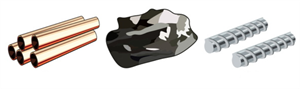
Copper, graphite and steel
Insulators:
Insulators are materials that do not allow electric current to pass through them.
Insulators do not have free electrons to carry electric current. They are used to block the flow of electricity and provide safety.
Example:
Wood, plastic, rubber, glass, paper, etc.
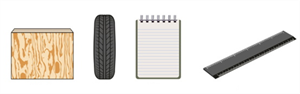
Wood, rubber, paper and plastic
Electrical conductors used for making wires:
Silver, copper, and gold are among the best conductors of electricity. However, copper is most commonly used for making electrical wires because it is less expensive and easily available compared to silver and gold. Different types of electrical wires are used for different purposes depending on their application.
Why are electrical wires covered with insulators?
Materials such as plastic, rubber, and ceramics do not allow electric current to pass through them. These materials are electrical insulators. Covering electrical wires with insulators prevents the electric current from coming into direct contact with our body, ensuring safety.
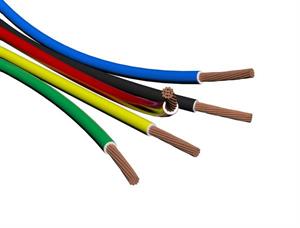
Electric wires with insulation
Role of insulation in electrical safety:
Insulation is the process of covering electrical wires with insulating materials like plastic or rubber. This prevents direct contact with electric current and protects us from electric shocks.
In electrical wires, the inner part is made of a conductor (like copper) to carry current, while the outer covering is made of an insulator to ensure safety. Insulation also prevents short circuits by stopping wires from touching each other.