

Electric lamps are one of the most useful inventions in daily life. We use them in homes, schools, hospitals, streets, and vehicles. Different lamps produce light in different ways. Some lamps waste more energy as heat, while others save electricity.
Two common types of electric lamps are filament lamps and LED lamps. Understanding their structure and working helps us choose better lighting for our needs.
Filament Lamp:
A filament lamp is the old type of electric bulb commonly used in the past. Inside the glass bulb, there is a very thin wire called a filament. This filament is usually made of tungsten because tungsten has a very high melting point.
When electric current passes through the filament, the wire resists the flow of current and becomes white-hot. Due to this high temperature, it glows and produces light.
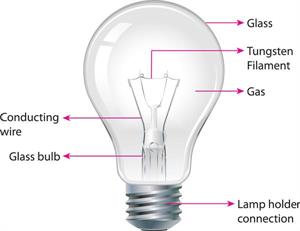
Filament lamp
Important Features:
- Produces light by heating the filament
- Gives yellowish warm light
- Consumes more electricity
- Produces a lot of heat
- Filament can break after long use
LED lamp:
LED stands for Light Emitting Diode. It is a modern lamp that uses semiconductor technology. Instead of a filament, it contains a small electronic component called a diode or LED chip.
When electric current passes through the LED chip in the correct direction, it emits light directly. Since no wire is heated, less energy is wasted.
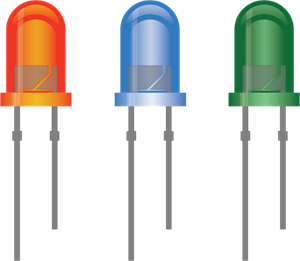
LED lamp
Important Features:
- Produces bright light instantly
- Uses less electricity
- Produces very little heat
- Long lifespan
- Available in many colors and shapes
Comparison of Filament Lamp and LED Lamp:
| Feature | Filament lamp | LED lamp |
| Structure | Has tungsten filament | Has LED chip, no filament |
| Working Principle | Filament becomes hot and glows | Diode emits light directly |
| Electricity Use | More | Less |
| Heat Production | High | Low |
| Efficiency | Low | High |
| Lifespan | Shorter | Longer |
| Safety | Gets hot | Safer, stays cooler |
Features of filament lamp and LED lamp