

Electricity is a form of energy that makes many devices around us work. Everyday appliances such as lights, fans, televisions, refrigerators, mobile chargers, and computers depend on electricity. However, electricity can make these devices work only when there is a proper electrical circuit. Understanding how an electrical circuit works helps us use electrical appliances safely and efficiently.
An electrical circuit is a complete conducting path through which electric current flows from one terminal of a cell or battery to the other.
Without a complete path, electric current cannot flow, and the electrical device will not work.
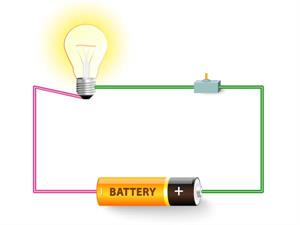
Simple electric circuit
Components of a Simple Electrical Circuit:
Every simple electrical circuit consists of four basic components:
1. Cell or Battery:
- Supplies electrical energy.
- A cell is a single source of electrical energy.
- Two or more cells connected together form a battery.
2. Connecting Wires:
- Usually made of copper.
- Carry electric current from one component to another.
3. Switch:
- Controls the flow of electric current.
- Opens or closes the circuit.
4. Lamp (Bulb/LED):
- Uses electrical energy to produce light.
Types of Electrical Circuits:
Closed Circuit:
A closed circuit has a complete conducting path.
- Electric current flows.
- The lamp glows.
- Electrical appliances work normally.
Example: Turning ON the room light by pressing the switch.
Open Circuit:
An open circuit has a break or gap in the conducting path.
- Electric current cannot flow.
- The lamp does not glow.
- Electrical appliances stop working.
Example: Switching OFF the room light.
Common Reasons Why a Lamp Does Not Glow
A lamp may not glow because:
- The switch is open.
- The cell or battery is exhausted.
- The connecting wire is loose or broken.
- The filament inside the lamp is broken.
- The circuit is not completely closed.
Broken Filament:
Inside an ordinary electric lamp is a very thin wire called the filament.
How does a filament work?
When electric current passes through the filament:
- The filament offers resistance to the flow of current.
- It becomes very hot.
- It emits light.
This is how an incandescent lamp produces light.
What happens when the filament breaks?
When the filament breaks:
- The conducting path inside the lamp is interrupted.
- Electric current cannot pass through the filament.
- The circuit inside the lamp becomes incomplete.
- The lamp does not glow.
Such a lamp is called a fused lamp.
Electric Switch:
An electric switch is a device used to control the flow of electric current by opening or closing an electrical circuit.
It does not produce electricity. It simply controls whether current can flow.
Switch closed:
- Circuit becomes complete.
- Current flows.
- Lamp glows.
Switch open
- Circuit becomes incomplete.
- Current stops flowing.
- Lamp does not glow.
Everyday uses of switches:
- Light switches
- Fan switches
- Doorbells
- Torch switches
- Electric toys
Circuit diagrams:
Drawing actual pictures of electrical components can be difficult and time-consuming.
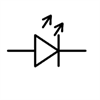
Instead, electricians and scientists use standard electrical symbols.
These symbols make circuit diagrams:
- Easy to draw
- Easy to understand
- Same throughout the world
- Less confusing
| S.No | Electric component | Symbol |
| 1. |  |
 |
| 2. |  |
 |
| 3. |  |
 |
| 4. | 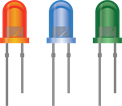 |
 |
| 5. |  |
 |
| 6. |  |
 |
| 7. | 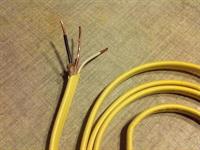 |
 |
Electric component and their symbols
Why are Circuit Diagrams Important?
Circuit diagrams help us:
- Understand electrical circuits quickly.
- Design circuits before building them.
- Identify faults easily.
- Communicate electrical ideas using a common language.
IEC, ANSI and IEEE:
Different countries use common electrical standards so that everyone understands the same circuit diagrams.
| IEC |
International Electrotechnical Commission
Develops international standards for electrical and electronic equipment.
|
| ANSI |
American National Standards Institute
Develops standards mainly used in the United States.
|
| IEEE |
Institute of Electrical and Electronics Engineers
Develops standards related to electrical engineering, electronics, and technology.
|
Electrical Conductors and Insulators
Conductors
Insulators protect us from electric shocks and prevent unwanted flow of electricity.
Conductors are materials that allow electric current to pass through them easily.
Example:
Copper
Aluminium
Iron
Steel
Silver
Conductors are used to make electrical wires because they allow electricity to flow.
Insulators:
Insulators are materials that do not allow electric current to pass through them easily.
Example:
Plastic
Rubber
Glass
Wood
Paper
Why is Copper Used for Electrical Wires?
Copper is the most commonly used material for electrical wiring because it:
- Is an excellent conductor of electricity.
- Allows electric current to flow with very little resistance.
- Is flexible, making it easy to bend without breaking.
- Is strong and durable, so wires last for many years.
- Is less expensive than silver, making it economical for everyday use.
Why is Plastic Used Outside the Wire?
Plastic is an insulator. It prevents electric shocks and protects the copper wire from damage.
AC and DC:
Direct Current (DC):
In Direct Current (DC), electric current flows in only one direction.
Sources:
- Cell
- Battery
Example:
Torch
Remote control
Clock
Toy car
Alternating Current (AC):
In Alternating Current (AC), the direction of electric current changes repeatedly.
Source
- Household wall socket
Example:
Fan
Television
Refrigerator
Washing machine
| Direct Current (DC) | Alternating Current (AC) |
| Flows in one direction | Changes direction repeatedly |
| Supplied by cells and batteries | Supplied through household power supply |
| Used in portable devices |
Used in household appliances
|