

Keshav spends his summer vacation in a village in the Western Ghats of Maharashtra with his friend Jatin. He enjoys the forests, streams, birds, and the beautiful dance of fireflies at night. He learns that fireflies use light to communicate and are decreasing due to light pollution and deforestation. While returning to the city by bus, he observes the moonlight, landscape and the headlights of passing vehicles. He wonders whether the Moon produces its own light. What is light, and how do different objects produce or reflect it?
Sources of light:
Objects that emit light are called sources of light, which can be natural or artificial
Natural sources of light:
The Sun gives out or emits its own light and is the main source of natural light on Earth.
Other natural sources of light include stars, lightning, natural fire, and even some animals that glow on their own.
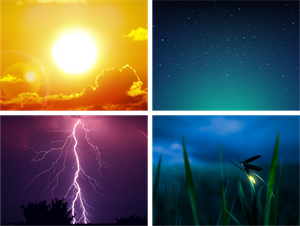
Some natural sources of light
Artificial light:
In ancient times, humans learned to create fire, the earliest form of artificial lighting.
Later, they discovered ways to produce fire using different fuels such as animal fat, oil, wax, and gas.
Later, they discovered ways to produce fire using different fuels such as animal fat, oil, wax, and gas.
With the invention of electricity, humans created many new light sources.
Today, most of our lighting needs are met by electric lamps, bulbs, LED bulbs and other electric light.
Today, most of our lighting needs are met by electric lamps, bulbs, LED bulbs and other electric light.
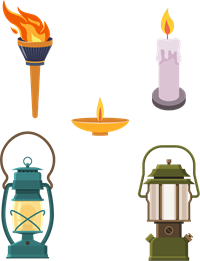
Fire as a source of artificial light
Luminous object:
Objects that emit their own light are called luminous objects.
Examples: Sun, stars, candle flame, fireflies
Non - Luminous object:
Objects that do not emit their own light are called non-luminous objects. The Moon is a
non-luminous object. It does not emit its own light. It just reflects the light emitted by the Sun that falls on it.
non-luminous object. It does not emit its own light. It just reflects the light emitted by the Sun that falls on it.
Examples: Moon, Earth, books, tables
Difference between Luminous and Non - Luminous objects:
| Luminous objects | Non - Luminous objects |
| Objects that emit own light | Objects that do not emit their own light |
| They can be seen because they emit light | They are seen when they reflect light from other sources |
| Examples: Sun, stars, candle flame, fireflies | Examples: Moon, Earth, books, tables |
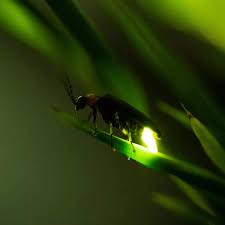
Firefly
Important!
LED (Light Emitting Diode) lamps are modern sources of light that use much less electricity, shine brighter, and last longer than traditional bulbs.

They help reduce electricity bills and are better for the environment. Because of these benefits, the Indian government has encouraged people across the country to use LED lamps. When LED lamps stop working, they should be properly disposed off or recycled, not thrown into regular garbage.
They help reduce electricity bills and are better for the environment. Because of these benefits, the Indian government has encouraged people across the country to use LED lamps. When LED lamps stop working, they should be properly disposed off or recycled, not thrown into regular garbage.