

The movement of air from one place to another is called wind or breeze. Naturally air moves because of the temperature differences between land and water. This movement is called breeze.
Imagine spending the same hot day at the beach. You’re building sandcastles with your friends under the bright sun. The sand under your feet feels hot, almost burning, but the breeze coming from the sea feels cool and refreshing.
As evening approaches and the Sun begins to set, the sand on the beach starts to feel cool, while the breeze coming from the sea now feels warm.
What causes this change between the land and the sea from day to night?
- The main reason is the difference in how land and water absorb and release heat.
- Land absorbs and stores more heat when temperature increases.
- Water releases heat more slowly when the temperature decreases, while land cools down faster.
Let us understand these changes through an activity.
Activity:
To observe how land and sea heat up and cool down, causing breezes.
Step 1: Take two separate bowls each filled with soil and water and place it in direct sunlight.
Step 2: Record the temperature of soil and water using a thermometer.
Step 3: Light an incense stick and place it between the bowls.
Step 4: Leave the same setup out at night.
Step 5: Record the temperature now of soil and water using the thermometer.
Step 6: Light an incense stick and place it between the bowls.
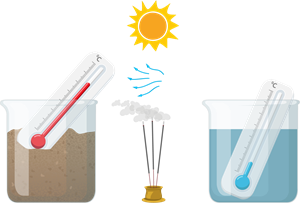
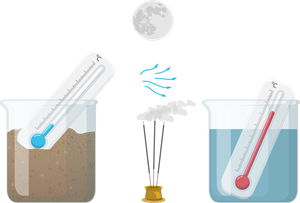
Sea breeze formation Land breeze formation
Explanation:
- During the day, the soil heats up faster than water and the warmer air above the soil rises, and cooler air from the water moves in, causing smoke to move from water to soil.
- At night, the soil cools down faster than water and the warmer air above the water rises, and cooler air from the soil moves in, causing the smoke to move from soil to water.
- This moving air is what we call a sea breeze during the day and a land breeze at night. They are examples of convection of heat that occurs in the air.
Sea breeze:
During the daytime on the beach, the soil heats up faster than the sea water, and the air above the land becomes hot. As hot air is lighter it rises up. This in turn causes the cooler air from above the sea to move towards the land. This movement of cooler air from the sea to the land is called sea breeze. The sea breeze is more prevalent during the spring and summer seasons.
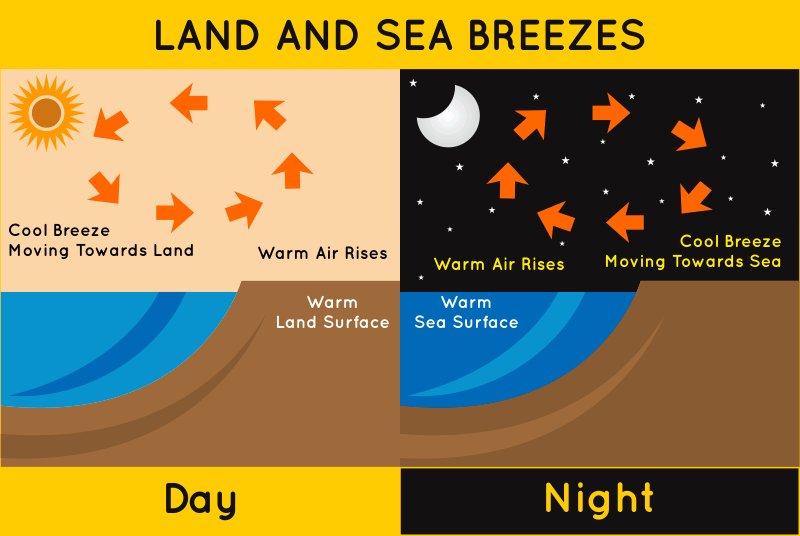
Land and sea breeze
Land breeze:
At night on the beach there is no sunlight, so the soil cools down faster than the sea water, and the air above the sea becomes hot. The hot air above the sea rises up as it is lighter. Cooler air from the land moves towards the sea. This movement of cooler air from the land to the sea is called land breeze. Land breeze is more prevalent during the autumn and winter seasons.
| Type of breeze | Time | Wind direction |
| Sea breeze | Day | From sea to land |
| Land breeze | Night | From land to sea |