

One night, Luke was reading when the power went off, and everything turned dark. He lit a candle, and the room brightened again. His mother explained, “Light helps us see things. Candles, bulbs, and the Sun give out light.”
Luke realized that some objects give out their own light, while others do not.
Luke realized that some objects give out their own light, while others do not.
Sources of light:
Objects that emit light are called sources of light, which can be natural or artificial.
Natural sources of light:
The Sun gives out or emits its own light and is the main source of natural light on Earth.
Other natural sources of light include stars, lightning, natural fire, and even some animals that glow on their own.
Other natural sources of light include stars, lightning, natural fire, and even some animals that glow on their own.
Early artificial light:
In ancient times, humans learned to create fire, the earliest form of artificial lighting.
Later, they discovered ways to produce fire using different fuels such as animal fat, oil, wax, and gas.
Later, they discovered ways to produce fire using different fuels such as animal fat, oil, wax, and gas.
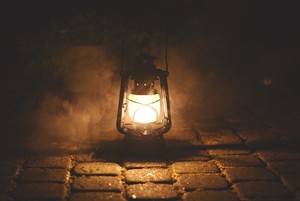
Oil lamp
Modern artificial light:
With the invention of electricity, humans created many new light sources.
Today, most of our lighting needs are met by electric lamps, bulbs, LED bulbs and other electric lights.
Today, most of our lighting needs are met by electric lamps, bulbs, LED bulbs and other electric lights.
Luminous objects:
Objects that emit or give out their own light are called luminous objects.
Example:
The Sun, stars, and glowing fireflies.
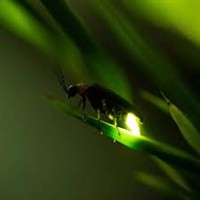
Glowing firefly
Non-Luminous objects:
Objects that do not emit their own light are called non-luminous objects.
They can only be seen when light from luminous objects falls on them and is reflected.
They can only be seen when light from luminous objects falls on them and is reflected.
Example:
The Moon, which shines because it reflects sunlight.
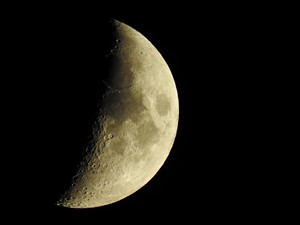
Moon reflecting the sunlight
Important!
LED (Light Emitting Diode) lamps are modern sources of light that use much less electricity, shine brighter, and last longer than traditional bulbs.
They help reduce electricity bills and are better for the environment.
Because of these benefits, the Indian government has encouraged people across the country to use LED lamps.
When LED lamps stop working, they should be properly disposed off or recycled, not thrown into regular garbage.
They help reduce electricity bills and are better for the environment.
Because of these benefits, the Indian government has encouraged people across the country to use LED lamps.
When LED lamps stop working, they should be properly disposed off or recycled, not thrown into regular garbage.

Light Emitting Diode
Let us perform an activity to show that light travels in a straight line.
Activity:
To demonstrate and observe that light travels in a straight line
Step 1: Take three cards and make a small hole in the center of each card.
Step 2: Arrange the three cards in a straight line so that the holes are exactly one behind the other.
Step 4: Place a candle in front of the first card and light it on.
Step 5: Look through the hole in the last card.
Step 6: Now slightly move one of the cards out of line.
Observation:
When all the holes are in a straight line, the light passes through them.
When one card is moved out of line, the light is blocked and cannot be seen.
When one card is moved out of line, the light is blocked and cannot be seen.
Conclusion:
Light can travel only in a straight line, and it cannot bend around objects.
Let us perform one more activity to undertand that the light always travel in the straight line.
Activity:
To demonstrate and observe that light always travels in a straight line
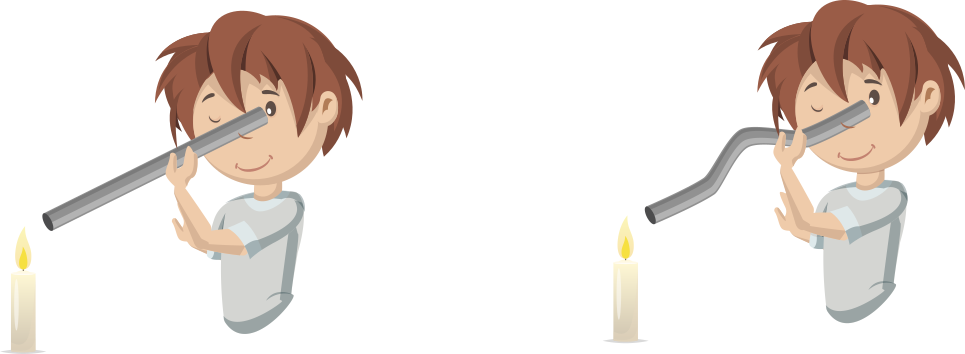
Candle flame seen through two different pipes
Step 1: Light a candle carefully with the help of an adult.
Step 2: Hold the hollow pipe straight and align it so that you can clearly see the candle flame through it.
Step 3: Now bend the pipe and try to look at the candle flame again.
Observation:
You can see the candle flame when the pipe is straight, but when the pipe is bent, the flame is no longer visible.
Conclusion:
This shows that light always travels in a straight line and cannot bend around corners.