

A curious boy named Terry asked his grandfather, “How did people tell time before clocks?”
His grandfather smiled and said, “We looked at the Sun and the Moon. Sunrise meant morning, short shadows meant noon, and sunset meant evening. People also watched the phases of the Moon to count days and months.”
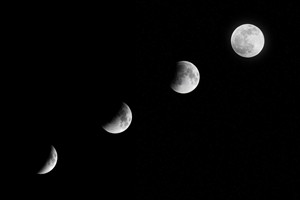
Phases of the Moon
Terry began observing shadows and moon shapes. He even made a sundial in his yard. But on cloudy days or at night, it didn’t work.
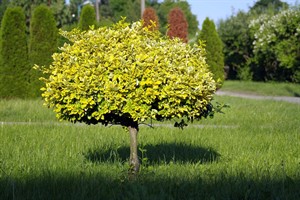
Shadow of a tree
That’s when he learned that people invented better tools like water clocks, hourglasses, candle clocks, and finally modern clocks.
Sundial:
A sundial is a device that uses the Sun's shadow to tell the time. As the Sun moves across the sky, the shadow of a stick changes its position. The movement of the shadow shows the time in a periodically repeating way each day.
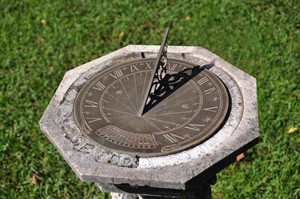
Sundial
Water clock:
A water clock measures time by the steady flow of water. Water either drips out or fills up a container at a constant rate. The changing water level shows the passage of time. It is one of the oldest periodically repeating time-measuring devices.
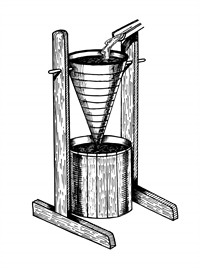
Water clock
Activity:
To construct a simple water clock.
Step 1: Make a water clock by poking a small hole near the bottom side of a plastic bottle.
Step 2: Use tape to fix the bottle above a bowl, so the water can drip into it.
Step 3: Fill the bottle with a fixed amount of water like 1 cup or 250ml.
Step 4: As soon as the water starts dripping, start your timer.
Step 5: Every 40 seconds or 1 minute, mark the water level in the bowl or note the time it takes to reach certain volumes like 50 ml or 100 ml.
Step 6: Now make a bigger hole and compare how the water level and timing changes.
Explanation:
- Water drips at a constant speed, so it can be used to measure short periods of time.
- If the hole size or water level changes, it can affect how fast the water flows and how accurately time is measured.
- This is similar to how early water clocks worked by using steady water flow to keep track of time.
Floating bowl water clock:
In a floating bowl water clock, a bowl with a small hole at the bottom is placed in a larger container filled with water. Water slowly enters the bowl through the hole. After a fixed time, the bowl fills up and sinks. This process repeats and helps measure time in a periodically repeating way.
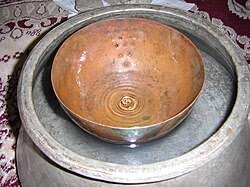
Floating bowl water clock
Hourglass:
An hourglass shows time by letting sand fall from the top part to the bottom. It takes the same amount of time, every time the sand flows. When we turn it over, the sand starts falling again, so it repeats periodically.
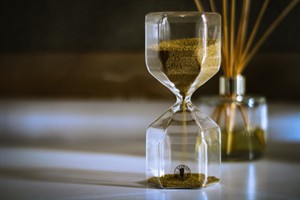
Hourglass
Candle clock:
A candle clock measures time by the slow and steady burning of a candle. Marks are made on the candle, and as it burns down, each mark shows how much time has passed. It works in a periodically repeating way, as the candle burns at a constant rate.
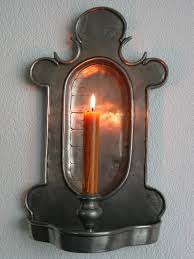
Candle clock
Modern clock:
A modern clock uses mechanical, electrical, or digital parts to measure time accurately. It shows time in hours, minutes, and seconds, and works in a periodically repeating way. Today, most clocks are either quartz clocks, which use vibrations of a tiny crystal, or digital clocks, which run on electricity and display time electronically.
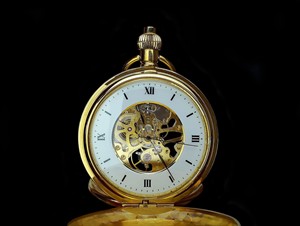
Modern clock