One Friday morning, Terry took his bicycle and rode to his friend’s house along a straight road. The weather was nice, and he kept pedalling at the same steady speed from start to finish. Every few minutes, he passed the same number of houses and trees, it felt like his journey had a smooth rhythm.
 
The next day that is Saturday, he rode the same road again, but this time things were different. First, he slowed down to look at a puppy playing near the roadside. A little later, he stopped completely to buy some snacks from a shop. Then, seeing that he was getting late, he pedalled as fast as he could until he reached his friend’s place.
 
On which day did Terry cover equal distances in equal times, and on which day were the distances different in each time interval?
 
He covered equal distances in equal times on Friday, and the distances were different in each time interval on Saturday.
 
When Terry rides his bicycle from home to his friend’s house, his position changes with time. This change is called motion.
 
Motion:
Motion is the change in the position of an object with respect to its surroundings over time.
Types of motion:
 
Rectilinear motion:
The objects which move along a straight line are in rectilinear motion or linear motion.
Example:
Motion of any vehicle on a straight road, soldiers in a parade, and runners in a \(100\)-metre race.
Circular motion:
The motion in which the objects move along a circular path is called as circular motion.
Example:
Pedals of a bicycle, hands of a clock, and blades of a fan  
Activity:
To understand the type of motion by observing Terry's bicycle rides on a straight road.
 
Day Time (\(s\)) Distance (\(m\))
Friday \(0\) \(0\)
\(120\) \(200\)
\(240\) \(400\)
\(360\) \(600\)
Saturday \(0\) \(0\)
\(120\) \(150\)
\(240\) \(150\)
\(360\) \(450\)
 
Explanation:
Ride on Friday: Terry pedals at the same speed from start to finish.
 
In the first \(120\) second, he covers \(200\) metre, in the next \(120\) second another \(200\) metre, and in the following \(120\) second again \(200\) metre. Since the distances covered in each equal time interval is the same, it is uniform linear motion.
 
Ride on Saturday: Terry pedals at different speed from start to finish.
 
In the first \(120\) second, he covers \(150\) metre, in the next \(120\) second \(0\) metre, and in the following \(120\) second \(300\) metre. Since the distances covered in equal time intervals are different, this is non-uniform linear motion.
Uniform motion:
An object is said to be in uniform motion if it travels in a straight line with a constant speed. Here, the object travels equal distances in equal intervals of time. So, the average speed is the same as the actual speed of an object.
Example:
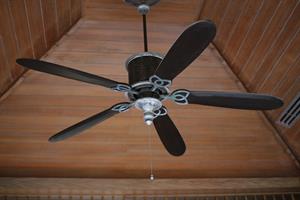
electric-fan-414575_960_720.jpg
Moving blades of a ceiling fan
 
The blades of the fan moves in a circular motion with a constant speed in equal intervals of time.
Non-uniform motion:
An object is said to be in non-uniform motion if it travels along a straight line with a variation in speed. The object travels unequal distances in equal intervals of time. Here, the average speed is not the same as the actual speed of an object.
Example:
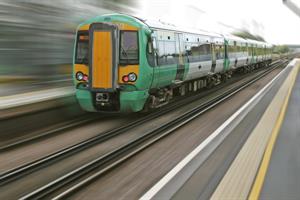
blur-1239439_1280.jpg
Motion of a train
 
At the starting point of the journey, the train was at rest, and then it started moving slowly. After covering a certain distance, the train gathered some speed. Then, it slowed down while crossing a bridge and stopped at the stations for passengers. Finally, the train slowed down and came to a halt at the last station. Throughout the journey, the speed of the train was not the same. Thus, the motion is said to be non-uniform motion.