

Friction is a contact force because it acts only when two surfaces are in contact with each other. It comes into play when an object moves or tries to move over another surface.
Friction:
When a ball rolls on a flat surface, it eventually comes to a stop on its own. Similarly, if we stop pedaling a bicycle on a flat road, it slows down and halts after some time. On a rough road, the bicycle stops even sooner than on a smooth road.
Why objects slow down?
You might wonder what causes the change in speed in such situations. We know that a force is required to change the speed of an object. Even though it seems that no force is acting, the objects gradually slow down and stop. This happens because a force called friction is acting on them, opposing their motion.
Friction:
Friction is the force that comes into play when an object moves or tries to move over another surface. It always acts in a direction opposite to the motion or the attempted motion of the object.
Friction as a contact force:
Friction is a contact force because it arises due to the interaction between two surfaces in contact. It only exists when surfaces touch each other.
Cause of friction:
Friction occurs due to the irregularities on the surfaces in contact. Even surfaces that appear smooth have many tiny bumps and grooves. When two surfaces are placed together, these irregularities lock into each other, resisting any attempt to slide one surface over the other.
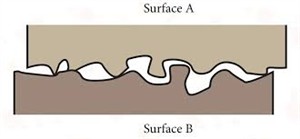
Friction between two surfaces with irregularities
To decrease friction, lubricants such as oil or grease are used between moving parts. Polishing surfaces and using ball bearings also help reduce friction, allowing objects and machines to move more smoothly.
The force of friction depends on the nature of the surfaces in contact. Rough surfaces produce greater friction, which stops the object more quickly. Smooth surfaces produce less friction, allowing the object to travel farther.
Friction: Useful or Harmful?
It is useful because it helps us walk, write, grip objects, and stop vehicles safely. However, friction can also be harmful as it causes wear and tear of surfaces and produces unwanted heat. Whether friction is useful or harmful depends on the situation.
Friction in liquids and gases:
Does friction act only when objects move on solid surfaces? No.
Objects moving through liquids and gases also experience friction. Air, water, and other fluids exert a resistive force on objects passing through them. To reduce this friction, vehicles like aeroplanes, ships, boats, cars and high-speed trains are designed with streamlined shapes, allowing them to move more efficiently through air or water.
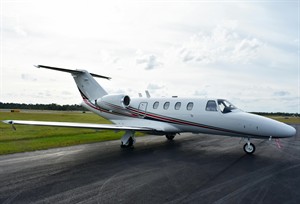
Streamlined shape of an aircraft