

Science is a way of understanding the world through observation, evidence, and logical thinking. It helps us explain natural phenomena, make reliable predictions, and solve real-life problems.
Theories, principles, and scientific thinking:
A scientific theory goes beyond observing patterns; it explains why those patterns occur using evidence collected over time. For example, atomic theory explains how molecules are formed.
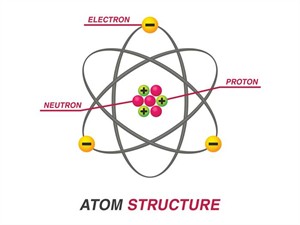
Atoms and its structure
Principles are broad ideas that help us understand situations, such as the conservation of energy when climbing stairs.
In science, a theory is not a guess. It is a well-tested explanation based on careful investigation.

Scientific theory
These ideas are always open to change when new evidence appears, which makes science reliable and self-correcting.
Power of prediction in science:
One of science’s greatest strengths is its ability to make predictions. Well-established laws, theories, and models help us anticipate outcomes even before experiments are performed.
For instance:
- Motion in Physics helps predict how far a football travels.
- Chemistry helps estimate carbon dioxide production.
- Biology helps predict breathing changes during exercise.
These predictions are evidence-based, not guesses. When predictions match observations, confidence in scientific ideas increases. When they don’t, scientists revise their understanding. This process drives deeper exploration.
Making predictions scientific:
To test predictions scientifically, we must ask questions based on measurable data and past patterns, not simple yes/no queries.
Instead of saying “dark clouds mean rain,” better questions include:
- What were past weather conditions during rainfall?
- What is the humidity level?
- Is the temperature dropping?
- What are wind speed and direction?
Such questions make predictions testable and reliable.

Asking questions
Why weather forecasts can be wrong?
Weather depends on many changing factors like temperature, pressure, humidity, and wind. Even tiny changes can lead to very different outcomes over time.
Thus, forecasts are usually accurate for short periods but become less reliable further into the future.
Science improves through limits and failures:
Even the best scientific theories have limits. When predictions fail, scientists do not rely on opinions; they re-examine evidence and improve ideas.
No theory is final or beyond questioning. This openness to correction is a key strength of science.
Questioning everyday claims:
Scientific thinking helps evaluate common beliefs.
For example, the claim that food becomes harmful during an eclipse has no scientific basis.
An eclipse is simply a shadow effect, with no significant physical, chemical, or biological change affecting food. Asking logical questions helps disprove such myths.
Importance of estimation in science:
Science often begins with approximate reasoning rather than exact values. Estimation helps:
- Check if answers are reasonable
- Build intuition
- Detect errors
Example:
- Estimating food needed for a family
- Estimating air breathed in a day
Approximate answers are useful when exact values are unnecessary, but precise measurements are important in critical situations.
Interconnection of scientific fields:
Science is divided into branches like physics, chemistry, biology, and earth science for convenience, but real-world problems require combined knowledge from multiple fields.

Branches of science
Example:
Climate change, medical advancements, and technology design

Medical advancements
Science also connects with mathematics, technology, arts, and social sciences.
Science in real life:
Everyday objects and problems involve multiple scientific concepts.
Example:
A mask works using physics (particle motion), chemistry (materials), biology (viruses), and mathematics (airflow models).
Understanding such connections helps solve real-world problems.
Science as a human endeavour:
Science is not just facts and formulas; it is driven by curiosity, creativity, and collaboration. It develops over time through questioning, testing, and learning from mistakes. Scientific thinking is valuable in all areas of life.
Scientific thinking
It helps us:
- Understand technology
- Evaluate information critically
- Make informed decisions
Science is a continuous journey of discovery. It encourages us to observe carefully, question deeply, and rely on evidence. With curiosity as our guide, science helps us understand not just the world, but also the process of learning itself.