

When you see a rainbow forming after rain, feel cool air when a fan is switched on, watch a tiny seed grow into a plant, or notice your shadow changing size during the day, you are already thinking like a scientist.
These everyday experiences show that science begins with simple observations of the world around us.
Science: A Way of thinking and exploring life:
Science is not just a collection of facts written in textbooks. It is a method of asking questions and searching for answers. Since ancient times, humans have observed nature and asked “why” and “how.” This curiosity is what makes science special. It covers everything; from the smallest cell in a leaf to the movement of distant stars in space.

Asking questions
Science beyond memorization:
Unlike subjects that focus only on fixed information, science encourages deeper thinking. It makes us ask questions such as:
- How does this work?
- Why does this happen?
- What patterns can we see in nature?
When we ask why iron rusts, we learn about reactions with air and moisture. When we ask how a bulb glows, we understand electric current.
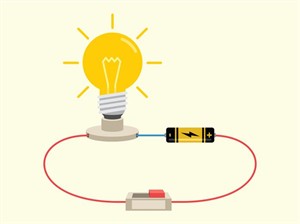
An electric circuit
Science is not about memorizing answers but about developing a scientific attitude; being curious, observing carefully, experimenting, and accepting new ideas.
Curiosity: The starting point of science
Curiosity is the heart of science. A curious child may wonder why the sky appears blue, how birds are able to fly, or why a paper boat floats on water. Such simple questions can lead to big discoveries. For instance, studying how birds fly inspired scientists to design airplanes. Many great inventions began with small, everyday questions.
Science in daily life:
Rainbow formation:
After rainfall, sunlight passing through water droplets forms a rainbow. This happens due to refraction, dispersion, and total internal reflection of light. White sunlight splits into seven colours, showing that white light is a mixture of many colours.

A rainbow
Cooling effect of a fan:
A fan makes us feel cool even though it does not lower room temperature. This is due to convection and evaporation of sweat. As sweat evaporates, it absorbs heat from our body, making us feel cooler.
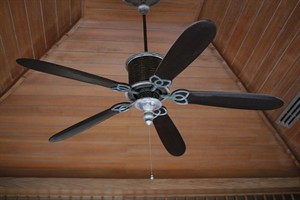
A ceiling fan
Growth of a seed into a plant:
A seed grows into a plant through germination, using stored food initially. Later, the plant makes its own food by photosynthesis, using sunlight, water, and carbon dioxide. This explains how plants depend on solar energy.
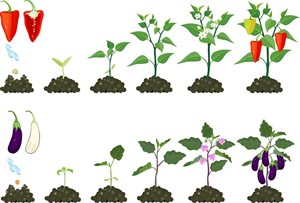
Growth of a seed into a plant
Changing shadow size:
Shadows are long in the morning and evening and shortest at noon. This happens because of the change in the Sun’s position and the linear propagation of light.
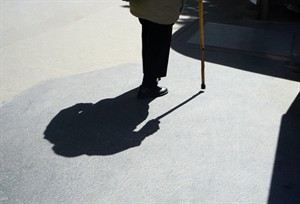
Shortest shadow at noon
Rusting of iron:
Iron objects left in moist air develop rust due to a chemical reaction between iron, oxygen, and water, forming iron oxide. This explains why painting or coating iron prevents rusting.

Rusting of iron
Turmeric stain and soap:
Turmeric changes colour when soap is applied because turmeric is a natural indicator. It turns reddish-brown in basic substances, showing the acid–base nature of materials.
Boiling water into steam:
When water is heated, it changes into steam due to the absorption of heat energy, explaining change of state and latent heat.

Steam from boiling water
These examples prove that science is present everywhere around us.
From classroom learning to real life:
Science is not limited to laboratories or classrooms. It is present in daily life. When we notice turmeric stains turning reddish with soap, or water changing into steam while boiling, we are observing science in action. Learning through experiments and real-life observations makes science interesting and meaningful, turning students into active learners.
Science, discovery, and responsibility:
Science is not only about discovering new things but also about understanding our responsibility toward nature. Human activities such as cutting trees, excessive use of plastic, and burning fuels affect the environment.
Scientific thinking encourages us to ask, “What impact will this action have?” and “How can science help protect our planet?”
Flow of scientific thinking:
- Begin with curiosity and questions.
- Observe and experiment.
- Understand and explain using scientific ideas.
- Apply knowledge responsibly for society and nature.
Science as a way of thinking helps us question, explore, and learn continuously. It is not fixed; it grows with new observations and discoveries.
Important!
When students start thinking like scientists, they not only gain knowledge but also develop care and responsibility for the world around them.
In this way, science becomes a lifelong journey of learning, discovery, and concern for nature.