

Plant hormones
Plants do not have a nervous system, but they still show growth, movement and responses to stimuli. These activities are controlled by chemical substances called plant hormones or phytohormones.
Types of plant hormones
Plant hormones are broadly classified into growth promoters and growth inhibitors. They act in very small quantities and bring about significant changes in plant growth and behaviour.
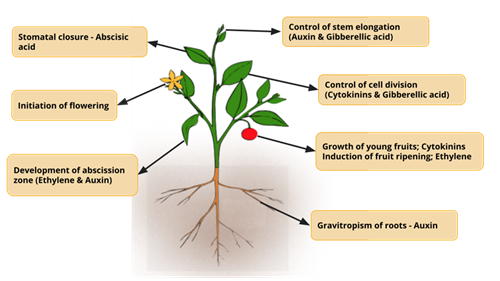
Hormonal interaction in plant growth and development
Auxins
Auxins are growth-promoting hormones mainly responsible for cell elongation in shoots. They help plants bend towards light, a phenomenon called phototropism. Auxins also maintain apical dominance by suppressing the growth of lateral buds. They play an important role in root initiation and overall plant growth.
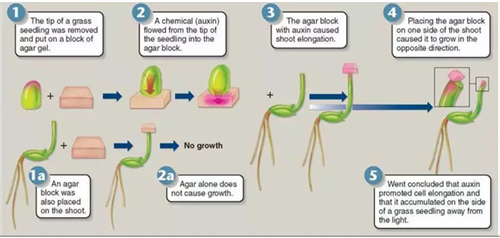
Went's experiment
Gibberellins
Gibberellins promote stem elongation and increase the length of internodes. They help in seed germination by activating enzymes required for food mobilisation. Gibberellins also promote flowering and fruit development in some plants.
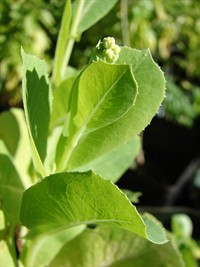
Bolting observed in lettuce plants
Cytokinins
Cytokinins stimulate cell division and promote the growth of lateral buds. They delay ageing of leaves by preventing leaf senescence. Cytokinins help in nutrient mobilisation and improve the lifespan of plant tissues.
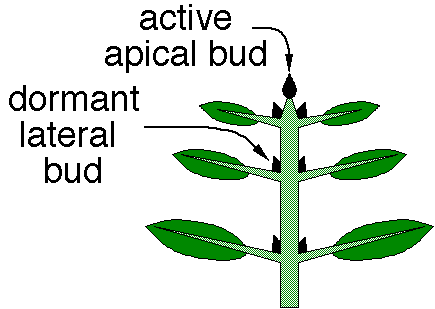
Apical bud and lateral bud
Ethylene
Ethylene is a unique gaseous plant hormone. It promotes fruit ripening and ageing of plant parts. Ethylene also causes leaf fall and is involved in flowering in some plants. It plays an important role in agriculture and food storage.
Abscisic acid
Abscisic acid is a growth-inhibiting hormone. It induces dormancy in seeds and buds and prevents germination during unfavourable conditions. It helps plants tolerate stress such as drought by closing stomata and reducing water loss.
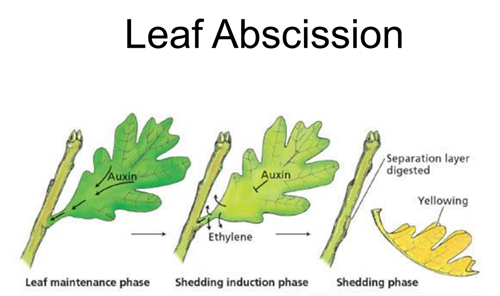
Senescence and abscission
Importance of plant hormones
Plant hormones regulate growth, development and responses to environmental stimuli. The balanced interaction of different hormones ensures normal plant growth and survival.
Plant hormones play a vital role in controlling plant growth and development.
Together, these hormones coordinate all physiological activities in plants.
Auxins, gibberellins and cytokinins promote growth, while ethylene and abscisic acid regulate ripening, ageing and dormancy.