

Let us step into our kitchen - not just as cooks - but, today, as science detectives! Well, let’s make a crispy and delicious dosa. Behind this dosa preparation, every step hides a bit of science magic!
First, we take a pan and place it over the stove, and turn on the gas flame. But, wait, have you ever imagined where this flame comes from? It’s from LPG, a fuel is a mixture of hydrocarbons like propane and butane. They are non-metals.
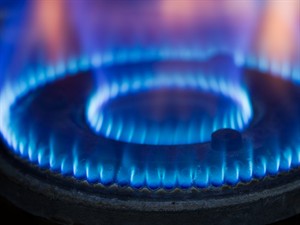
Burning of LPG gas burner
Physical properties:
A physical property can be observed and measured without altering the sample's chemical identity. In other words, a physical property can cause a physical change but not a chemical change.
State:
i. Most metals are solid at room temperature, except mercury, which is liquid. Gallium melts just above room temperature.
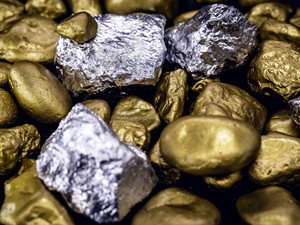
Gold and silver
ii. The non-metals naturally exist in three states: solid, liquid and gas.
- Sulphur and phosphorus occur in a solid-state.
- Bromine occurs in a liquid state.
- Oxygen, nitrogen, hydrogen, halogens and noble gases occur in the gaseous state.
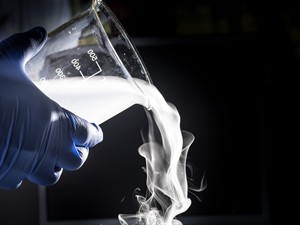
Chlorine gas
Lustre:
i. Metals are lustrous in nature. Metals have a shining surface in their purest form. This property is known as 'metallic lustre'. Metallic lustre means reflected light resembles a polished metal surface. For example, gold and silver.
Metals have free electrons that reflect light, making them appear shiny and giving them a metallic lustre.
ii. Non-metals lack lustre because they have a dull appearance. Substances such as diamond (these are allotropes of carbon) and iodine are exceptions.
Malleability:
Malleability refers to the ability of materials to be hammered or shaped permanently without breaking or cracking, allowing it to be beaten into thin sheets.
i. Metals are malleable. The most malleable metals are silver and gold. Aluminium is also malleable and can be beaten into thin sheets to create foils for wrapping food.
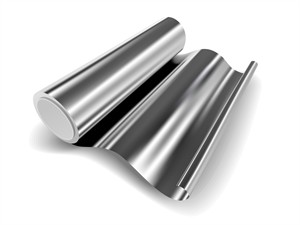
Thin sheet of metal
Most metals are hard; they can be beaten into thin sheets. However, some metals such as sodium, potassium and lithium are soft metals, and mercury is a liquid metal; hence they cannot be beaten into thin sheets..
ii. Non-metals are non-malleable. When non-metals are hammered, they form a powdery mass because they are brittle in nature.
Hardness:
i. Metals are generally hard. The hardness varies from metal to metal. Take small pieces of iron, copper, aluminium or magnesium. Try to cut these metals with a sharp knife. You cannot cut them. On the other hand, alkali metals (lithium, sodium, potassium) are soft enough to be cut by a knife.
ii. Non-metals are soft and brittle. The hardest natural substance known is diamond, which is a carbon allotrope.
Ductility:
The property of materials that allows them to be pulled into thin wires is called ductility.
i. Most of the metals are ductile, and they can be drawn into thin wires. Gold is the most ductile metal. One gram of gold may produce a wire with a length of around \(2\) kilometres.
Metals can be moulded into various shapes according to our needs due to their malleability and ductility.
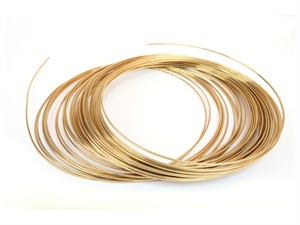
Thin wire of metal
ii. Non-metals are non-ductile. As they are brittle, they cannot be drawn into thin wires.
Conductivity of materials:
On a hot summer day, you and your friend are heading to a park, to a place, and to spend some time. After a joyful round of play, you all decide to find a spot where you can relax. You all noticed two benches unoccupied in the park.
One is a metal bench and the other is a wooden bench. You all decided to sit on a metal bench because it was attractive. While sitting on it, all felt that it was very hot.
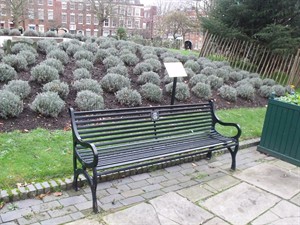
A metal bench
Then, everyone decided to change the spot and sat on a wooden bench; it did not feel very hot. What could be the reason for the metal bench to be hot?
It is a special property of metals known as the conductivity of heat.

A wooden bench
Conductivity is the ability of a material to conduct heat or electricity.
Heat conductivity
i. Metals are good conductors of heat.
Activity: To find out if metals are good conductors of heat
- Take a wire made of aluminium or copper.
- Clamp this wire on a stand. Using wax, attach a pin to the free end of the wire.
- Heat the wire near the clamping point with a spirit lamp, candle or burner.
- What do you notice when some time has passed?
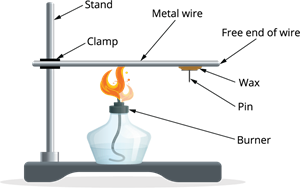
Heating a metal wire
Answer: Since the wire has not melted, it proves that metal is a good conductor of heat and has a high melting point.
Silver and copper are the best conductors of heat, while lead and mercury are relatively poor conductors of heat.
ii. Non-metals are poor conductors of heat; they do not transfer heat from one end to the other. Non-metals lack free electrons, so heat cannot pass through them. Non-metals act as an insulator. But diamond conducts heat.
Activity: Heat transfer in materials
Instructions:
- Place a glass tumbler and fill it with hot water.
- Into the glass tumbler, immerse a metal spoon and a wooden spoon of the same length, and leave them for a few minutes.
- Later, carefully touch the upper end of each spoon.
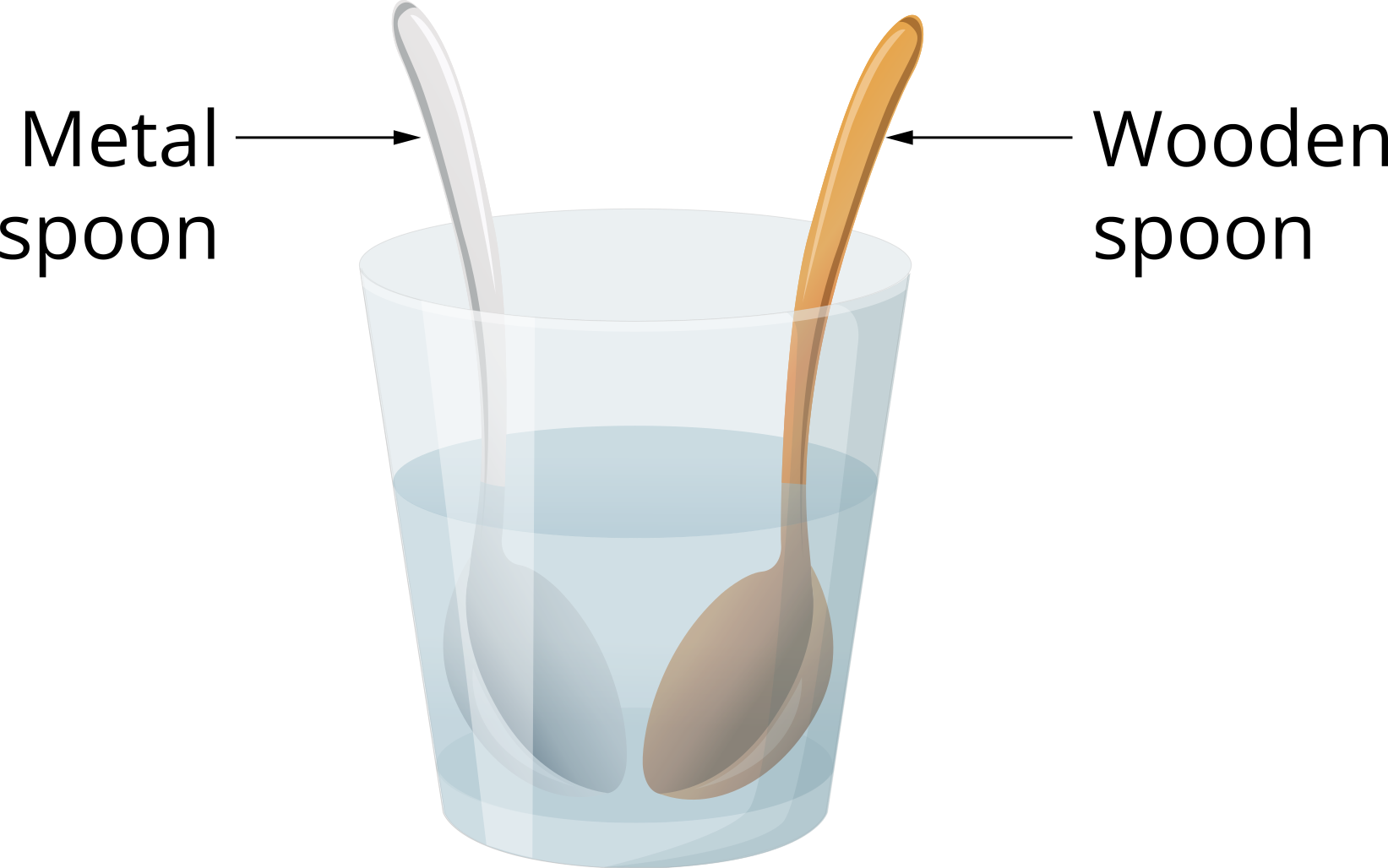
Metal and wooden spoons immersed in hot water
Observation:
Even though both the metal and wooden spoons are placed in water of the same temperature and at the same time, the metal spoon feels hotter to the touch. This is because metal is a good conductor of heat, which allows it to transfer heat quickly. In contrast, wood has poor heat transfer properties, making it feel less hot.
As a result, most metals are considered good conductors of heat, while non-metals are poor conductors.
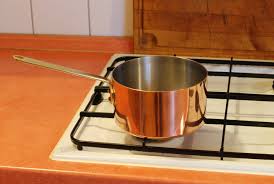
Cooking utensil
Electrical conductivity:
Conductivity of electricity is the ability of a material to allow an electric current to pass through it.
Activity:
1. Make a circuit by using a battery, bulb and copper wires, as shown below.
2. Place a copper coin between the two free ends of the wire in the circuit, as shown below.
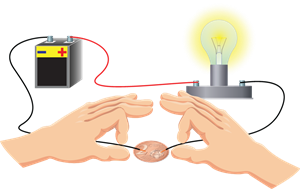
Electrical circuit
The bulb is glowing because metals are good conductors of electricity.
Metals contain free electrons, making them good conductors of electricity. These free electrons move easily through the metal, allowing it to conduct an electric current.
When the metal coin in the circuit is replaced by a non-metal, the bulb does not glow. Non-metals are poor conductors of electricity. Graphite (allotrope of carbon) conducts electricity because it has free electrons to allow current to pass through it.
Materials that do not allow electricity to pass through them are called poor conductors or insulators of electricity.
We have probably noticed that the wires that carry current in your homes have a coating of a rubber-like material called polyvinyl chloride (\(PVC\)).
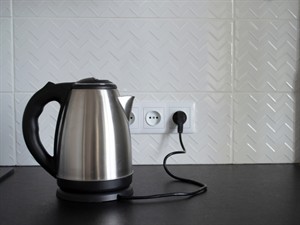
Electronic kettle
Sonority:
The ability of a material to produce a loud sound or ringing sound when struck over is called sonority.
i. Metals are sonorous in nature because metals have a closely packed arrangement of electrons, and are elastic in nature. When stuck over hard surface, vibration travels through the metal and produces a clear sound.
ii. Non-metals are non-sonorous because they do not vibrate uniformly when struck on a hard surface, and they do not resonate. So, non-metals cannot produce a loud, ringing sound.
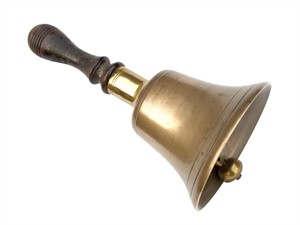
Metal bell
Application of sonority in daily life:
Metals are used widely because they are sonorous, durable and can be moulded to desired shapes - also, their ability to produce a resonant sound.
The practical applications of sonorous property in daily life and in industries are,
i. Musical instruments such as bells, drums, strings, and guitars.
ii. Bells, wind chains, electrical buzzers.
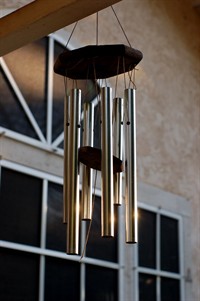
Wind chain
Reference:
https://1.bp.blogspot.com/-kpCdiNTyXf4/WMbnYWVLboI/AAAAAAAARQk/ih7_pQFGR-ckJDjRtkXVyVlbSx6Pv0jwgCLcB/s1600/CONDUCTINGINSULATINGWIRE.png
https://www.flickr.com/photos/daveparker/4984482207
https://pxhere.com/en/photo/1627149
https://www.flickr.com/photos/ell-r-brown/4153212203