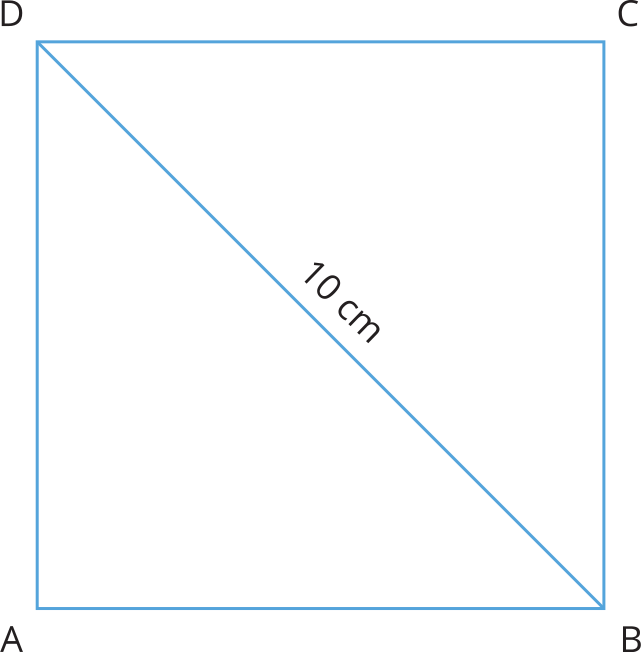
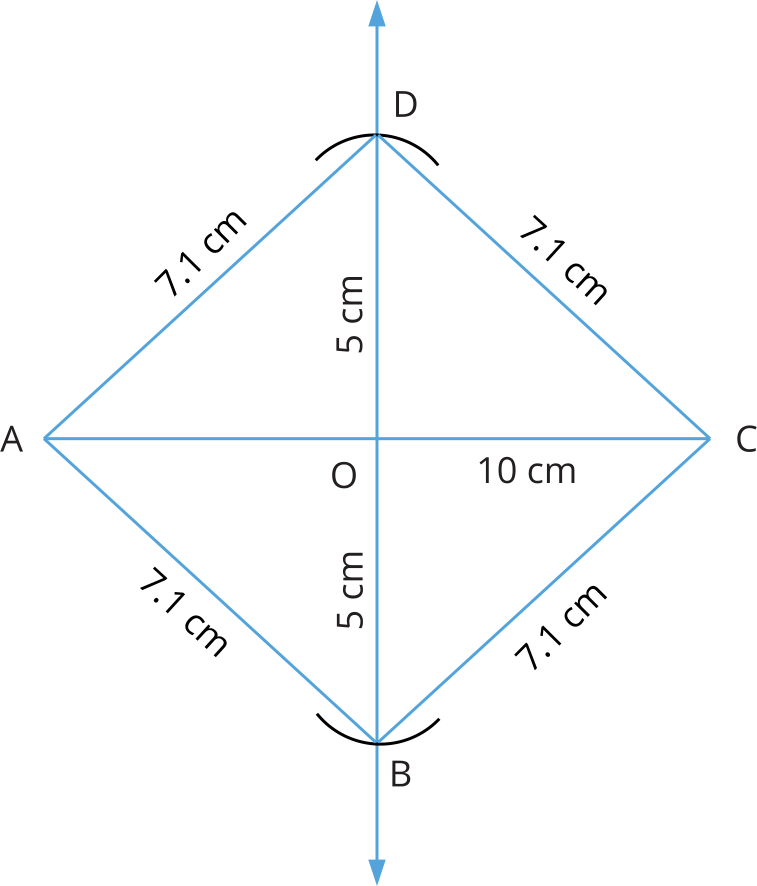
Construct a square with one of its diagonals as \(10\) \(cm\).
Step \(1\): Draw a rough diagram for the measurements given.
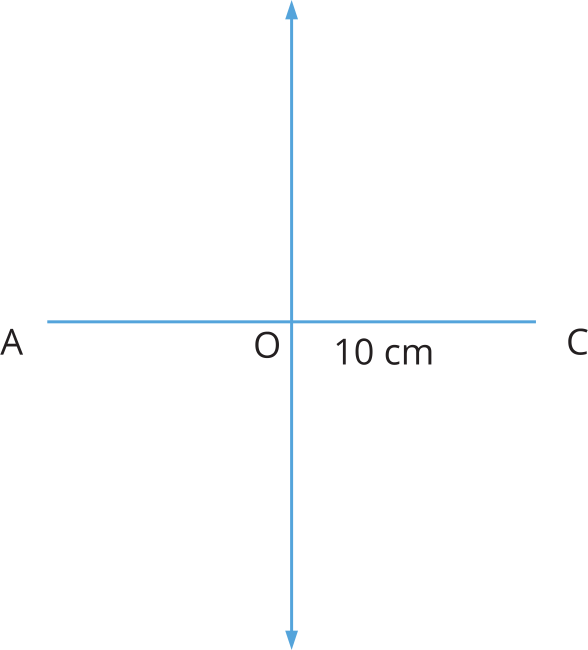
Step \(2\): Draw a line segment \(AC\) of length \(10\) \(cm\).
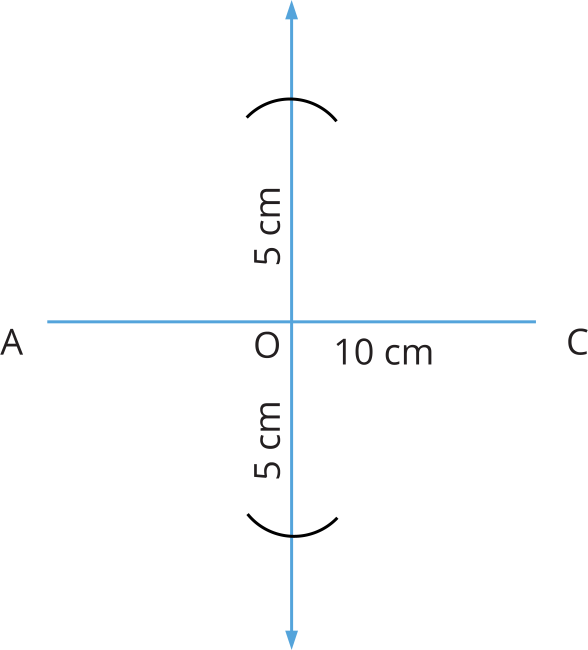
Step \(3\): Draw a perpendicular bisector to \(AC\) such that the bisector intersects \(AC\) at \(O\).
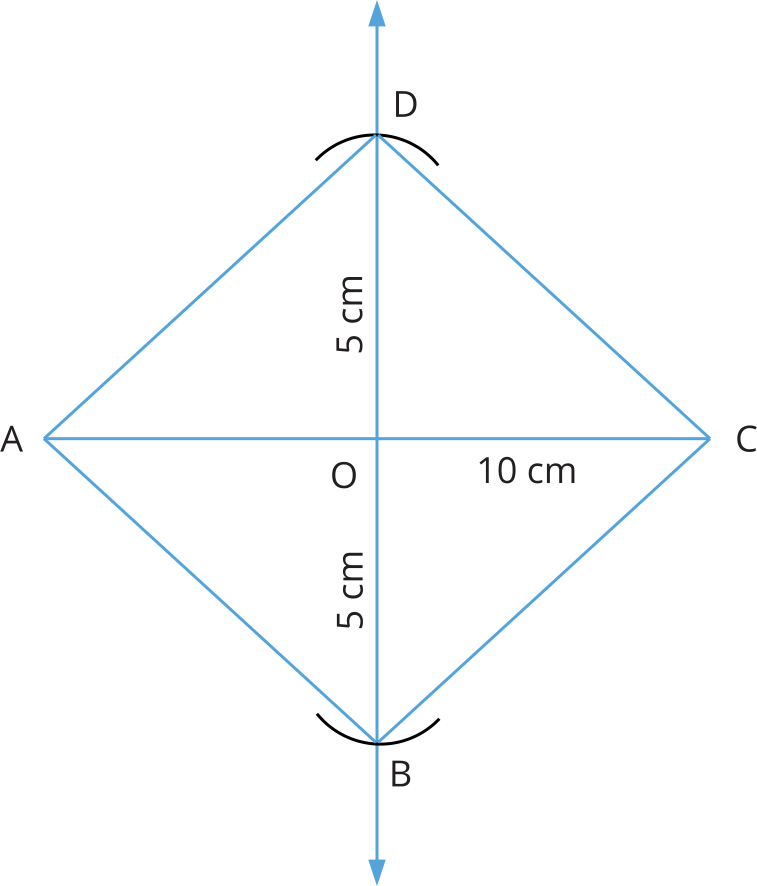
Step \(4\): With \(O\) as centre and with \(5\) \(cm\) as radius, draw arcs on both sides of the perpendicular bisector. Mark the intersections as \(B\) and \(D\)
Step \(5\): Join \(AB\), \(BC\), \(CD\), and \(AD\) to form the desired square.
Step \(6\): Measure the sides manually to calculate the area of the square.
Area of the square: \(=\) \(cm^2\)
(Enter the answer to nearest hundredth if it is in decimal value)
Answer variants: