








Electricity plays an important role in our daily life, and many common devices such as torches, lamps, and mobile phones work using electrical energy. To understand how these devices function, it is necessary to learn about basic electrical components like electric cells, batteries, switches, and lamps.  
 
Torch:
A torch is an electrical device that works using electric cells and produces light when the switch is turned ON, allowing electric current to flow through the lamp and make it glow.
Electric cell:
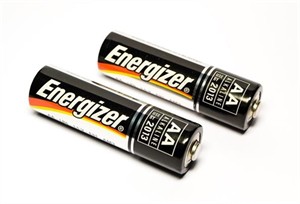
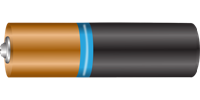
An electric cell is a portable source of electrical energy that has two terminals, a positive terminal and a negative terminal, which help in the proper connection of the cell in an electric circuit.
The raised metal cap forms the positive terminal, while the flat metal disc acts as the negative terminal. 
 
01SetofEnergizerBatteriesw592w591.jpg
Electric cells
 
Battery:
A battery is formed when two or more electric cells are connected such that the positive terminal of one cell is joined to the negative terminal of the next, enabling it to supply electrical energy to a circuit. 
Need for a battery:
 
Many electrical devices require more than one electric cell to operate. Therefore, two or more cells are connected together. Using multiple cells supplies electrical energy to the circuit for a longer duration and can also provide greater energy when required.
 
Use of the term “Battery”:
 
The word battery is often used even when there is only a single cell. For example, the power source used in mobile phones is commonly called a battery, although it may consist of just one cell
 
Incandescent lamp:  
An incandescent lamp is a device in which electric current passes through a thin wire called a filament, causing it to become very hot and glow, thereby producing light.
LED:
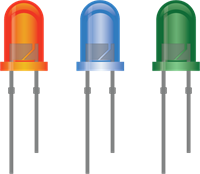
An LED (Light Emitting Diode) is an electric device that produces light without the use of a filament. It has two terminals with fixed polarity, represented by a longer wire for the positive terminal and a shorter wire for the negative terminal. 
Electrical components and their symbols:
 
S.No. Electrical component Symbol
1. battery1612391280w400.png 9.svg
2. 101.svg battsym8.svg
3. bulblight1484831280w400.png bulbsym23 (1).svg
4. LEDw504.png download (9).png
5. swion33.svg switchclosesym4w351.png
6. swioff7.svg switopen43.svg
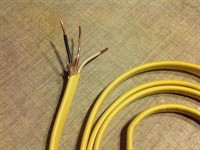
7. wire1200pxRomexcableagrw400.jpg wiresym12.svg
 
Circuit diagram
A circuit diagram is a representation of an electrical circuit in which symbols are used to show the different electrical components and their connections. 
Symbol of an electric cell: 

In the symbol of an electric cell, the longer line shows the positive terminal, while the shorter line shows the negative terminal.

 
9.svg
Positive and negative terminals of a cell
 
Symbol of an LED:

In the symbol of an LED, the triangle indicates the direction in which electric current flows, and the two arrows show that the LED emits light.
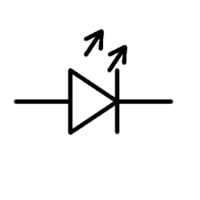
 
download (9).png
Positive and negative terminals of an LED
 
Standard electrical symbols: 

International organisations such as the International Electrotechnical Commission (IEC), the American National Standards Institute (ANSI), and the Institute of Electrical and Electronics Engineers (IEEE) develop standard symbols for electrical and electronic components. Using the same symbols worldwide makes it easier for people from different countries and fields to understand circuit diagrams clearly.