

When electric current passes through a conductor, it can produce heat as a result of the resistance offered to the flow of current. This heating effect can be observed in simple experiments and is also used in many everyday appliances.
Activity: To observe the heating effect of electric current.
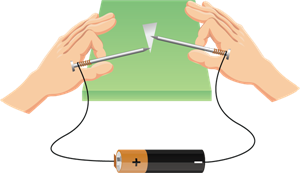
Aluminium foil experimental setup
Step 1: Cut a piece of aluminium foil in the shape of an arrow.
Step 2: Ensure that the head of the arrow is sharp and pointed.
Step 3: Place the arrow-shaped aluminium foil flat on a dry wooden board.
Step 4: Take two thin pins and connect each pin to a connecting wire.
Step 5: Connect the free ends of the wires to the two terminals of a 9 V electric cell.
Step 6: Touch one pin to the pointed tip of the aluminium foil and keep the second pin very close to the first pin, about 1–2 mm away, without touching it.
Observation:
When the pin is placed at the pointed tip of the aluminium foil, the foil starts melting at that point. The melting occurs quickly at the sharp tip compared to other parts of the foil.
Conclusion:
- The aluminium foil melts due to the heat produced when electric current flows through it.
- This shows that electric current produces heat, known as the heating effect of electric current.
- The sharp tip heats up faster because the current gets concentrated at that point, producing more heat.
Resistance in conductors:
When electric current flows through a conductor, it experiences resistance, which is the opposition to the flow of current. Different conductors offer different amounts of resistance. For example, a nichrome wire; which is an alloy of Nickel and Chromium, has a much higher resistance than a copper wire of the same length and thickness.
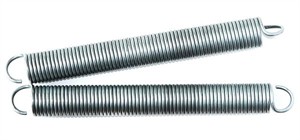
Nichrome coil
Heating due to electric current:
Because of this resistance, a part of the electrical energy is converted into heat energy as current passes through the conductor. As a result, the conductor becomes warm. This effect can be easily observed in a nichrome wire when current flows through it.
Heating effect of electric current:
The warming of a conductor due to the flow of electric current is called the heating effect of electric current. This effect is widely used in devices such as electric heaters, irons, and bulbs.
Heating effect of electric current in household appliances:
An incandescent bulb glows because its filament becomes hot when electric current passes through it. This heating of the filament produces light.

Heat radiation from an incandescent bulb
The same heating effect of electric current is used in many household appliances such as electric heaters, stoves, irons, immersion rods, water heaters, kettles, and hair dryers.
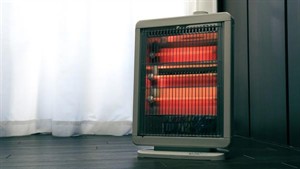
Electric room heater
These appliances contain a wire or coil called a heating element, which becomes hot when current flows through it. In some appliances, the heating element is visible and can be seen glowing red hot.
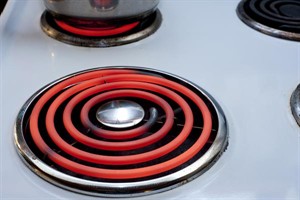
Red hot heating element of an electric stove
Uses of the heating effect:
The heating effect of electric current is very useful in everyday life. It helps in cooking food, heating water, ironing clothes, and operating various electrical appliances used at home.
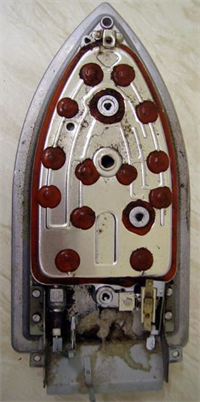
Iron box with its heating element
Harmful effects and safety measures:
Sometimes, the heating effect can be harmful. Electrical energy may be wasted as heat during transmission through wires. Excessive heating can damage plugs and sockets by melting plastic parts and may even cause fires. To prevent such accidents, safety devices such as fuses are installed in household electric circuits to protect appliances and ensure safe use.
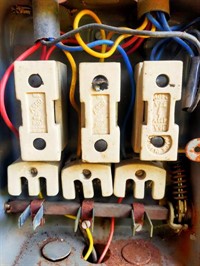
Fuse