

One afternoon, Dave was pushing his school bag across the floor while playing. At first, it moved easily, but after some distance, it slowed down and stopped. When he tried the same thing on the rough carpet, the bag stopped even sooner. Curious, Dave wondered why objects move only when pushed or pulled and why they do not keep moving forever.
This simple question leads us to learn about contact forces, muscular force, and an important force called friction, which affects motion in our daily life.
Contact forces:
Contact forces are forces that act only when two objects are in physical contact with each other.
These forces occur whenever we push, pull, or move objects by touching them. Contact can be direct, like using our hands or feet, or indirect, such as using tools like sticks, ropes, or levers. They are essential for performing tasks in both humans and animals.
Example:
Opening a door, writing with a pen, lifting a bag.

Writing with a pen
Muscular force:
Muscular force is the force generated by the contraction and relaxation of muscles in the body during physical activity.
Muscular force allows us to perform actions such as walking, running, jumping, lifting, pushing, or stretching. Animals, birds, fish, and insects also depend on muscular force for movement and survival. In history, humans have relied on the muscular strength of animals, such as oxen or horses, to carry loads or pull carts. Muscular force is a fundamental example of a contact force in everyday life.
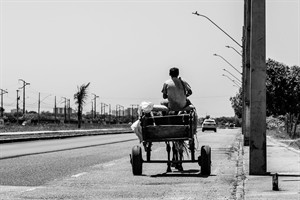
A Bullock cart
Role of muscular force in the body:
Muscular force is essential for many internal functions of our body. It helps us chew food and move it through the alimentary canal during digestion. The contraction and relaxation of heart muscles pump blood throughout the body, a process vital for survival.
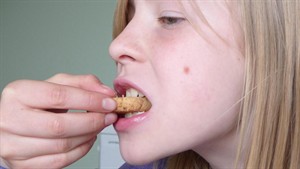
Chewing food
Friction:
When a ball rolls on a flat surface, it eventually comes to a stop on its own. Similarly, if we stop pedaling a bicycle on a flat road, it slows down and halts after some time. On a rough road, the bicycle stops even sooner than on a smooth road.
Why objects slow down?
You might wonder what causes the change in speed in such situations. We know that a force is required to change the speed of an object. Even though it seems that no force is acting, the objects gradually slow down and stop. This happens because a force called friction is acting on them, opposing their motion.
Activity:
A notebook on a table
Step 1: Take an object with a flat base, such as an empty lunch box, geometry box, or notebook, and place it on a table or floor.
Step 2: Gently push the object and observe its motion.
Step 3: Note whether the object stops after traveling some distance.
Step 4: Ask yourself if there is a force that brings it to rest.
Step 5: Repeat the activity by pushing the object in the opposite direction.
Step 6: Observe whether it stops again after moving and think about whether any other contact force is involved.
Observation:
When the object is pushed, it moves for some distance and then stops on its own. The object stops regardless of the direction in which it is pushed. A force appears to act on the object in a direction opposite to its motion, slowing it down.
Conclusion:
The force that opposes the motion of the sliding object is friction. This force is responsible for bringing the moving object to rest.
Friction:
Friction is the force that comes into play when an object moves or tries to move over another surface. It always acts in a direction opposite to the motion or the attempted motion of the object.
Friction as a contact force:
Friction is a contact force because it arises due to the interaction between two surfaces in contact. It only exists when surfaces touch each other.
Cause of friction:
Friction occurs due to the irregularities on the surfaces in contact. Even surfaces that appear smooth have many tiny bumps and grooves. When two surfaces are placed together, these irregularities lock into each other, resisting any attempt to slide one surface over the other.
Activity: To explore friction on different surfaces.
Step 1: Take the object such as a notebook or lunch box.
Step 2: Place the object on different surfaces such as glass, cloth, wood, ceramic tile, and sand.
Step 3: Gently push the object on each surface and observe how far it moves before stopping.
Step 4: Record whether the object stops at the same distance on all surfaces.
Observation:
- The object does not stop after traveling the same distance on all surfaces.
- On smooth surfaces like glass or ceramic, the object moves farther before stopping.
- On rough surfaces like cloth or sand, the object stops sooner.
Conclusion:
The force of friction depends on the nature of the surfaces in contact. Rough surfaces produce greater friction, which stops the object more quickly. Smooth surfaces produce less friction, allowing the object to travel farther.
Friction in liquids and gases:
Does friction act only when objects move on solid surfaces? No.
Objects moving through liquids and gases also experience friction. Air, water, and other fluids exert a resistive force on objects passing through them. To reduce this friction, vehicles like aeroplanes, ships, boats, cars and high-speed trains are designed with streamlined shapes, allowing them to move more efficiently through air or water.
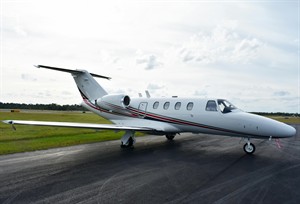
Streamlined shape of an aircraft
Reference: